
Caminito in Buenos Aires: colour, tin and tango in La Boca
Published on 09/07/2026 at 17:32 | Editorial responsibility: Rafael Müller, Editor-in-Chief AD HOC NEWS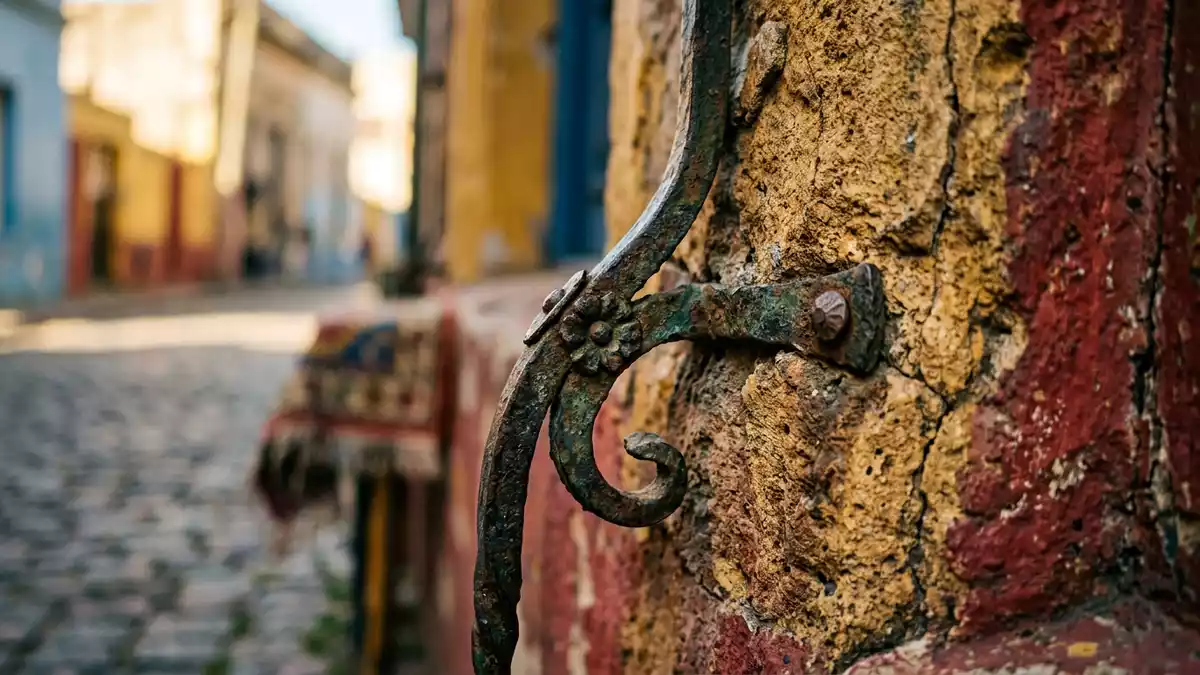
Caminito in Buenos Aires is a short alley in La Boca where corrugated tin houses, bright paint and tango performances turn former tenements into an open?air street museum. Set in the historic portside neighbourhood, this pedestrian passage traces the story of Italian immigration and working?class life along the Riachuelo in the twentieth century.
A sinuous alley turned street museum
Caminito is a traditional alley and street museum in the La Boca neighbourhood of Buenos Aires, laid out along a former railway cutting that curves towards the Riachuelo River.traditional alley and street museum The passage is lined with buildings that once backed directly onto the tracks, and its plan still follows the bend that gave the area the nickname “La Curva”. The museum street extends for roughly 150 m (492 ft), creating an intimate pedestrian route framed by façades and balconies at close range.museum a cielo abierto de casi 150 metros
The alley was reclaimed in the middle of the twentieth century after the railway line through La Boca had fallen into disuse, and in 1959 Caminito was formally recognised as a “calle museo”, a street museum open to the sky.calle museo a cielo abierto The initiative is closely associated with the painter Benito Quinquela Martín, whose work centres on La Boca’s harbour scenes and whose interventions, together with local residents, turned an abandoned tract into a curated urban promenade.pintor boquense Benito Quinquela Martín
Corrugated tin conventillos and vivid colour
The buildings that frame Caminito are former conventillos, multi?family tenement houses constructed from timber and corrugated metal sheets, materials typical of La Boca’s modest working?class housing.colourful painted houses typical of the immigrant dwellings Many of these structures were elevated on simple supports to cope with the floods that affected the low?lying banks of the Riachuelo, and their thin walls and walkways speak to an era when Italian immigrants crowded into cheap lodgings close to the docks.casas de madera y chapas muy precarias
Quinquela Martín and his collaborators promoted a distinctive treatment for these tenements: façades covered in strong, contrasting colours, often using leftover marine paint, so that the patched metal surfaces became a patchwork of reds, yellows, blues and greens.old sheet metal tenements painted many different colours Balconies, external staircases and projecting galleries overlook the alley, and many frontages carry murals, reliefs or sculptural figures that refer to dock work, neighbourhood characters or scenes from tango lyrics. Together, the architecture and its colour scheme form a continuous exhibition of the materials and visual culture of La Boca’s tenement streets.
Tango, immigrant memory and the name “Caminito”
Caminito takes its name from the 1926 tango “Caminito”, composed by Gabino Coria Peñaloza and Juan de Dios Filiberto, whose title means “little path” and echoed the route along the former railway siding.bautizó la calle de adoquines como “Caminito” The alley’s paving, balconies and small squares provide stages where tango dancers perform and musicians play, tying the physical space back to the music that helped fix its name in Argentine cultural memory.open-air museum street
Along the route, artists set up easels and stalls, displaying paintings, prints and crafts inspired by La Boca’s harbour, football culture and everyday life. Many works foreground the colourful tenements themselves or the nearby stadium of Boca Juniors, linking Caminito to the wider identity of the barrio.paseo peatonal dedicado al arte The combination of street art, performance and architecture makes the museum as much a living cultural corridor as a static historical site.
Visiting Caminito: what travellers from Western Europe should know
- Caminito lies in the La Boca district in the south?east of Buenos Aires, close to the bend in the Riachuelo River and within walking distance of the stadium of Boca Juniors.
- The alley is pedestrian and paved, with short ramps and steps between levels; balconies, external staircases and narrow passageways make the space feel enclosed and vertical despite its limited length.
- Caminito is surrounded by the broader La Boca neighbourhood, so a visit easily combines with time along Avenida Don Pedro de Mendoza by the waterfront and with views towards the docks.
- The official language is Spanish and the currency is the Argentine peso.
- Entry requirements depend on your nationality; UK travellers can check the FCDO travel advice at gov.uk/foreign-travel-advice, Irish travellers the Department of Foreign Affairs at ireland.ie.
Searching for Caminito on social platforms
These links open searches for Caminito on each platform.
Frequently asked questions about Caminito
Where is Caminito in Buenos Aires?
Caminito is a short alley and street museum in the La Boca neighbourhood in the south?east of Buenos Aires, near the bend in the Riachuelo River.
What can visitors expect on a walk through Caminito?
Visitors walk a compact paved passage lined with brightly coloured corrugated tin tenements, outdoor art displays and spaces where tango dancers and musicians perform.
What makes Caminito distinctive among Buenos Aires neighbourhood streets?
Caminito retains former tenement architecture and a sinuous railway alignment, but treats them as an open?air museum, with colour, performance and art foregrounding La Boca’s immigrant and portside heritage.


