
Caminito, Buenos Aires’ painted alley of tango and tin
Published on 09/05/2026 at 20:19 | Editorial responsibility: Rafael Müller, Editor-in-Chief AD HOC NEWS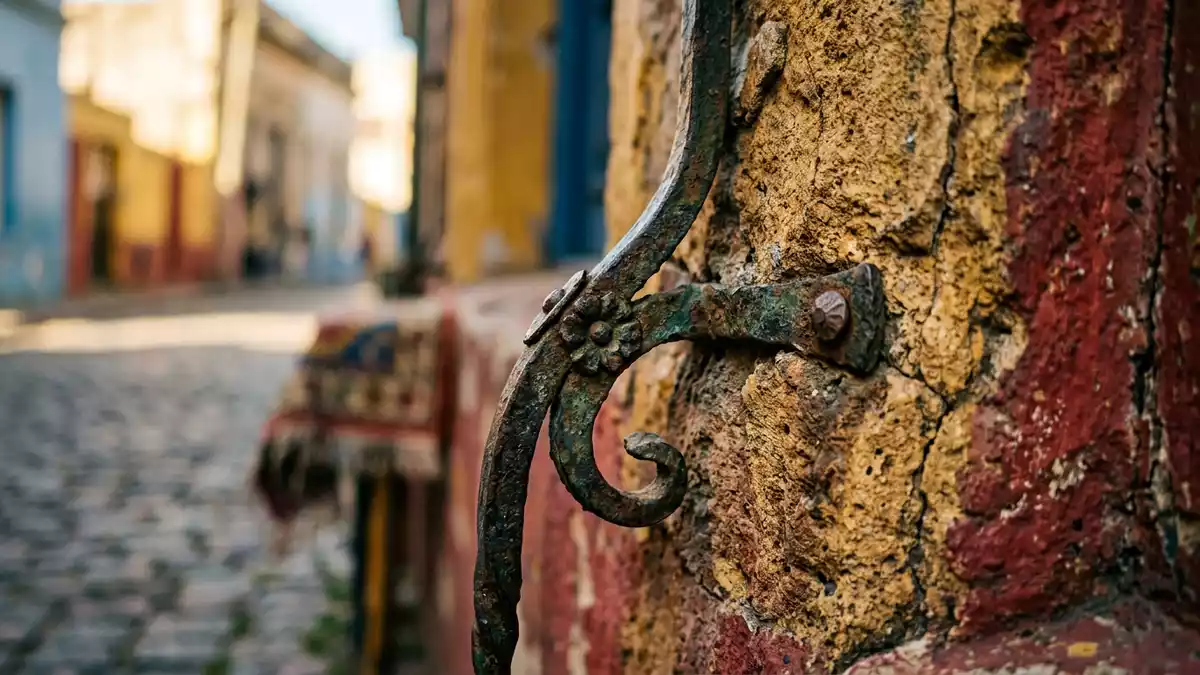
Caminito in Buenos Aires is a short alley in La Boca where corrugated?metal tenement houses have been turned into an open?air museum of colour and tango, rather than left as fading industrial fabric. The passage takes its name from a 1920s tango and runs close to the Riachuelo river in one of the city’s historic portside neighbourhoods, tying music, migration and the riverfront together in a single streetscape.
A painted alley turned street museum
Caminito is a pedestrian street and alley formally recognised as a street museum in La Boca, a neighbourhood in the south of Buenos Aires. The route follows the line of an old stream that once flowed towards the Riachuelo and later formed part of a railway alignment before being remodelled as a walkway.street museum in La Boca The walk itself is short, running for roughly 150 m (about 492 ft) between low buildings that lean inwards, so the entire museum can be seen as a single, continuous façade.
The houses lining Caminito are built from timber and sheet?metal panels, a form associated with the conventillos or tenements that once housed immigrant families arriving from Europe. Their cladding is painted in blocks of intense colour, bringing reds, yellows, blues and greens onto every surface in an arrangement that emphasises each window frame and balcony rather than hiding the patchwork construction.colourful conventillos of La Boca The alley is free of vehicles, and visitors move along paving stones with façades almost close enough to touch from each side.
From railway siding to open?air gallery
The present form of Caminito dates from the mid?twentieth century, when a disused railway siding and neglected passage were reworked as a museum street. The painter Benito Quinquela Martín, who grew up in La Boca, played a central role in transforming the space and organising its painting, sculpture and street art, turning a functional trackside strip into a place where local artists could show work on the walls and balconies.work of Benito Quinquela Martín In October 1959 Caminito was formally inaugurated as a named street, marking its shift from leftover railway land to a cultural landmark in the city.officially opened in 1959
The alley’s name comes directly from the tango “Caminito”, with music by Juan de Dios Filiberto and lyrics by Gabino Coria Peñaloza, composed in 1926.tango composed in 1926 The song’s melody was inspired in part by Filiberto’s walks through La Boca, and the connection between path and music is now anchored physically in the street. The alley is lined with references to tango culture: painted figures, small stages and balconies where musicians and dancers perform alongside the tin walls.
Caminito in the fabric of La Boca
Caminito sits close to the Riachuelo at the Vuelta de Rocha, within walking distance of the Bombonera football stadium and other La Boca landmarks.located near the Riachuelo and La Bombonera It lies in a riverside quarter where port activity, industry and housing once intermingled, and many façades nearby still show the same corrugated?metal construction found along the museum street. The river bends in a broad curve here, and Caminito occupies part of the inner side of that curve, so the alley and the water can be experienced as neighbouring elements.
The passage itself is laid out as a gentle bend rather than a straight line, with small side streets connecting to it at different angles. Balconies project above the paving, sometimes with life?size figures in costume mounted on the railings, while shopfronts, bars and galleries occupy the ground?floor spaces of the former tenements. Murals fill blind walls, and sculptural pieces are set on plinths along the route, so walking the alley becomes a sequence of framed views where colour, artwork and the patchwork architecture are always present.
Visiting Caminito: what travellers from Western Europe should know
- Caminito is in the La Boca district of Buenos Aires, south?east of the city centre, near the bend of the Riachuelo and close to the Bombonera football stadium.
- The museum street itself is a short pedestrian alley paved for walking, with steps and kerbs at its edges and narrow side streets connecting from surrounding blocks.
- La Boca is a low?lying riverside quarter, so streets around Caminito are relatively flat, but the close spacing of buildings and balconies creates a dense urban environment.
- Buenos Aires is in Argentina; the official language is Spanish and the currency is the Argentine peso.
Searching for Caminito on social platforms
These links open searches for Caminito on each platform.
Frequently asked questions about Caminito
Where is Caminito in Buenos Aires?
Caminito is a pedestrian alley and street museum in the La Boca neighbourhood in the south?east of Buenos Aires, close to the curve of the Riachuelo river.
What can visitors expect when walking Caminito?
Visitors walk a short paved alley lined with brightly painted corrugated?metal tenement houses, balconies with figures, murals and small galleries, forming an open?air museum of local culture.
What makes Caminito distinctive among Buenos Aires streets?
Caminito combines its origins as a railway siding with a mid?twentieth?century artistic transformation, linking tango, immigration and the riverside landscape in a single, colour?saturated passage.


