
Caminito and the painted street museum of La Boca
Published on 09/15/2026 at 16:52 | Editorial responsibility: Rafael Müller, Editor-in-Chief AD HOC NEWS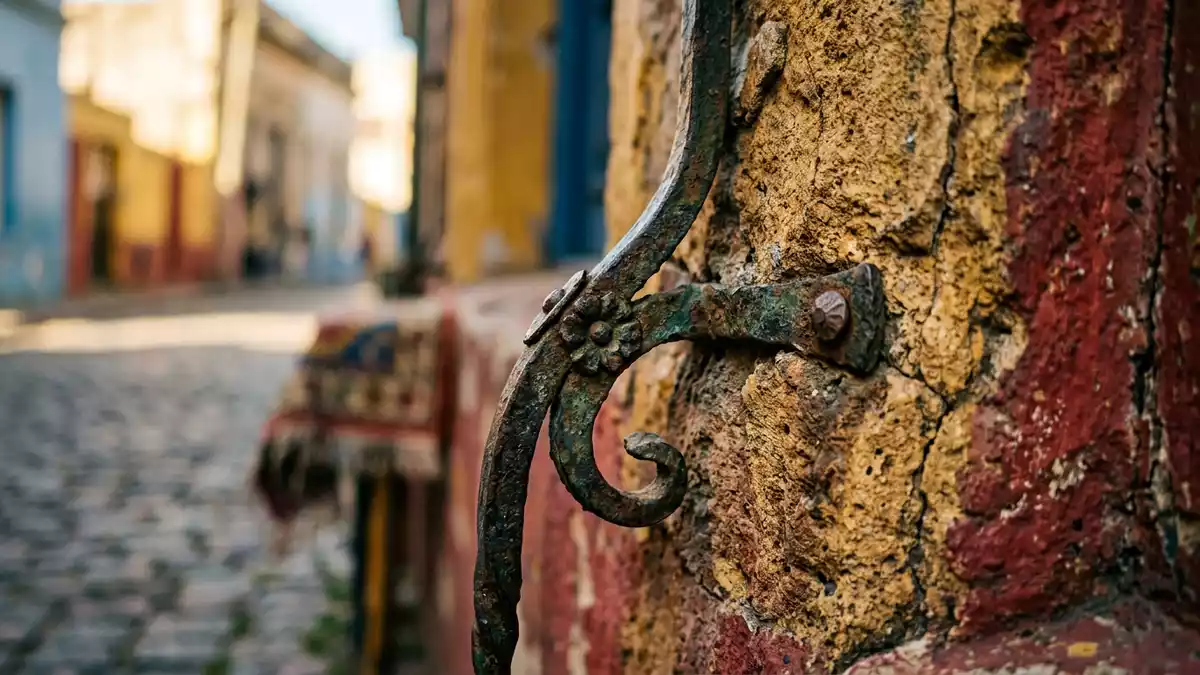
Caminito is a short street museum in La Boca, Buenos Aires, where wood, sheet metal and colour form the main attraction. Its present shape belongs to the mid-twentieth century, and Benito Quinquela Martín is central to that story.
Caminito’s painted frontage and street form
The street is lined with tenement buildings in different colours, with balconies, shutters and painted walls facing a narrow pedestrian route. The official English website describes Caminito as a street museum of painted houses in La Boca.
Its buildings are associated with the conventillos of the port district, the communal dwellings that became part of La Boca’s visual identity. Wood and sheet metal remain the dominant materials, giving the place a patchwork appearance across the facades.
La Boca, Benito Quinquela Martín and 1959
Caminito followed the line of an old stream that once reached the Riachuelo, then a railway route after the watercourse dried up. The area was largely abandoned after the railroad closed, and the street’s later form came from neighbourhood efforts and Benito Quinquela Martín.
The Buenos Aires city tourism site notes that Quinquela Martín, a painter from La Boca, used the tenements as his canvas and that the street was formally inaugurated in 1959. The tango Caminito, by Juan de Dios Filiberto and Gabino Coria Peñaloza, gave the place its name.
Caminito’s place in Buenos Aires culture
The street is tied to La Boca’s immigrant history, especially the Genoese communities that settled in the port district in the late nineteenth and early twentieth centuries. Their buildings, built from timber and metal, gave Caminito a material language that remains visible.
The open-air setting also makes room for art on walls, balconies and façades. That combination of painted architecture and public display is what gives Caminito its character as a street museum in Buenos Aires.
Visiting Caminito: what travellers from Western Europe should know
- Location and getting there. Caminito is in La Boca, in the south of Buenos Aires, near the Riachuelo. It is reached on foot within the neighbourhood and by taxi or bus from other parts of the city.
- What the terrain demands. The route is pedestrian and narrow, with uneven paving in places. The buildings sit close to the passage, so the street reads as a compact corridor rather than an open square.
- Nearby context. La Boca is the wider district around Caminito, and the Riachuelo marks the area’s river edge. The neighbourhood’s portside setting remains part of the scene.
- Local language and currency. The official language is Spanish and the currency is the Argentine peso.
Searching for Caminito on social platforms
These links open searches for Caminito on each platform.
Frequently asked questions about Caminito
Where is Caminito?
Caminito is in La Boca, a riverside district in Buenos Aires, Argentina. It sits near the Riachuelo and forms part of the city’s southern port area.
What does a visit involve?
The place is a pedestrian street museum with painted tenements, art displays and street-level activity. Its scale is compact, and the buildings stand close to the passage.
What makes Caminito distinctive?
Its identity comes from the mix of colour, communal architecture and tango association. The name links it to Juan de Dios Filiberto’s tango, while Benito Quinquela Martín shaped its later street museum form.


