
Caminito and the painted street museum of Buenos Aires
Published on 09/23/2026 at 03:13 | Editorial responsibility: Rafael Müller, Editor-in-Chief AD HOC NEWS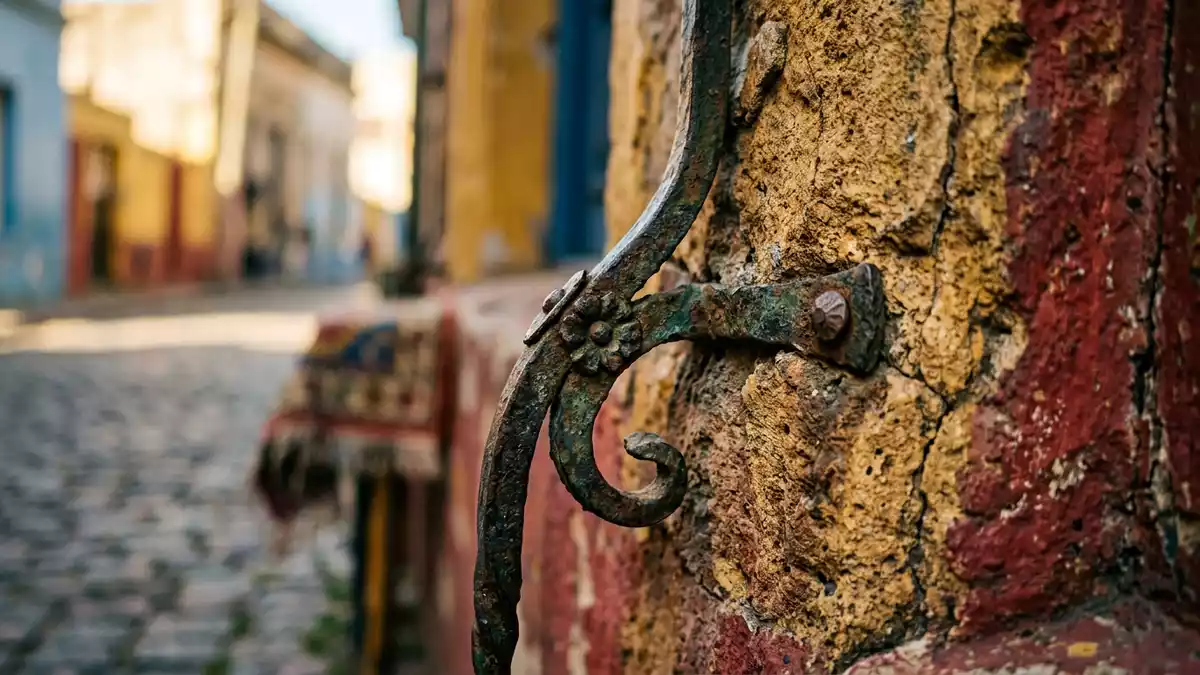
Caminito is a short pedestrian street museum in Buenos Aires, where corrugated-metal façades carry intense colours beside paintings, sculptures and public art. In the La Boca district, the street links the working history of the Riachuelo waterfront with the artistic legacy of Benito Quinquela Martín.
Caminito’s colour comes from La Boca’s port history
La Boca developed beside the Riachuelo, one of Buenos Aires’ historic port areas. Immigrant families, including many people from Genoa, lived in communal tenements known as conventillos. Corrugated metal became a familiar building material, and façades appeared in varied colours.
Caminito preserves that visual language across a compact pedestrian setting. Painted walls, exposed metal, balconies and uneven façades form a continuous street scene. The surfaces carry murals and artworks, while sculptures and reliefs occupy the spaces between buildings. The result combines architecture and art without separating them into galleries.
Benito Quinquela Martín and the street museum
The painter Benito Quinquela Martín was born in 1890 and became closely associated with La Boca. His paintings focused on the harbour, ships, dockworkers and the labour of the waterfront. His connection with the district also extended into local cultural life.
Neighbourhood residents and artists reshaped the neglected railway route during the 1950s. Quinquela Martín painted the surrounding tenements and encouraged the use of strong colours across the street. Caminito received formal recognition as an open-air street museum in 1959, linking the place with a distinctive chapter in Buenos Aires cultural history. Buenos Aires’ street museum remains associated with this transformation.
The tango name and the open-air collection
The name Caminito comes from the tango “Caminito”, composed by Juan de Dios Filiberto and Gabino Coria Peñaloza. The tango dates from 1926, while the street museum belongs to the cultural renewal of the following decades.
That relationship gives the street several overlapping identities. Caminito is an urban artwork, a record of immigrant housing, a tribute to La Boca’s painter and a place connected with Argentine tango. Its exhibits are not confined to one building. They appear on façades, along the pedestrian route and in the relationship between painted architecture and the public street. The tango connection gives the name a cultural meaning beyond its literal translation, “little path”.
The route also follows an older line through the district. A stream once ran towards the Riachuelo, and the same corridor became part of a railway route. After the railway closed, the passage acquired its present form through neighbourhood initiatives and artistic work. The 1959 street museum records the date when Caminito entered Buenos Aires’ cultural map as a formal public landmark.
Visiting Caminito: what travellers from Western Europe should know
- Caminito lies in La Boca, beside the Riachuelo in Buenos Aires. It is reached through the city’s street network, with the surrounding district forming part of the visit.
- The route is pedestrian and exposed. Painted façades, metal walls, balconies, sculptures and murals line the street at close range.
- The official language is Spanish and the currency is the Argentine peso.
- Entry requirements depend on your nationality; UK travellers can check the FCDO travel advice at gov.uk/foreign-travel-advice, Irish travellers the Department of Foreign Affairs at ireland.ie.
Searching for Caminito on social platforms
These links open searches for Caminito on each platform.
Frequently asked questions about Caminito
Where is Caminito?
Caminito is in La Boca, a district of Buenos Aires beside the Riachuelo. Its setting is connected with the city’s historic port and immigrant communities.
What can visitors expect at Caminito?
The pedestrian street contains brightly painted façades, corrugated-metal buildings, murals, sculptures and reliefs. Art appears across the public route instead of inside a single enclosed museum.
What makes Caminito distinctive?
Its identity combines La Boca’s port history, Benito Quinquela Martín’s artistic influence and the tango named “Caminito”. The street museum was formally recognised in 1959.


