Bwindi Impenetrable National Park, an ancient gorilla forest in Uganda
Published on 09/04/2026 at 07:41 | Editorial responsibility: Rafael Müller, Editor-in-Chief AD HOC NEWS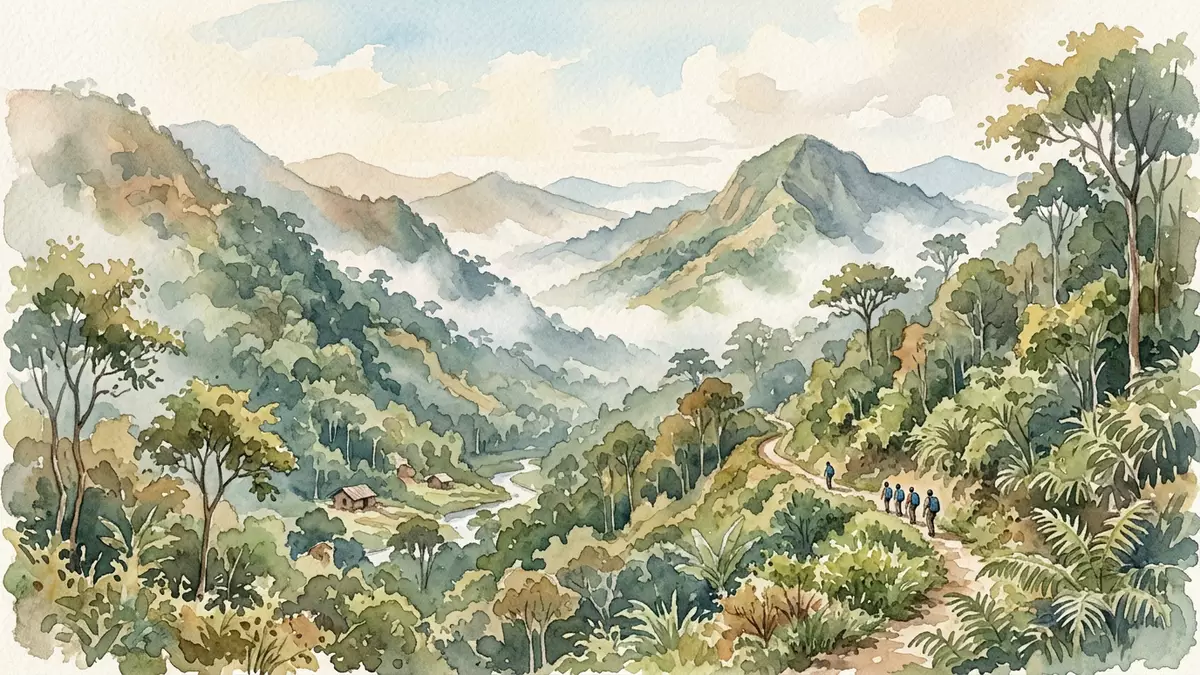
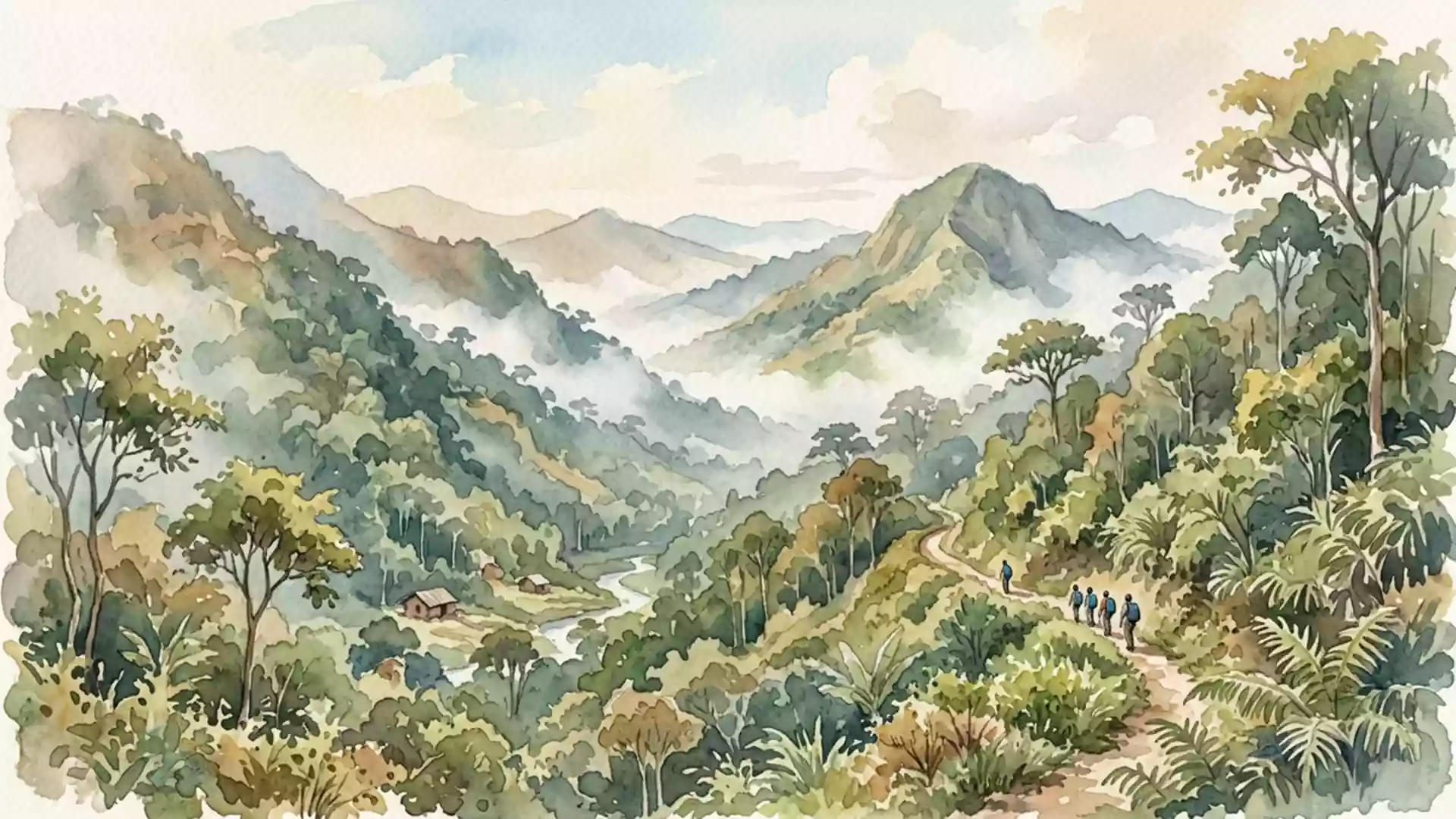
Bwindi Impenetrable National Park in south-western Uganda is an ancient block of montane rainforest tucked into the Kigezi Highlands near Kabale, where dense vegetation, steep ridges and mist-filled valleys create one of Africa’s most distinctive forest landscapes. In this compact area of protected Afromontane forest, a rich web of plant and animal life includes mountain gorillas that move through tangled slopes under towering trees, giving the park a rare combination of geological drama, biological richness and primate habitat in a single place.
An ancient forest on the edge of the Western Rift Valley
The core of Bwindi Impenetrable National Park is its rainforest, an Afromontane lowland and montane forest that has been evolving for tens of thousands of years on the edge of the Western Rift Valley. The park lies in the highest parts of the Kigezi Highlands, where uplift along the rift has left a landscape of steep hillsides, narrow valleys and irregular ridges covered by evergreen forest.The park lies in southwestern Uganda on the border with the Democratic Republic of Congo and its underlying geology includes Precambrian shale, quartzite, schist and granite that weather into varied soils beneath the canopy.
The protected area covers a little over 320 km² (about 124 sq mi) of forest, a size that allows whole catchments of streams and valleys to remain cloaked in vegetation.Bwindi Impenetrable National Park is described as a 321 km² protected area of Afromontane rainforest that retains lowland forest extending into the montane belt. Within this area, more than 160 tree species and over 100 fern species form multiple layers of canopy, understorey and ground cover, creating an environment where trunks, lianas and epiphytes form a continuous fabric and forest edges give way quickly to closed cover.UNESCO’s description of Bwindi highlights its exceptional biodiversity of trees, ferns, birds and butterflies, all rooted in this long-lived forest system.
Mountain gorillas in a dense, shared habitat
Among the many animals in Bwindi Impenetrable National Park, the mountain gorillas are the most closely associated with the place. The park shelters a substantial proportion of the global population of Gorilla beringei beringei, the mountain gorilla subspecies, which lives only in a small arc of high-altitude forests in Uganda, Rwanda and the Democratic Republic of Congo.Estimates from conservation organisations describe approximately 459 mountain gorillas in Bwindi, representing nearly half of the world’s remaining mountain gorillas. Family groups led by silverbacks move along slopes and ridgelines, feeding on leaves, shoots and stems in glades and clearings inside the forest.
Bwindi’s primate community extends beyond gorillas, making the park significant for research into forest-dwelling apes. It is part of the Bwindi–Sarambwe ecosystem, a forest block that has developed for over 25,000 years and now supports a range of species, including chimpanzees, colobus monkeys and other primates alongside forest antelope, birds and insects.Descriptions of Bwindi emphasise that the park is one of Africa’s most biologically diverse rainforests, with a long evolutionary history. The coexistence of large-bodied primates, smaller mammals and an exceptional diversity of birds in the same habitat illustrates how the park’s dense vegetation and varied terrain provide niches from valley floor to ridge crest.
A World Heritage landscape in the Kigezi Highlands
Bwindi Impenetrable National Park holds formal international recognition as a natural World Heritage Site. In 1994, the United Nations Educational, Scientific and Cultural Organization inscribed the park on the World Heritage List under criteria (vii) and (x), recognising both its outstanding natural beauty and its importance for conserving biological diversity.The UNESCO listing records Bwindi as World Heritage Site number 682, designated in 1994 for its superlative natural phenomena and key habitats for biodiversity. This status places the forest within a small group of protected areas in Uganda recognised at a global level.
The park’s position within the districts of Kabale, Kisoro and Rukungiri in south-west Uganda anchors it in a wider cultural and agricultural landscape of terraced hillsides and rural settlements.World Heritage nomination documents situate Bwindi in the Kigezi Highlands within these districts, on the edge of the western rift valley. From its forest interior, views open where clearings or ridgelines allow sightlines across valleys, revealing sharp transitions between dense protected forest and cultivated slopes beyond the boundary. That juxtaposition between a continuous canopy and human-shaped hills is part of what gives visits to Bwindi their distinctive character.
Visiting Bwindi Impenetrable National Park: what travellers from Western Europe should know
- Bwindi Impenetrable National Park lies in south-western Uganda in the Kigezi Highlands; Kabale is a major town to the south-east and provides a common regional reference point for reaching the forest.
- The terrain inside the park is steep and irregular, with ascents and descents on forest paths that can involve long stretches on foot over uneven ground, exposed roots and damp soil.
- The park sits at elevations where mist, cloud and rainfall are regular features of the climate, so trails and vegetation can remain wet and surfaces may be slippery in shaded sections.
- Bwindi lies near Uganda’s border with the Democratic Republic of Congo, and visits therefore combine forest walking with travel through rural highland districts where local road conditions and topography shape journeys.
- The official language of Uganda is English and the currency is the Ugandan shilling; entry requirements depend on your nationality, UK travellers can check the FCDO travel advice at gov.uk/foreign-travel-advice, Irish travellers the Department of Foreign Affairs at ireland.ie.
Searching for Bwindi Impenetrable National Park on social platforms
These links open searches for Bwindi Impenetrable National Park on each platform.
Frequently asked questions about Bwindi Impenetrable National Park
Where is Bwindi Impenetrable National Park?
Bwindi Impenetrable National Park is in south-western Uganda in the Kigezi Highlands, on the border with the Democratic Republic of Congo and near highland towns such as Kabale.
What should visitors expect on a visit to Bwindi?
Visitors encounter steep forest terrain, mist-laden valleys and dense vegetation, with long stretches on foot along narrow paths through rainforest that supports mountain gorillas and many other species.
What makes Bwindi Impenetrable National Park distinctive among African forests?
The park combines an ancient Afromontane rainforest, a substantial population of mountain gorillas and formal recognition as a natural World Heritage Site, all contained in a relatively compact highland protected area.