
Burano’s painted facades and lace in the Venetian lagoon
Published on 09/05/2026 at 17:05 | Editorial responsibility: Rafael Müller, Editor-in-Chief AD HOC NEWS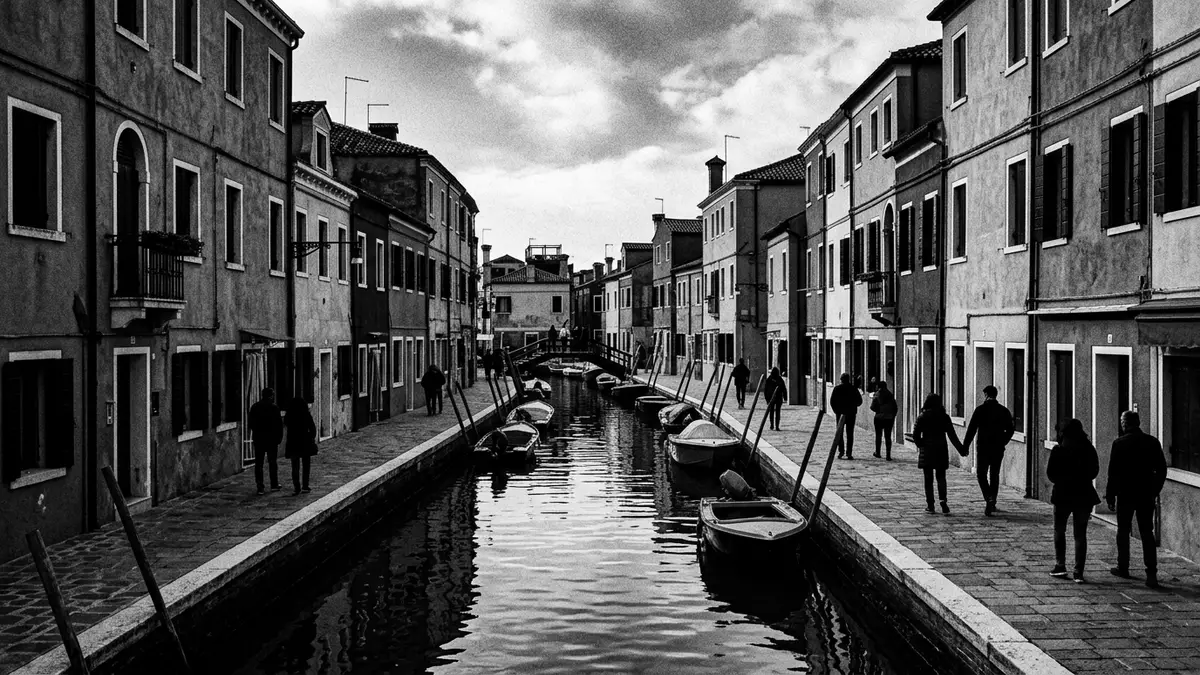
Burano is a small island in the northern part of the Venetian Lagoon, near Venedig in Italy, where bright painted facades line narrow canals and lace has been worked for centuries.
Colour along the canals
Burano is formed by a group of low-lying islands linked by bridges, with canals running between rows of simple houses that once belonged mainly to fishing families.A group of linked islands means that short walks cross small bridges and pass quays where working boats can still be seen moored along the water.
The facades are painted in saturated colours that distinguish one house from the next, creating strong contrasts when viewed along a canal or through a side lane.Coloured fishermen’s houses are not treated as private decoration alone, as repainting a house involves permission from the local administration, which sets the range of permitted shades for each frontage.Regulated colours mean canal-facing fronts, side alleys and small courtyards share a controlled palette rather than random paintwork.
Lace and a working island
Burano is known for needle lace, a craft that developed into a recognised speciality of the island by the sixteenth century, with fine work produced for wealthy clients across Europe.Lacemaking on Burano complemented fishing and salt-related work, adding another layer of skilled manual labour to this small community in the lagoon.
Examples of historic lace and explanations of the techniques are presented in the Museo del Merletto on Piazza Baldassarre Galuppi, where the development of the craft and its role in island life are documented.The Lace Museum gathers work from different periods, showing how needle lace from Burano formed part of church ornament, formal clothing and domestic textiles.
Burano in the wider lagoon
Burano lies in the northern part of the Venetian Lagoon, in shallow waters marked by navigation posts and channels leading back towards the historic centre of Venedig.Its position in the northern lagoon places it within sight of other low islands and marshes that share the same tidal environment.
Fishing has long shaped Burano, and nets, small boats and equipment can still be found along some of its quays, reflecting the island’s continuing connection with lagoon waters.A fishing community sits alongside streets lined with painted houses, so that working vessels and craft linked to tourism share the same canals.
Visiting Burano: what travellers from Western Europe should know
- Burano is in the northern sector of the Venetian Lagoon, reached by boat services from the historic centre of Venedig, including routes that pass the island of Murano.
- The island is compact and level, with narrow streets, small bridges over canals and paved quays, making walking the primary way to move between its painted houses and squares.
- Burano forms part of Italy; the official language is Italian and the currency is the euro.
Searching for Burano on social platforms
These links open searches for Burano on each platform.Frequently asked questions about Burano
Where is Burano in relation to Venedig?
Burano is in the northern part of the Venetian Lagoon, reached by boat from the historic centre of Venedig and lying near other lagoon islands.
What can visitors expect on a walk through Burano?
Visitors find rows of painted houses along canals, small bridges linking the island sections, and streets that pass fishing quays and squares with lace-related buildings.
What makes Burano distinctive among lagoon islands?
The combination of regulated strong house colours, a long-established needle lace tradition and its role as a fishing community gives Burano a character distinct from its neighbours.


