
Burano’s colours and lace in the Venetian lagoon
Published on 09/22/2026 at 03:27 | Editorial responsibility: Rafael Müller, Editor-in-Chief AD HOC NEWS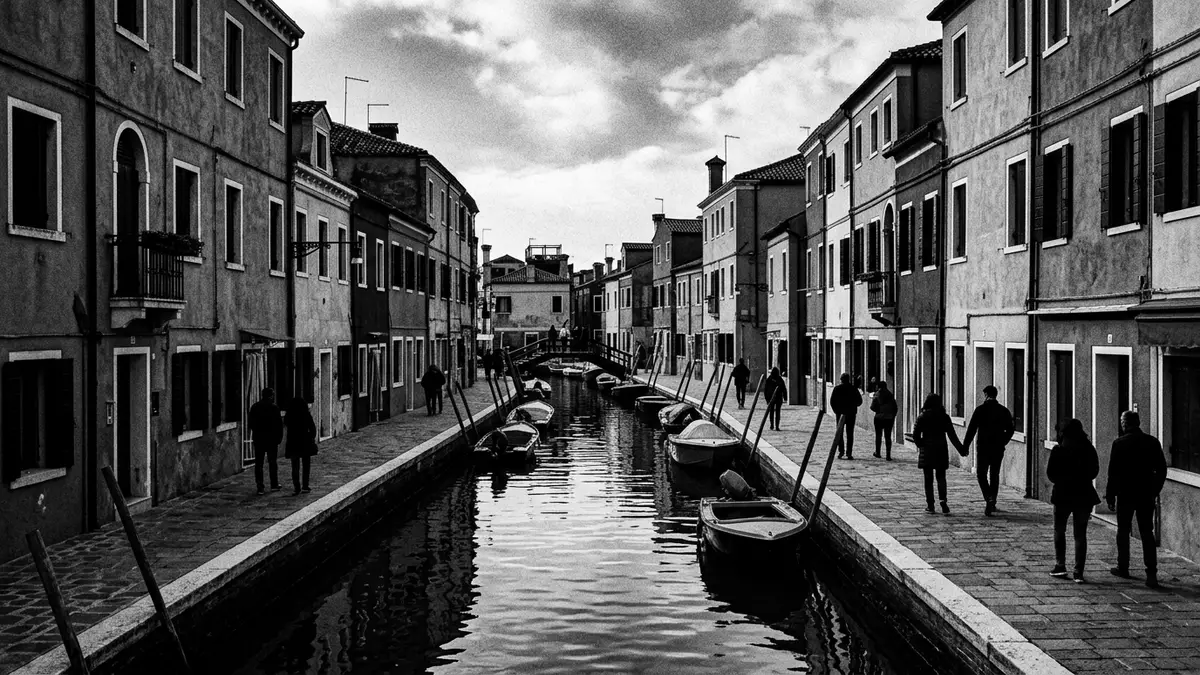
Burano is a small island settlement in the Venetian lagoon near Venedig, known for its brightly painted houses and a long tradition of handmade lace. These two visible threads – colour and craft – still define the island’s streets and canals and give Burano a character distinct from other lagoon communities.
An island of canals and clustered houses
Burano forms part of the northern lagoon of Venice, reached by boat across shallow tidal channels that separate it from the city’s historic centre. The settlement itself occupies a compact area cut by canals, with houses and small squares clustered along the water in a dense, low-rise pattern typical of lagoon villages. Burano is described as a fishing island, and its early development was linked to fishing and related lagoon trades such as salt production, which supported the economy of the wider Venetian Republic.fishing island The island lies close to Mazzorbo and other small lagoon islands, and together they form a distinctive northern outpost of Venice’s urban world.Venetian lagoon
Historically Burano grew from a refuge at the edge of the lagoon into a recognised community within the structures of Venice. By the medieval and early modern periods its inhabitants were supplying fish to Venetian markets and contributing to military campaigns organised by the Republic.Buranese men in defence Over time the island’s administration was adjusted several times, and by 1924 Burano was formally integrated into the municipality of Venice, a step that followed earlier debates about its status and relationship with the city’s council.part of the municipality of Venice
Colours along every canal
The most striking visual feature of Burano is the intense, varied colouring of its houses, which line the canals and narrow alleys in strong reds, blues, yellows and greens. This painted architecture is so consistent that entire streets appear as continuous bands of solid colour reflected in the water, giving even simple fishermen’s houses a graphic presence in the flat lagoon landscape.rainbow-painted houses The colours form clear boundaries between properties, and the effect is especially visible at canal intersections and on the main square, where several hues meet in a small space.
Local explanations tie these colours to Burano’s fishing heritage, describing how returning crews used bold paints to distinguish their homes through lagoon fog.painted bright so fishermen could spot their houses Whatever their origin, the colours now form part of an informal system overseen by municipal authorities, with residents required to follow local rules when repainting to keep the overall palette coherent.permission from the local government The visual rhythm of colour and canal, roofline and mooring post, makes Burano instantly recognisable in photographs and in person.
Lace, labour and Piazza Galuppi
Alongside colour, lace is the craft most closely associated with Burano. Needle lace from the island gained prominence in the sixteenth century, when women here developed intricate techniques that produced fine textiles sought by courts across Europe.rose in importance in the 16th century This delicately worked lace, known as punto in aria – “stitch in the air” – is made with needle and thread without a supporting fabric, a method that demands considerable time and skill.punto in aria needle lace Burano lace became a prized luxury item, contributing to the island’s reputation far beyond the lagoon.
The history of this craft includes periods of decline and revival. Lace production fell in the eighteenth century but was renewed in 1872 with the opening of a lacemaking school, part of a wider effort to preserve and formalise techniques that had been passed down within families.school of lace in 1872 The island’s main square, Piazza Galuppi, named for the composer Baldassare Galuppi who was born on Burano in 1706, hosts the Museo del Merletto (Lace Museum), where historical pieces and tools illustrate this work and its place in local life.Museo del Merletto on Piazza Galuppi While machine-made lace is widespread, a small number of artisans on Burano still practise traditional needle techniques, continuing a craft that once shaped the island’s fortunes.
Visiting Burano: what travellers from Western Europe should know
- Burano lies in the northern Venetian lagoon north of Venedig and is reached by vaporetto boat services that connect it with Fondamente Nove and neighbouring islands such as Murano and Mazzorbo.
- The island is car-free, and movement takes place on foot along narrow alleys and canal-side pavements, with several bridges linking different parts of the settlement across the waterways.
- Burano forms part of Italy, where the official language is Italian and the currency is the euro.
- Entry requirements depend on your nationality; UK travellers can check the FCDO travel advice at gov.uk/foreign-travel-advice, Irish travellers the Department of Foreign Affairs at ireland.ie.
Searching for Burano on social platforms
These links open searches for Burano on each platform.
Frequently asked questions about Burano
Where is Burano in relation to Venedig?
Burano is an island in the northern Venetian lagoon, situated north of Venedig and reached by vaporetto connections from the city and neighbouring islands.
What can visitors expect on a walk through Burano?
Visitors encounter canals bordered by closely spaced houses painted in strong colours, interspersed with small squares, bridges and workshops linked to fishing and lace craft.
What makes Burano distinctive among lagoon settlements?
Burano combines a centuries-old tradition of handmade needle lace with an intensely colourful streetscape of painted houses, giving its compact fishing community a particularly vivid appearance.


