
Bulguksa, a stone terrace temple above Gyeongju
Published on 08/16/2026 at 14:49 | Editorial responsibility: Rafael Müller, Editor-in-Chief AD HOC NEWS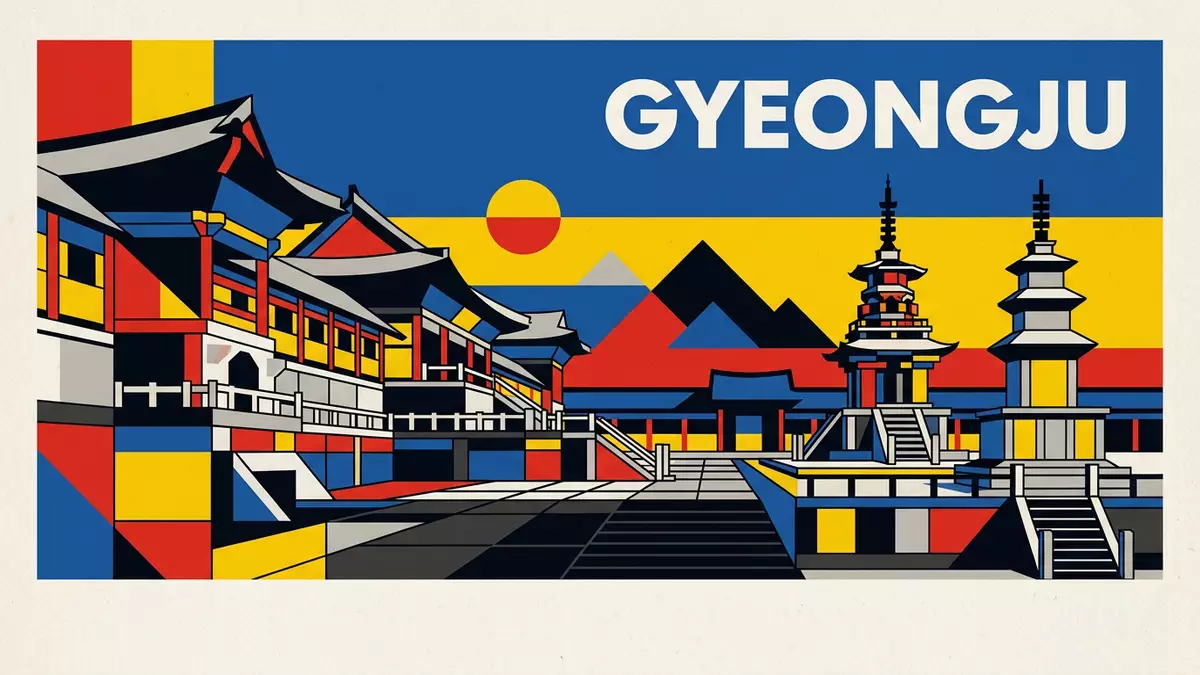
Bulguksa is a Buddhist temple complex on the slopes of Mt Tohamsan above Gyeongju in South Korea, built on broad stone terraces that step up the mountain. The site is rooted in the Silla kingdom and in its present form dates to the eighth century, when the temple was completed under the name “Temple of the Buddha Land”.
Stone terraces and wooden halls
Bulguksa occupies a series of raised stone platforms cut into the hillside, with wooden temple buildings arranged in groups across them. The complex forms the head temple of the Jogye Order in the 11th district of Korean Buddhism, giving it an active religious role alongside its historic significance.Buddhist temple complex The whole ensemble on Tohamsan is recognised as Historic and Scenic Site No. 1 by the South Korean government, a formal status that points to both its architecture and its landscape setting.historic and scenic site
Visitors arriving at Bulguksa first encounter long flights of stone steps and retaining walls that lead up towards the inner courtyards. On the main terrace, the temple’s wooden halls stand on the masonry base with tiled roofs and painted timber framing typical of Silla and later Korean Buddhist architecture. The stone and timber together give the complex a layered appearance: heavy terraces below, lighter pavilions above.
Pagodas, bridges and national treasures
Within the central courtyard in front of the main hall, two stone pagodas, Dabotap and Seokgatap, face one another across the paved surface. Seokgatap, a Silla-era stone pagoda designated as National Treasure No. 21, stands a little under 11 m (36 ft) high, directly opposite the more elaborate Dabotap.Seokgatap stone pagoda Together with the Cheongun-gyo, or Blue Cloud Bridge, and gilt-bronze Buddha statues inside the halls, they form part of a group of national treasures housed within Bulguksa.national treasures at Bulguksa
The Blue Cloud Bridge is one of the stone stair-and-bridge structures that link the lower approach to the temple’s main terrace, turning the ascent into a sequence of platforms and gateways rather than a single climb. Elsewhere in the complex, further bridges and stairways connect sub-terraces and side halls, so that movement through Bulguksa is always along and across stonework that has been carefully laid out. The pagodas, bridges and retaining walls give the temple a strong geometric order, while the timber halls and courtyards soften it.
Silla heritage and UNESCO recognition
Bulguksa stands close to the ancient Silla capital area, and its design reflects the Buddhist art of the Unified Silla period. The temple complex is divided into three main precincts: Birojeon, the Vairocana Buddha Hall; Daeungjeon, the Hall of Great Enlightenment; and Geungnakjeon, the Hall of Supreme Bliss, each on its own terrace within the wider site.three main precincts The ensemble of halls and terraces was completed in 774 under the Silla royal court, embedding Bulguksa firmly in eighth-century religious architecture.completed in 774
Bulguksa and the nearby Seokguram Grotto together form a religious complex that is inscribed on the UNESCO World Heritage List. The listing, made in 1995, recognises both the temple’s architecture on stone terraces and the grotto’s sculpted Buddha, linked by their Silla-era origins.UNESCO World Heritage listing Modern restoration has returned Bulguksa’s buildings and stone structures to a condition that makes the spatial plan legible again, even though the complex is smaller than in its earliest form.restored temple complex
Visiting Bulguksa: what travellers from Western Europe should know
- Bulguksa stands on Mt Tohamsan on the outskirts of Gyeongju, reached by road from the city and by buses that run to the temple area from local terminals.
- The temple complex is built on several stone terraces connected by staircases and bridges, so a visit involves climbing multiple flights of steps between the different courtyards.
- Seokguram Grotto lies further up Mt Tohamsan above Bulguksa, and the route between the temple and the grotto follows mountain roads and paths through wooded terrain.
- The official language is Korean and the currency is the South Korean won.
- Entry requirements depend on your nationality; UK travellers can check the FCDO travel advice at gov.uk/foreign-travel-advice, Irish travellers the Department of Foreign Affairs at ireland.ie.
Searching for Bulguksa on social platforms
These links open searches for Bulguksa on each platform.Frequently asked questions about Bulguksa
Where is Bulguksa?
Bulguksa is on Mt Tohamsan in Jinhyeon-dong near Gyeongju, in North Gyeongsang Province in South Korea, above the former Silla capital region.
What can visitors expect on a visit?
A visit to Bulguksa involves walking up stone terraces and staircases, moving through several courtyards with wooden halls, stone pagodas, bridges and Buddha statues.
What makes Bulguksa distinctive among Korean temples?
Bulguksa is distinctive for its eighth-century Silla stone terrace layout, its pair of pagodas facing each other in the main courtyard, and its UNESCO-listed link with Seokguram Grotto.


