
Budai Var and the layered palace above the Danube
Published on 09/24/2026 at 02:50 | Editorial responsibility: Rafael Müller, Editor-in-Chief AD HOC NEWS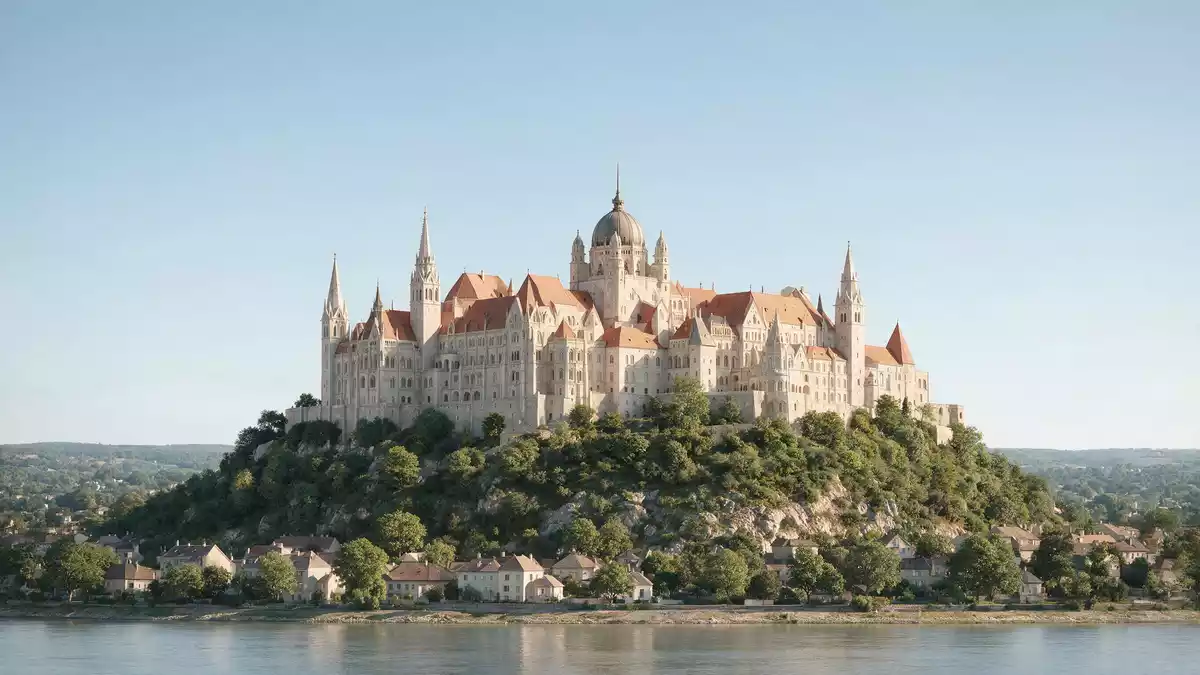
Budai Var occupies the southern end of Castle Hill above the western bank of the Danube in Budapest. The palace combines medieval foundations, an eighteenth-century Baroque core and twentieth-century reconstruction, creating a complex where several architectural periods remain visible.
Budai Var: a royal residence on Castle Hill
The first royal residence on Castle Hill was built under King Béla IV between 1247 and 1265. The castle formed part of the medieval history of the Hungarian monarchy, and its position above the Danube remains central to the character of the district.
The Gothic palace expanded under King Sigismund of Luxembourg during the early fifteenth century. Matthias Corvinus then brought Renaissance culture to Buda, with Italian artists, craftsmen and humanists connected to his court. Fragments of that period survive in the archaeological remains and collections associated with the palace.
From Gothic palace to Baroque complex
The medieval palace was destroyed during the siege of Buda in 1686. A new Baroque palace followed in the eighteenth century, with plans associated with Jean Nicolas Jadot and Nicolò Pacassi. Construction began in 1749, and the palace was completed in 1769.
The building changed function several times. Maria Theresa gave part of the palace to the Sisters of Loreto, and the complex housed the University of Nagyszombat from 1777. In the nineteenth century, it became the residence of the Habsburg palatines before extensive enlargement under Miklós Ybl and Alajos Hauszmann.
Budai Var after war and reconstruction
The palace suffered severe destruction during the siege of Budapest in 1944–45. Post-war reconstruction exposed medieval remains and restored selected Gothic elements, while the surviving palace façades took a simplified form.
Budai Var became part of the UNESCO World Heritage property inscribed in 1987, together with the Banks of the Danube, the Buda Castle Quarter and Andrássy Avenue. The World Heritage ensemble records the relationship between Buda, Pest, the river and the city’s historic architecture.
The palace contains the Hungarian National Gallery, the Budapest History Museum and the National Széchényi Library. The Royal Palace complex also includes courtyards, terraces, sculptures and surviving medieval spaces.
Visiting Budai Var: what travellers from Western Europe should know
- Budai Var stands on Castle Hill in District I, on Budapest’s Buda side. The Castle Hill Funicular connects the hill with Clark Ádám Square and the Széchenyi Chain Bridge.
- The palace occupies the southern end of the hill. The Castle Quarter continues northwards with Matthias Church, Fisherman’s Bastion and historic streets.
- The site includes steep approaches, stairs, cobbled surfaces and archaeological sections. Comfortable footwear suits the changing ground between courtyards, terraces and streets.
- The official language is Hungarian and the currency is the Hungarian forint.
Searching for Budai Var on social platforms
These links open searches for Budai Var on each platform.
Frequently asked questions about Budai Var
Where is Budai Var?
Budai Var stands on Castle Hill above the western bank of the Danube in Budapest. The palace occupies the southern end of the historic Castle Quarter.
What can visitors expect at Budai Var?
The complex includes palace courtyards, terraces, museums, reconstructed medieval spaces and views towards the Danube. Nearby streets contain Matthias Church and Fisherman’s Bastion.
What makes Budai Var distinctive?
Its architecture combines medieval Gothic remains, Renaissance associations, an eighteenth-century Baroque palace and post-war reconstruction. The layered form reflects Budapest’s changing royal, political and cultural history.


