
Buckingham Palace and the ceremonial heart of London
Published on 09/08/2026 at 06:32 | Editorial responsibility: Rafael Müller, Editor-in-Chief AD HOC NEWS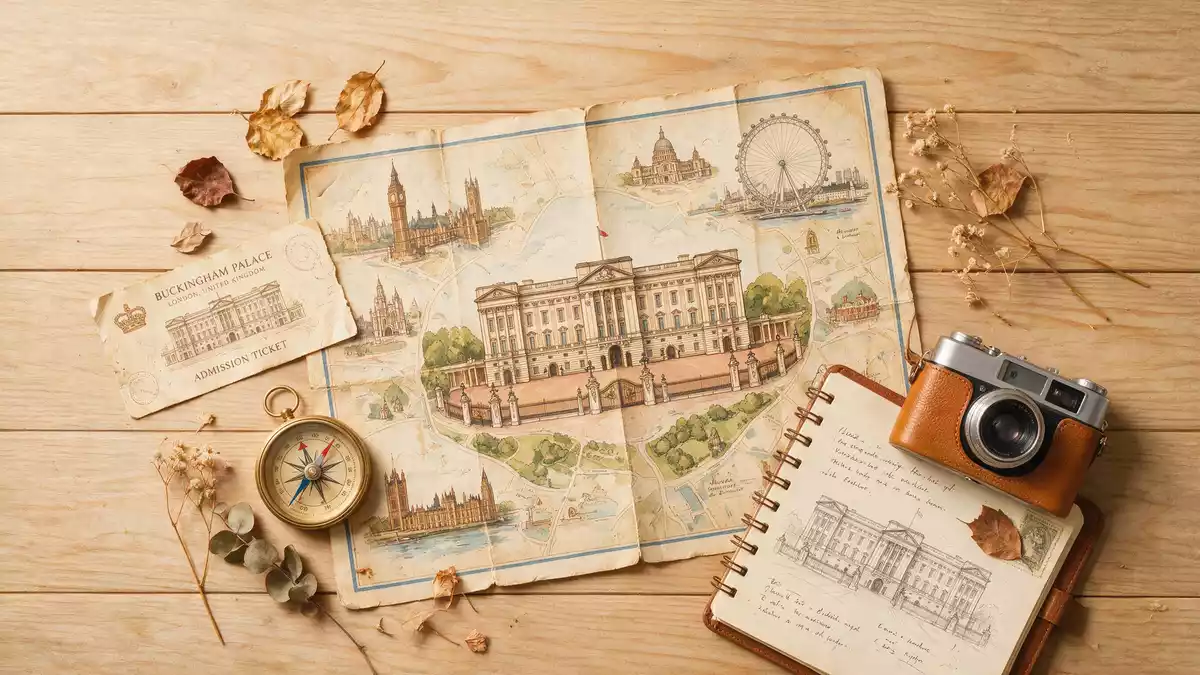
Buckingham Palace is the royal residence that anchors the ceremonial core of London, facing the processional route of The Mall and edged by St James’s Park in Westminster. Built up from an eighteenth?century townhouse into a royal palace in the nineteenth century, it became the official London residence of the British monarch on the accession of Queen Victoria in 1837.
The royal headquarters behind the famous façade
From the outside, Buckingham Palace presents a long, formal frontage to The Mall, with the Victoria Memorial standing prominently in the forecourt and Green Park and St James’s Park framing the setting. Behind that frontage lies a quadrangular plan of ranges and courtyards that together form the working headquarters of the monarchy, housing state rooms, offices and private apartments.working headquarters of the Monarch The building occupies a site in the City of Westminster, at the western end of The Mall, within walking distance of Trafalgar Square and Westminster Abbey.western end of The Mall
The palace serves as the administrative centre of the British sovereign, hosting state occasions, investitures and receptions in a suite of formal state rooms, while remaining a functioning residence.administrative headquarters of the monarch The complex contains hundreds of rooms arranged around its courtyards, including state rooms used for ceremonial entertaining, offices supporting royal duties and accommodation for members of the Royal Household.rooms where ceremonial duties are performed
From Buckingham House to Victorian palace
The story of Buckingham Palace begins with Buckingham House, a large townhouse built for the Duke of Buckingham and later acquired by King George III in the eighteenth century as a private residence for Queen Charlotte.Buckingham House as earlier residence In the early nineteenth century, George IV embarked on a major transformation of the house into a palace, commissioning architect John Nash to extend and remodel the building, adding new wings and grand state apartments.George IV commissioned John Nash
Further works followed under subsequent monarchs, including the completion of the principal east front and the central balcony facing The Mall in the mid?nineteenth century, associated with architect Edward Blore.east front and balcony added When Queen Victoria moved into Buckingham Palace in 1837, it became the official London residence of the British monarch, marking its transition from private royal home to the seat of the court and a stage for public ceremony.became the official seat of the court
Setting, parks and ceremonial routes
The location of Buckingham Palace places it at the centre of London’s royal and political geography, bordered by the greenery of St James’s Park and Green Park and linked by The Mall to Admiralty Arch and Trafalgar Square.The Mall and royal parks St James’s Park lies immediately to the south, with its lake and tree?lined paths offering views of the palace framed by water and foliage, while Green Park extends to the north, providing open lawns and avenues of trees.
This landscaped setting emphasises the palace’s role along formal routes used for ceremonial processions, including royal parades that move along The Mall towards the forecourt. The surrounding district of Westminster brings government buildings, royal residences and historic landmarks into close proximity, so that a walk between the palace, St James’s Palace and the nearby parks traces a compact circuit through Britain’s constitutional and monarchical centre.located in Westminster with royal parks
Visiting Buckingham Palace: what travellers from Western Europe should know
- Buckingham Palace stands at the western end of The Mall in central London, within the City of Westminster, close to landmarks such as Trafalgar Square and Westminster Abbey.
- The approaches from The Mall and from Buckingham Palace Road are broad and paved, with the forecourt and surrounding pavements generally level.
- Green Park and St James’s Park lie beside the palace and offer level paths and open spaces that form part of many walking routes through the area.
- The official language is English and the currency is the pound sterling.
Searching for Buckingham Palace on social platforms
These links open searches for Buckingham Palace on each platform.
Frequently asked questions about Buckingham Palace
Where is Buckingham Palace in London?
Buckingham Palace is in the City of Westminster, at the western end of The Mall, beside St James’s Park and near Green Park.
What can visitors expect around the palace?
Visitors find a grand façade facing the Victoria Memorial, broad ceremonial routes, level pavements and nearby parks that offer views of the palace across trees and water.
What makes Buckingham Palace distinctive among royal residences?
It combines a formal urban frontage and landscaped park setting with its role as the official London residence and administrative headquarters of the British monarch.


