
Buckingham Palace and the ceremonial heart of London
Published on 08/30/2026 at 13:06 | Editorial responsibility: Rafael Müller, Editor-in-Chief AD HOC NEWS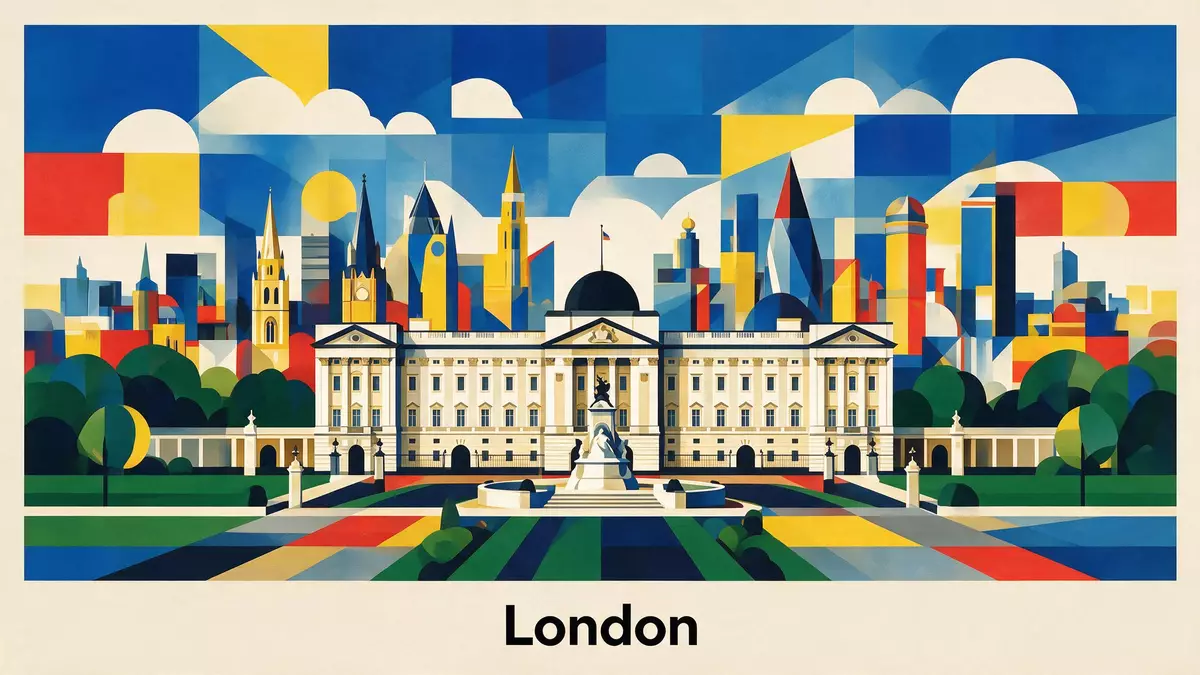
Buckingham Palace in London stands as the principal London residence and working headquarters of the British monarch, formed over three centuries from a Georgian townhouse into a vast neoclassical palace.principal London residence Its broad east front, facing The Mall and the Victoria Memorial, gives the building a formal urban presence that defines the ceremonial centre of Westminster.east front facing The Mall
From Buckingham House to royal palace
The story begins in the early eighteenth century with Buckingham House, a private townhouse built around 1703 for John Sheffield, the Duke of Buckingham, on land west of St James’s Palace.Buckingham House built c.1703 In 1761, King George III purchased this house for his wife, Queen Charlotte, as a family residence close to the older court, and it became known as the Queen’s House.purchased by George III in 1761
The conversion from townhouse to palace gathered pace in the 1820s under King George IV, who instructed architect John Nash to transform the house into a grand royal residence with new wings and state apartments.John Nash expansion in 1820s Later in the nineteenth century, architect Edward Blore added further wings around a central courtyard, while in the early twentieth century Sir Aston Webb reshaped the east front as the formal façade facing The Mall.Aston Webb east front 1913
A working royal residence in Westminster
Buckingham Palace stands in the City of Westminster, at the western end of The Mall, within a cluster of royal parks and government buildings.site in Westminster Since 1837, when Queen Victoria made it her home on her accession to the throne, it has served as the official London residence of the sovereign and the administrative centre of the monarchy.official London residence since 1837
The building combines representative state rooms with domestic and office spaces, arranged around an internal courtyard and set behind iron railings and monumental gates. To the west, beyond the main block, lie extensive palace gardens bordered by St James’s Park and Green Park, giving the residence a broad green setting within central London.gardens to the west
Ceremonial axis: The Mall and the Victoria Memorial
The ceremonial approach to Buckingham Palace centres on The Mall, a straight avenue running east from the palace towards Admiralty Arch and Trafalgar Square.The Mall ceremonial route Immediately in front of the palace gates stands the Victoria Memorial, a high marble monument designed by Sir Aston Webb as part of an early twentieth-century urban scheme.
This arrangement sets the palace within a formal ensemble of roadway, monument and railings, with broad spaces for processions and public appearances on the balcony above the central portico. Around the palace, streets such as Constitution Hill and Buckingham Gate, together with nearby parks, situate the building in a dense yet ordered corner of Westminster.
Visiting Buckingham Palace: what travellers from Western Europe should know
- Buckingham Palace stands at the western end of The Mall in central London, within the City of Westminster and close to St James’s Park and Green Park.
Nearby Underground stations include Green Park, Victoria and St James’s Park. - The area around the palace is level but extensive, with broad paved spaces around the Victoria Memorial and along The Mall that involve considerable walking on hard surfaces.
- The palace is framed by iron railings and formal gateways; views of the façade and the ceremonial approach are available from The Mall and the space around the Victoria Memorial.
- London is in the United Kingdom; the official language is English and the currency is the pound sterling.
Searching for Buckingham Palace on social platforms
These links open searches for Buckingham Palace on each platform.Frequently asked questions about Buckingham Palace
Where is Buckingham Palace in London?
Buckingham Palace stands in the City of Westminster at the western end of The Mall, close to St James’s Park and Green Park.
What can visitors expect around the palace?
Visitors find broad paved spaces, views of the neoclassical east front, the Victoria Memorial and a formal ceremonial route leading along The Mall.
What makes Buckingham Palace distinctive among London’s landmarks?
Buckingham Palace combines Georgian origins, nineteenth-century expansion and a twentieth-century ceremonial façade to form the monarch’s principal London residence and working headquarters.


