Bryggen’s timber lanes and Hanseatic memory in Bergen
Published on 08/12/2026 at 14:13 | Editorial responsibility: Rafael Müller, Editor-in-Chief AD HOC NEWS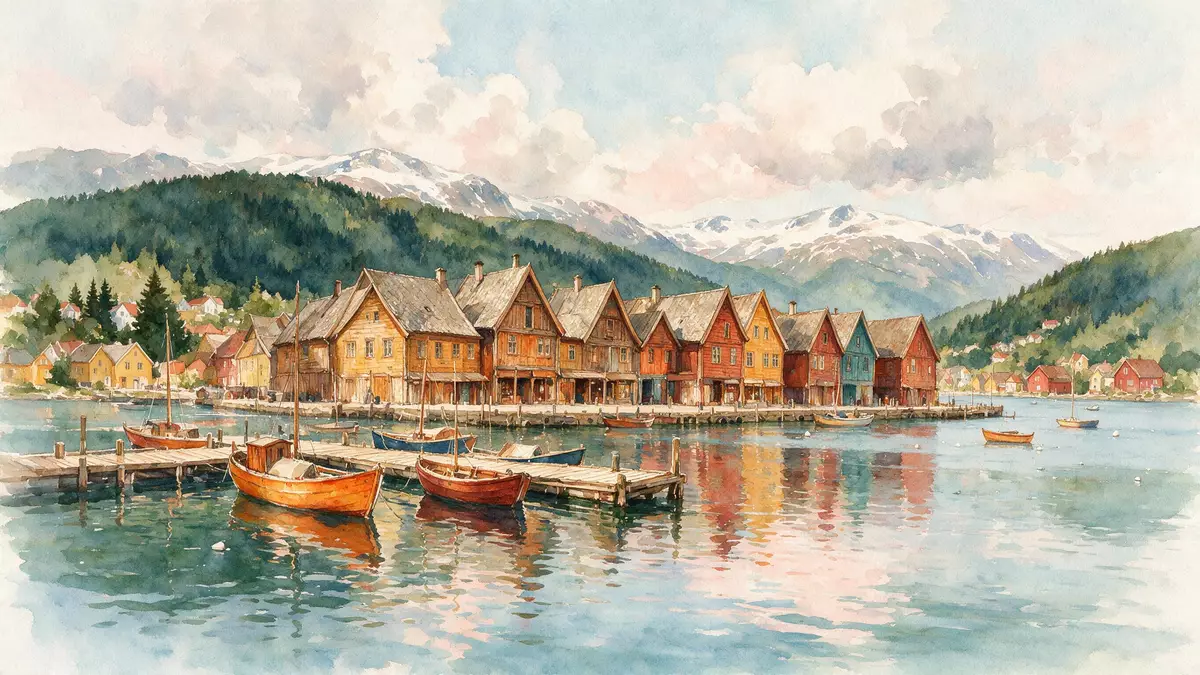
On the eastern side of Bergen’s Vågen harbour, Bryggen presents a compact world of tall timber warehouses and narrow lanes pressed between water and hillside. The quarter reflects Bergen’s rise as a trading centre from the twelfth century and the long presence of Hanseatic merchants on Norway’s Atlantic coast, a history recognised by its inscription as a UNESCO World Heritage Site in 1979.
Timber rows along the Vågen harbour
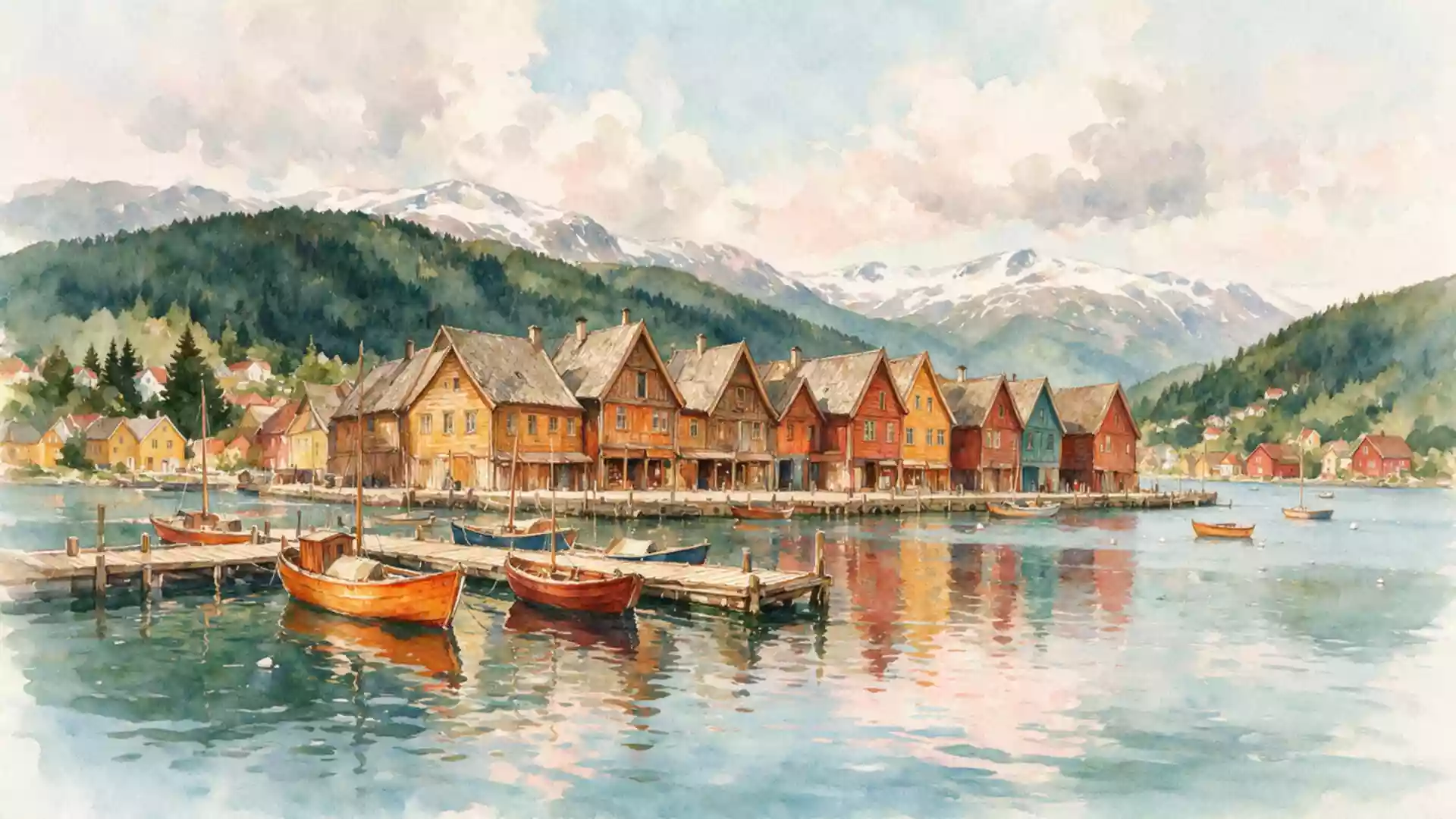
Bryggen forms a historic harbour district on the west coast of Norway, where Bergen developed as one of northern Europe’s important port cities for maritime trade by the twelfth century.historic harbour district The buildings line the eastern side of the Vågen harbour, their gabled fronts facing the water while long narrow structures extend back from the quayside.
The warehouses stand in characteristic rows set perpendicular to the waterfront, separated by shared passages that run inland from the quay.rows perpendicular to the waterfront Moving through Bryggen means stepping off the quay into these timber-sided corridors, where cross-beams, galleries and small stairways connect buildings on either side.
Hanseatic merchants and a working wharf
From the fourteenth to the mid-sixteenth century, Bryggen served as a quarter of Hanseatic merchants, part of a wider trading network centred on the Hanseatic League.quarter of Hanseatic merchants Bergen hosted a kontor, one of four overseas trading offices run from the League’s main cities, and control of the stockfish trade linked Bryggen to fishing grounds far to the north.
The commercial buildings at Bryggen combine warehouses facing the harbour with offices and wooden living quarters arranged along inner lanes.Hanseatic heritage commercial buildings Goods and equipment moved through ground-level openings directly from quayside to storage rooms, while upper floors carried stores reached by internal staircases and simple hoisting gear.
Fire, reconstruction and world heritage
Wooden construction and dense urban form left Bryggen exposed to repeated fires, including a major blaze in 1702 that led to the rebuilding of the quarter in its present timber pattern.rebuilt after the great fire in 1702 Later fires, including one in the twentieth century, damaged parts of the wharf but did not erase the overall layout of parallel rows and lanes along the harbour.
Bryggen’s surviving wooden structures illustrate an urban form that has remained in the cityscape despite centuries of change, preserving the memory of Bergen as one of the older large trading ports of northern Europe.memory of a lost trading culture In recognition of this, Bryggen was inscribed on the UNESCO World Heritage List in 1979 under cultural criterion (iii), and the protected area includes the wharf buildings themselves and related plots extending towards Øvregaten.
Visiting Bryggen: what travellers from Western Europe should know
- Bryggen stands on the eastern side of the Vågen harbour in central Bergen, a short walk from the city’s main streets and the waterfront quays where local boats dock.
- The quarter consists of narrow timber passages, uneven wooden walkways and internal staircases, so moving through Bryggen involves short stretches on foot over sloping and sometimes irregular surfaces.
- The harbour setting exposes Bryggen to Atlantic weather, and the timber structures create shaded spaces between the buildings, so conditions can feel different from the more open waterfront along the quay.
- Bryggen lies within Norway, where the official language is Norwegian and the currency is the Norwegian krone.
Searching for Bryggen on social platforms
These links open searches for Bryggen on each platform.
Frequently asked questions about Bryggen
Where is Bryggen and what kind of place is it?
Bryggen is a historic timber-built harbour quarter on the eastern side of the Vågen harbour in Bergen, on Norway’s west coast.
What can visitors expect when walking through Bryggen?
Visitors enter narrow wooden passages lined with tall warehouses, moving along timber walkways and short staircases that reveal small courtyards and views back towards the harbour.
What makes Bryggen distinctive among waterfront districts?
Bryggen combines rows of wooden Hanseatic heritage commercial buildings with a long-established urban pattern of lanes perpendicular to the quay, preserved despite repeated fires and recognised as world heritage.