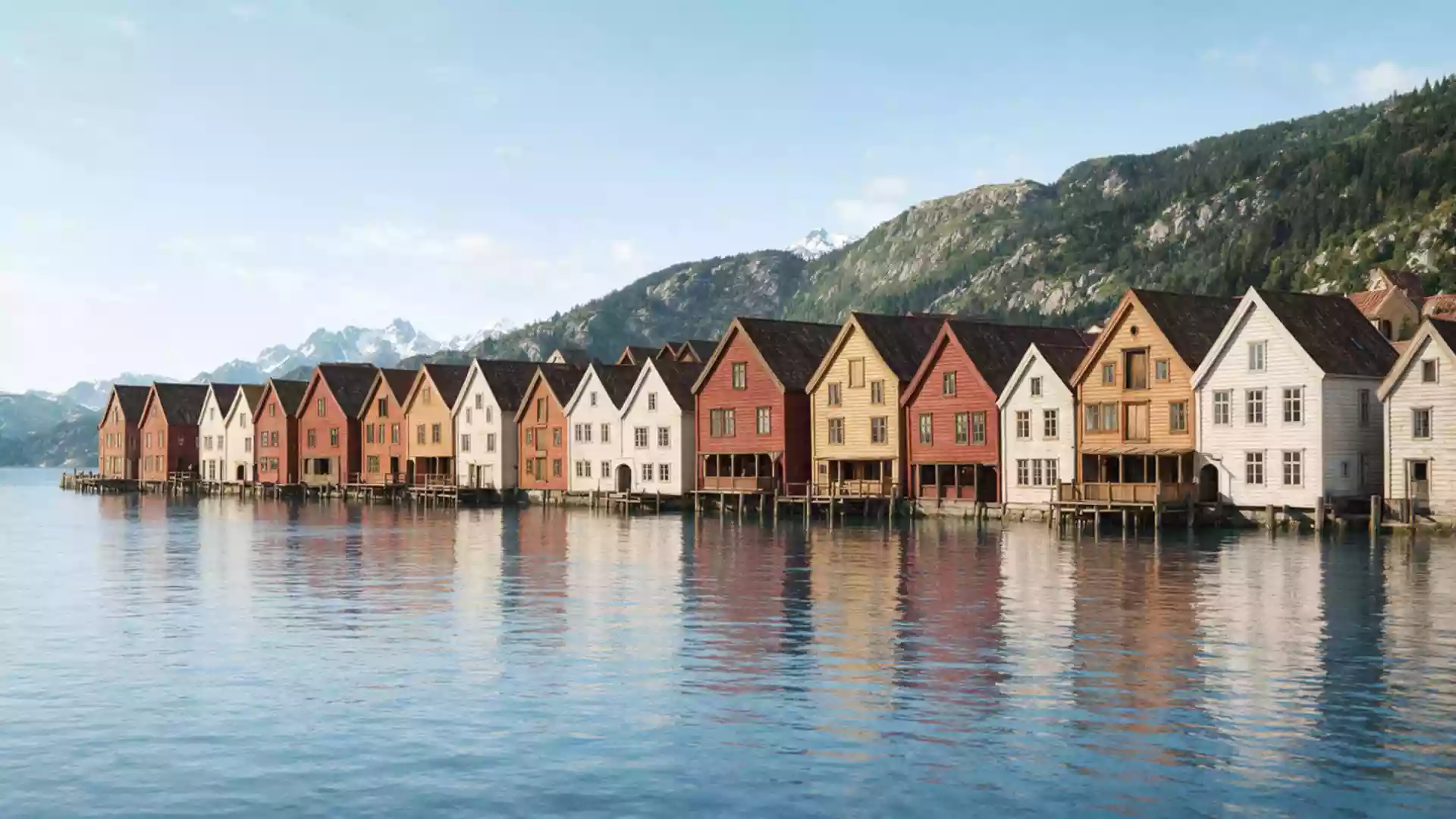
Bryggen, Bergen’s wooden Hanseatic waterfront
Published on 09/09/2026 at 15:24 | Editorial responsibility: Rafael Müller, Editor-in-Chief AD HOC NEWS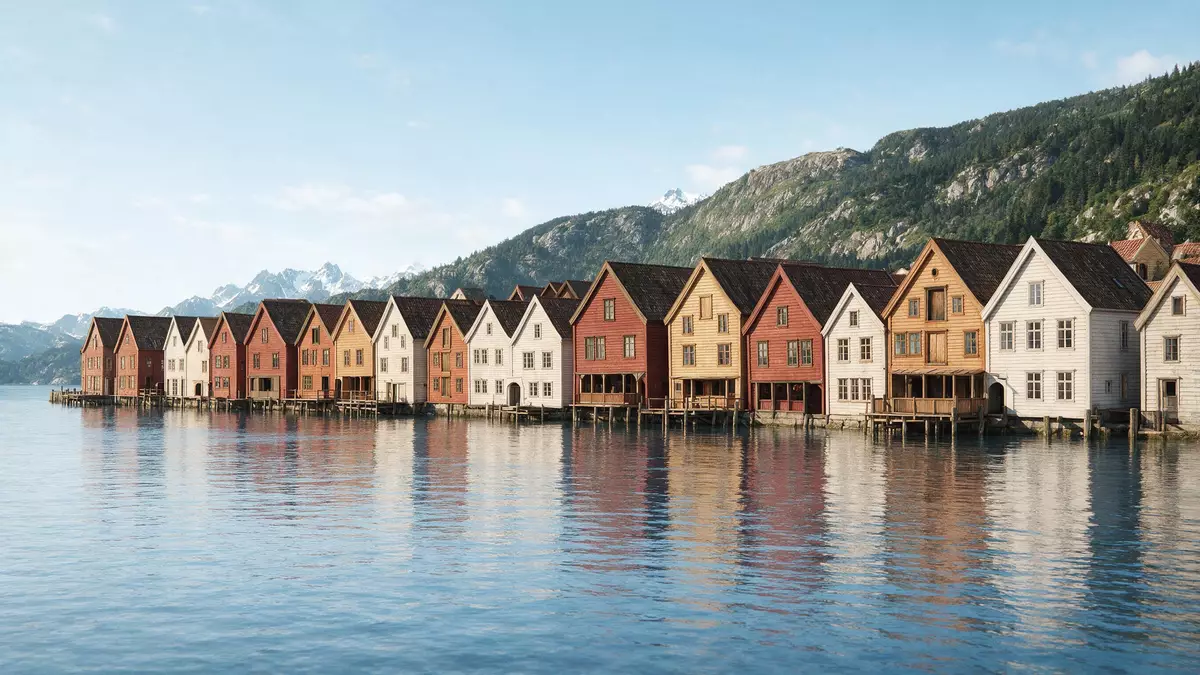
On the inner edge of Bergen’s Vågen harbour, Bryggen forms a dense row of wooden trading houses that still follow a medieval street pattern shaped by Hanseatic merchants from the fourteenth century. Recognised as a UNESCO World Heritage Site since 1979, this historic wharf district preserves one of Norway’s best documented ensembles of timber warehouses and passageways from the Middle Ages and early modern era.
Wooden rows along the Vågen harbour
Bryggen lines the eastern side of Vågen, the sheltered harbour that helped Bergen grow into a major North European trading centre by the twelfth century. The quarter consists of narrow, timber-built houses set perpendicular to the water, their gable ends facing the harbour and long bodies stretching inland in close rows.rows of houses built perpendicular to the sea Between these houses, tight alleyways run from the quayside towards the slope of Øvregaten, creating a compact pattern of lanes and courtyards.
The buildings are constructed in wood, a material long associated with Norwegian coastal towns, and their forms recall warehouse architecture developed for storing goods above damp ground and close to the ships that carried them. Many fires have damaged the quarter, including a major blaze in 1702, yet the rebuilt houses followed previous alignments so that the overall structure of the wharf district remained recognisably medieval.Bryggen, the old wharf of Bergen
Hanseatic merchants and a trading quarter
Bryggen is closely associated with the Hanseatic League, the network of mainly German merchant cities that shaped trade across the Baltic and North Sea between the fourteenth and sixteenth centuries.part of the Hanseatic League’s trading empire From the mid-fourteenth century onwards, Hanseatic merchants operated a trading office here, controlling exports of stockfish and other goods from coastal Norway and importing grain, cloth and supplies from the continent. Bergen became one of four main overseas offices of the League, alongside London, Bruges and Novgorod, and Bryggen served as the physical focus of this northern trading post.a Hanseatic Office in Bergen
Within the quarter, warehouses, offices and living quarters were grouped around the narrow alleys and inner yards, forming a concentrated merchant environment on the east side of the harbour. The World Heritage documentation highlights Bryggen as an example of a northern “fondaco”, a type of trading quarter where commercial buildings and storage spaces stand together as one unit.a type of northern “fondaco” The site bears traces of social organisation within this merchant community, with the layout reflecting a division of work, storage and residence tied directly to maritime trade.
World Heritage status and conservation
Bryggen was inscribed on the UNESCO World Heritage List in 1979, under cultural criterion (iii), recognising it as an exceptional testimony to a trading culture that emerged in medieval Northern Europe.listed as a UNESCO World Heritage Site in 1979 The protected area covers the wooden wharf buildings themselves, with associated properties such as Finnegården and adjoining garden land reaching towards Øvregaten.the World Heritage Site Bryggen was inscribed in 1979 and is number 59 on the list Mapping by UNESCO records the property as a compact site on Bergen’s inner harbour, surrounded by more recent urban fabric but retaining its historic street pattern.
Conservation work focuses on preserving the timber structures and the pattern of alleys and courts that define Bryggen’s character. Documentation emphasises the quarter as the only remaining part of an overseas Hanseatic office, and as one of the greatest assemblies of wooden warehouses of considerable age in Northern Europe.the greatest assembly of wooden warehouses of great antiquity Alongside warehouses, some of the buildings are used for cultural and artistic work, adding contemporary activity to a historic setting while keeping the wooden rows and narrow lanes intact.
Visiting Bryggen: what travellers from Western Europe should know
- Bryggen stands on the eastern edge of Vågen harbour in Bergen, Norway, within walking distance of the city’s central streets and waterfront.
- The quarter consists of closely spaced wooden houses and narrow alleys, with uneven timber surfaces and stepped passages that require sure footing.
- The historic wharf faces the harbour, with views across the water to other parts of Bergen and uphill towards Øvregaten and the surrounding streets.
- The official language is Norwegian and the currency is the Norwegian krone.
Searching for Bryggen on social platforms
These links open searches for Bryggen on each platform.
Frequently asked questions about Bryggen
Where is Bryggen located?
Bryggen is a historic wharf district on the eastern side of Vågen harbour in Bergen, on the west coast of Norway.
What can visitors expect on a visit to Bryggen?
Visitors encounter narrow wooden alleys, gabled trading houses and inner yards that together preserve a medieval merchant quarter linked to the Hanseatic League.
What makes Bryggen distinctive among harbour districts?
Bryggen combines timber warehouse architecture, a dense lane network and documented Hanseatic trading history, recognised through its UNESCO World Heritage inscription from 1979.