
Bryce Canyon National Park and its sculpted hoodoo amphitheatres
Published on 09/07/2026 at 19:42 | Editorial responsibility: Rafael Müller, Editor-in-Chief AD HOC NEWS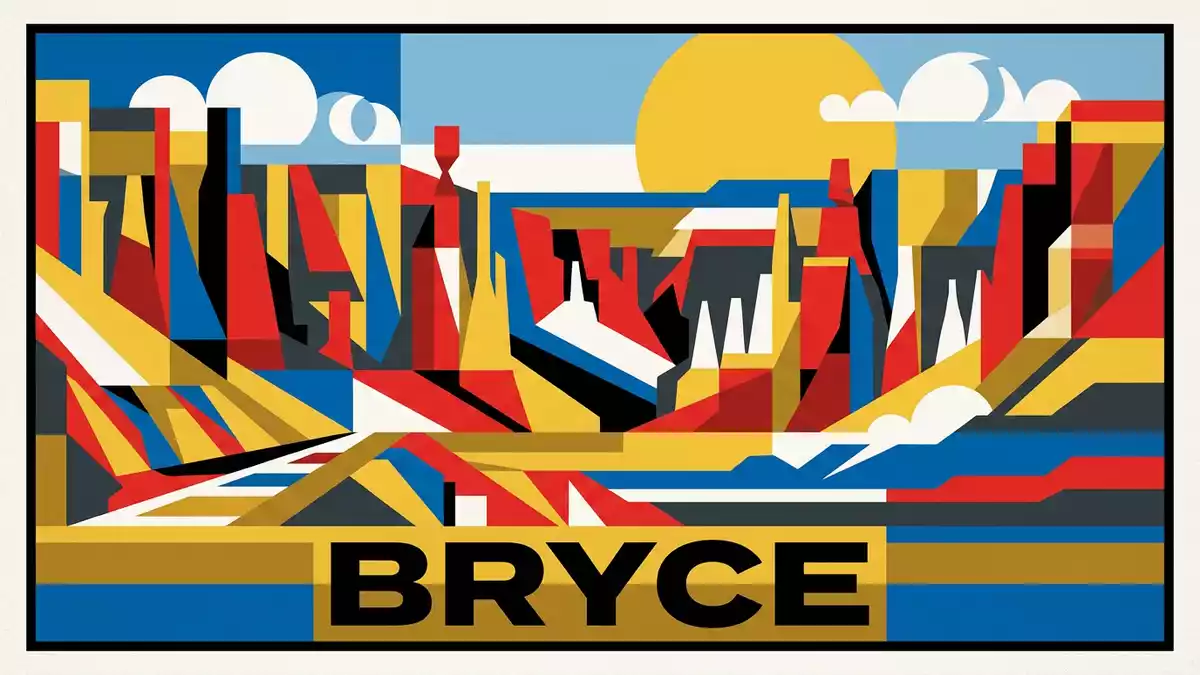
Bryce Canyon National Park in southern Utah takes the edge of the Paunsaugunt Plateau and carves it into vast amphitheatres filled with slender hoodoos and coloured cliffs. Set on the western margin of the Colorado Plateau and established as a national park in the twentieth century, it offers a compact landscape where geology, elevation and desert light combine in a distinctive way.
Amphitheatres on the Paunsaugunt Plateau
Bryce Canyon National Park occupies a rectangular stretch of the Paunsaugunt Plateau’s eastern rim in southern Utah, United States. The park lies northeast of Zion National Park, with its main viewpoints looking east across a series of natural amphitheatres cut into the plateau edge.area of spectacular rock formations The plateau itself is part of the High Plateaus region of the Colorado Plateau, and the park’s landscapes reflect this elevated setting.Western edge of the Colorado Plateau
Rather than a single canyon, Bryce consists of a chain of amphitheatre-shaped embayments eroded into the rim. These amphitheatres drop from forested plateau tops into intricate arrays of fins, walls and free-standing pinnacles. The setting places visitors above the formations rather than at their base, so viewpoints along the rim look down into the formations and across to distant mesas and ranges in Utah’s canyon country.
Hoodoos and the Claron Formation
The most distinctive features at Bryce Canyon National Park are its hoodoos, the tall, irregular rock spires that rise from the amphitheatre floors and slopes. They are carved mainly in the Claron Formation, a sequence of fine-grained sedimentary rocks that include limestone, dolomite, siltstone and mudstone laid down in ancient streams and lakes tens of millions of years ago.Claron Formation layers of limestone and siltstone Bright orange and light tan beds within this unit create strong colour contrasts on the slender towers and walls.bright orange and tan sedimentary rocks
The hoodoos form where vertical joints and weaknesses in the Claron rocks are widened by weathering and erosion. Differential erosion leaves harder caps perched on softer columns, so many hoodoos carry a block or irregular slab balanced atop a slender pedestal. In cross-section, their amphitheatres show sequences of coloured bands, revealing how changing conditions in ancient lakes and floodplains laid down different layers that now erode at varying rates.
Water, ice and desert climate
Bryce Canyon National Park’s hoodoos owe their shapes to a combination of water, ice and gravity acting on the plateau edge. The park’s high elevation, with rim levels around 2,400 m (7,900 ft), produces frequent freeze–thaw cycles. Water from snow and rain seeps into cracks in the rock, then freezes and expands, gradually prising blocks away in a process known as frost wedging.formation of Bryce Canyon and its hoodoos Over long periods, this repeated expansion loosens fins from the cliff, then carves them into isolated spires.
Rainfall at Bryce is mildly acidic, able to dissolve the calcium carbonate that cements the Claron limestones. As water runs over cliff faces and through joints, it removes material and enlarges gullies. Small alcoves grow into amphitheatres, and thin walls break into free-standing hoodoos whose varied shapes reflect subtle differences in rock hardness and fracture patterns.erosion on the east-facing rim of the Paunsaugunt Plateau Together, freeze–thaw, solution and gravitational collapse produce corridors, windows and columns that change on geological timescales while remaining recognisable to visitors.
Landscape, elevation and viewpoints
The rim of Bryce Canyon National Park sits high above surrounding valleys, and many viewpoints are located close to the plateau edge. From these, visitors look out over amphitheatres filled with hoodoos, then beyond to wider canyon country in southern Utah. The elevation gives long views under clear desert skies, with the colours of the Claron cliffs shifting through different tones as the sun angle changes.carved from the edge of the Paunsaugunt Plateau
Within the park, forested plateau tops contrast with exposed rock faces below. Ponderosa pine and other conifers grow on the higher ground, while scattered trees and shrubs cling to ledges and pockets of soil among the hoodoos. Trails and viewpoints follow the rim and descend into the amphitheatres, offering changing perspectives on the rock forms and their relationship to the plateau. The sense of depth comes from the staircase of cliffs, sloping terraces and spires that lead the eye from the rim down into the formation and then out towards distant horizons.
Visiting Bryce Canyon National Park: what travellers from Western Europe should know
- Bryce Canyon National Park lies near the community of Bryce in southern Utah, on State Route 63, with road connections from other destinations in the canyon country of the United States.
- The park sits on a high plateau rim, and many viewpoints involve short walks on uneven ground and paths with noticeable gradients along the canyon edge.
- Trails that descend into the amphitheatres cross loose sedimentary surfaces and switchbacks, so footwear with good grip and a tolerance for elevation changes is important.
- The official language is English and the currency is the United States dollar.
- Entry requirements depend on your nationality; UK travellers can check the FCDO travel advice at gov.uk/foreign-travel-advice, Irish travellers the Department of Foreign Affairs at ireland.ie.
Searching for Bryce Canyon National Park on social platforms
These links open searches for Bryce Canyon National Park on each platform.
Frequently asked questions about Bryce Canyon National Park
Where is Bryce Canyon National Park?
Bryce Canyon National Park is in southern Utah, United States, on the eastern rim of the Paunsaugunt Plateau near the community of Bryce.
What should visitors expect on a visit?
Visitors encounter high-elevation viewpoints over amphitheatres filled with hoodoos, forested plateau tops, desert light and trails that cross uneven terrain along the canyon rim and slopes.
What makes Bryce Canyon National Park distinctive?
The park is distinctive for its concentration of hoodoos carved in the Claron Formation, set within natural amphitheatres at the edge of a high plateau in Utah’s canyon country.


