
British Museum bans photos of Bayeux Tapestry on 21 September
Published on 09/27/2026 at 12:13 | Editorial responsibility: Rafael Müller, Editor-in-Chief AD HOC NEWS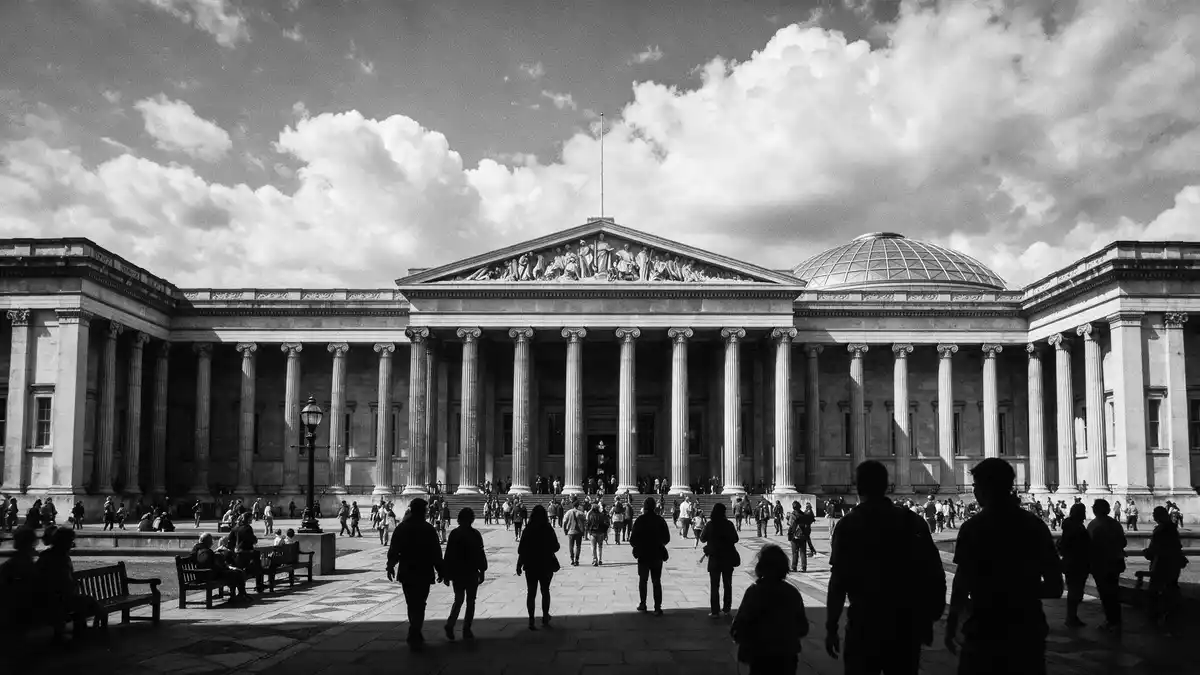
The British Museum introduced a photography ban at its Bayeux Tapestry exhibition in London on 21 September 2026. The rule change affects visitors viewing the medieval embroidery, which depicts events leading to the Norman conquest of England and the Battle of Hastings in 1066. The exhibition is being presented at the museum after the work returned to England for the first time since the eleventh century.
Photography ban changes the Bayeux Tapestry visit
Visitors were initially allowed to take photographs, but the museum reversed that decision after people stopping to capture scenes caused queues inside the exhibition. The BBC reported on 21 September that the restriction was introduced because delays were affecting later ticket-holders. Photography is now prohibited while visitors move along the length of the work, and drawing or sketching is also not permitted in the display.
The BBC report on the ban says visitors enter in groups every 40 minutes and follow a one-way route. The arrangement is significant because the embroidery is displayed in a single straight line in London, rather than the horseshoe-shaped gallery used at its home in Bayeux. The restriction is therefore part of the way the exhibition manages movement around the object, not a general photography rule for every gallery.
The London display links a new rule to museum history
The Bayeux Tapestry is on loan from Normandy and is scheduled to remain in London until July 2027. Its embroidered scenes record the events leading to William, Duke of Normandy, becoming king of England after the 1066 conquest. At 68 m (230 ft), the work requires visitors to travel along its full length rather than view it as a compact object.
The museum was created by an Act of Parliament in 1753 and opened to visitors in 1759, according to its official museum history. Its collections have grown to about eight million objects covering two million years of human history. The new rule places a contemporary crowd-management measure inside an institution whose public story began with access to collections for curious visitors.
Visiting British Museum: what travellers from Western Europe should know
- The photography ban began on 21 September 2026 at the Bayeux Tapestry exhibition in London.
- Photography and sketching are not permitted while viewing the embroidery, and visitors follow a one-way route through the display.
- The exhibition presents the 68 m (230 ft) work in a single straight line, so the visit involves moving along its length rather than viewing it from several sides.
- The museum stands on Great Russell Street in Bloomsbury, London, and the exhibition is part of the museum site rather than a separate venue.
Searching for British Museum on social platforms
These links open searches for British Museum on each platform.
Frequently asked questions about British Museum
What changed at the British Museum on 21 September 2026?
Photography and sketching were prohibited during the Bayeux Tapestry exhibition after visitors stopping to take pictures contributed to queues.
Where is the British Museum and how do you get there?
The museum is on Great Russell Street in Bloomsbury, London. The Bayeux Tapestry exhibition is located within the museum site.
What is the Bayeux Tapestry exhibition at the British Museum?
It is a London display of the eleventh-century embroidered work depicting events leading to the Norman conquest of England in 1066. The loan is scheduled to remain at the museum until July 2027.


