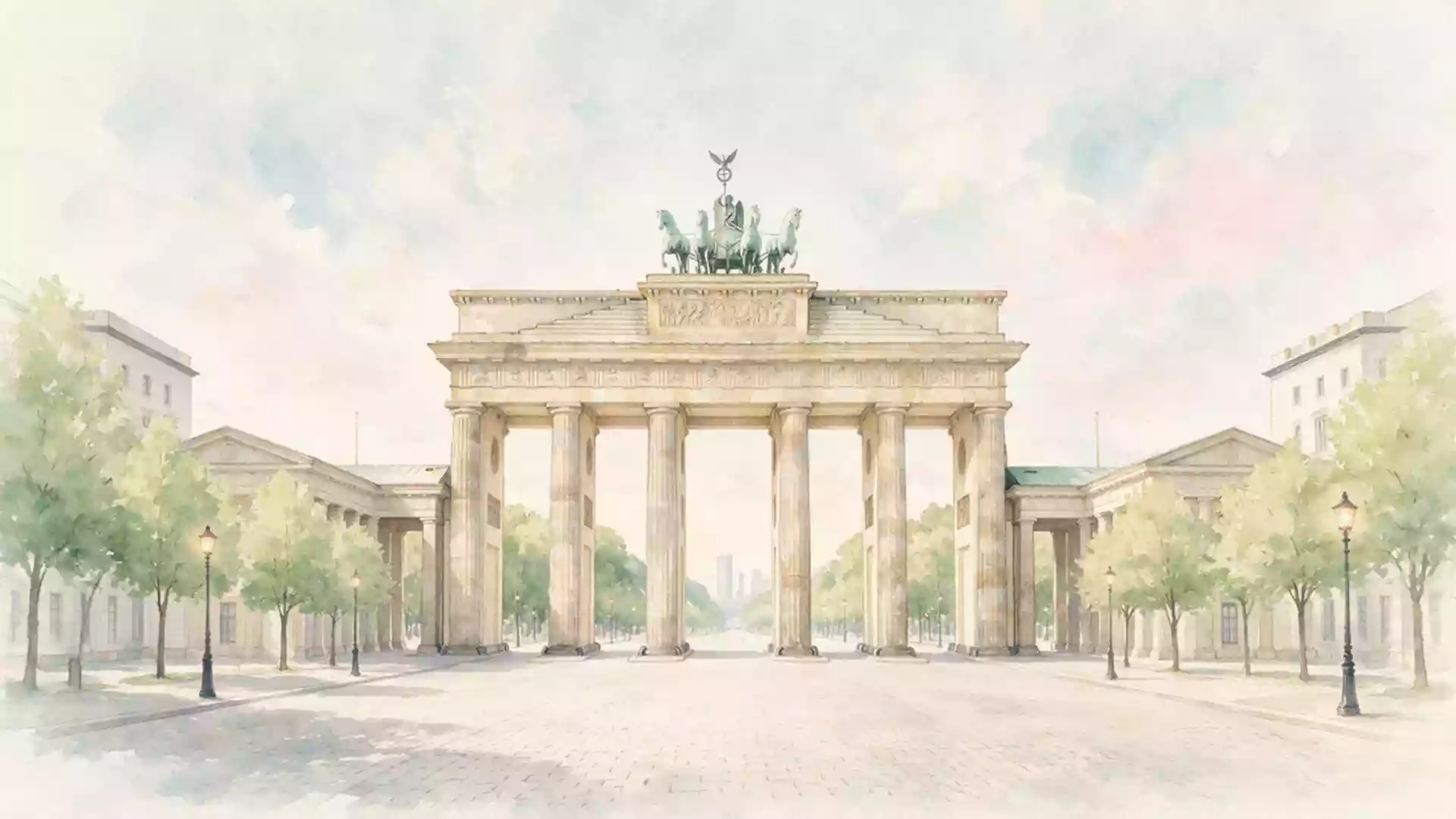
Brandenburger Tor, the neoclassical gateway at Unter den Linden
Published on 09/08/2026 at 06:12 | Editorial responsibility: Rafael Müller, Editor-in-Chief AD HOC NEWS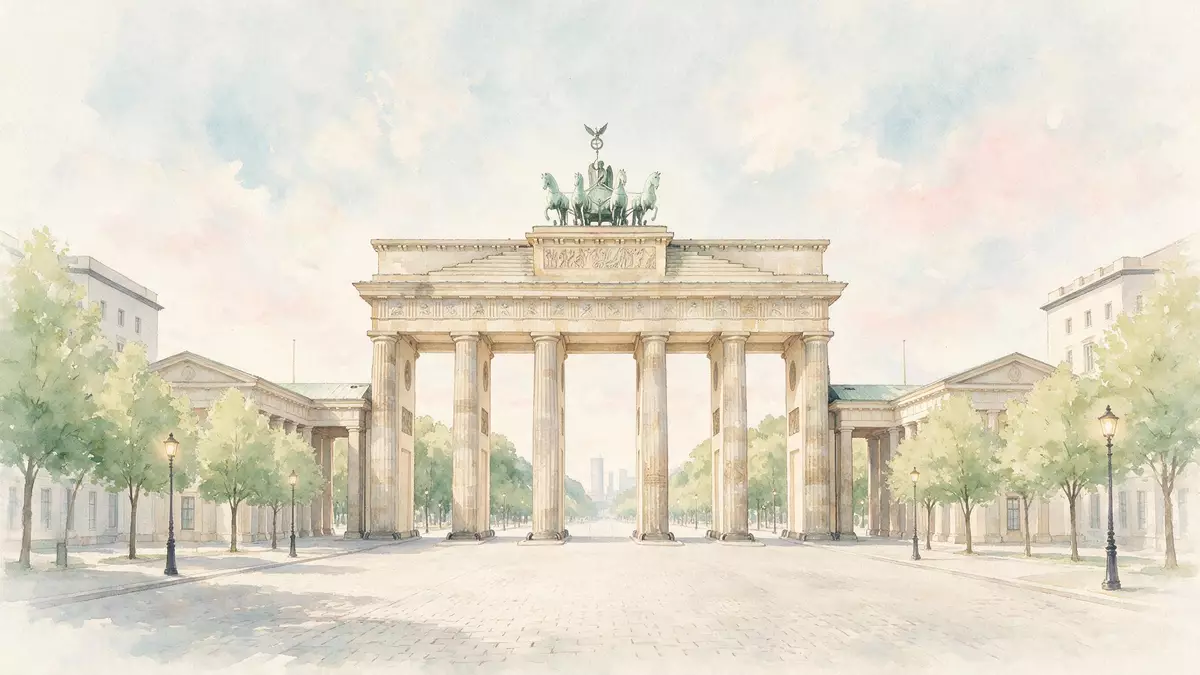
Brandenburger Tor in Berlin is the great sandstone city gate that closes the boulevard Unter den Linden at Pariser Platz, a neoclassical monument dating from the late eighteenth century. Completed in 1791 during the reign of King Frederick William II of Prussia, it has become a symbol closely tied to the historic centre of Germany’s capital.
A neoclassical gate shaped by ancient models
The present Brandenburger Tor was constructed between 1788 and 1791 as a grand replacement for an earlier gate in Berlin’s customs wall, forming an entrance on the route towards Brandenburg an der Havel.constructed between 1788 and 1791 Commissioned by Frederick William II, the project was entrusted to court architect Carl Gotthard Langhans, who drew heavily on classical architecture for its appearance.commissioned by Frederick William II Visitors approaching along Unter den Linden encounter the gate as a stone screen across the end of the avenue, with its colonnades framing the view towards Pariser Platz and the Tiergarten beyond.at the end of Unter den Linden
The design takes inspiration from the Propylaea, the monumental gateway to the Acropolis in Athens, translating its temple-like composition into an urban structure in Prussia.inspired by the Propylaea Two parallel rows of Doric columns carry a heavy entablature and attic, creating multiple passageways through the stone mass and giving the gate a distinctly classical rhythm.two rows of Doric columns Above the central opening stands the Quadriga, a bronze sculpture of a four-horse chariot originally designed by Johann Gottfried Schadow in the 1790s, which crowns the whole ensemble with a figure representing victory.Quadriga statue added in 1793
From Prussian gate to national symbol
When Brandenburger Tor opened in August 1791, it marked the end of Unter den Linden and served as a formal city gate for Berlin, the capital of the Kingdom of Prussia.opened in August 1791 In the early nineteenth century it gained prominence as a ceremonial backdrop, including Napoleon’s entry into Berlin in 1806, when the Quadriga was taken to Paris as a war trophy and later returned.Napoleon took the Quadriga to Paris After the liberation wars, the sculpture was reinstalled with additional Prussian symbols, reinforcing the gate’s association with military success and state power.reinstallation after the liberation wars
Brandenburger Tor carried different meanings in later eras, standing behind mass parades in the National Socialist period and suffering substantial damage in the Second World War. Post-war restoration in the 1950s stabilised the structure and replaced the Quadriga using original moulds, ensuring that the gate retained its recognisable profile even after the destruction around it.restoration and recast Quadriga As political regimes changed, the stone colonnades and attic remained, turning the gate into a fixed architectural reference point within a shifting historical landscape.
A monument on the line of a divided city
The twentieth century brought a new role for Brandenburger Tor when the border between the sectors of Berlin ran close to it after 1945, placing the gate in the Soviet sector.in the Soviet sector after 1946 With the construction of the Berlin Wall in 1961, it stood inside an exclusion zone in the arc of fortifications, inaccessible from both East and West and visually embedded in the frontier between the two halves of the city.in the arc of the Berlin Wall Images from this period show the classical columns rising immediately behind barriers and watchtowers, turning an eighteenth-century gate into a stark symbol of division.
When border controls eased and the Wall began to open in 1989, Brandenburger Tor again became a focal point, this time for crowds celebrating a changing political order. On 22 December 1989, the gate was formally reopened, with political leaders from East and West walking through it as part of the wider process that led to German reunification.reopening in December 1989 Subsequent restoration work at the turn of the twenty-first century cleaned and repaired the sandstone surfaces, and vehicle traffic no longer passes underneath, leaving the gate largely as a pedestrian space in the urban fabric.restoration around 2000
Visiting Brandenburger Tor: what travellers from Western Europe should know
- Brandenburger Tor stands at Pariser Platz at the western end of Unter den Linden in central Berlin, close to the Tiergarten and the Reichstag building.
- The immediate surroundings are level city streets and squares, and the area around the gate is paved, so it can be explored on foot without significant gradients.
- Berlin’s central railway stations connect with public transport services that stop near Pariser Platz, bringing visitors within a short walk of the gate.
- The official language is German and the currency is the euro.
Searching for Brandenburger Tor on social platforms
These links open searches for Brandenburger Tor on each platform.
Frequently asked questions about Brandenburger Tor
Where is Brandenburger Tor located in Berlin?
Brandenburger Tor stands at Pariser Platz at the western end of Unter den Linden in central Berlin, close to the Tiergarten and major federal buildings.
What can visitors expect when they visit Brandenburger Tor?
Visitors find a large neoclassical sandstone gate with multiple columned passageways, pedestrian space around it and views into the surrounding governmental and cultural district.
What makes Brandenburger Tor distinctive among city gates?
Its neoclassical design inspired by the Acropolis, the Quadriga crowning the central opening and its role in events from 1791 through the Berlin Wall period give it a particularly layered character.