
Brandenburger Tor, Berlin’s classical stone gateway
Published on 09/18/2026 at 22:05 | Editorial responsibility: Rafael Müller, Editor-in-Chief AD HOC NEWS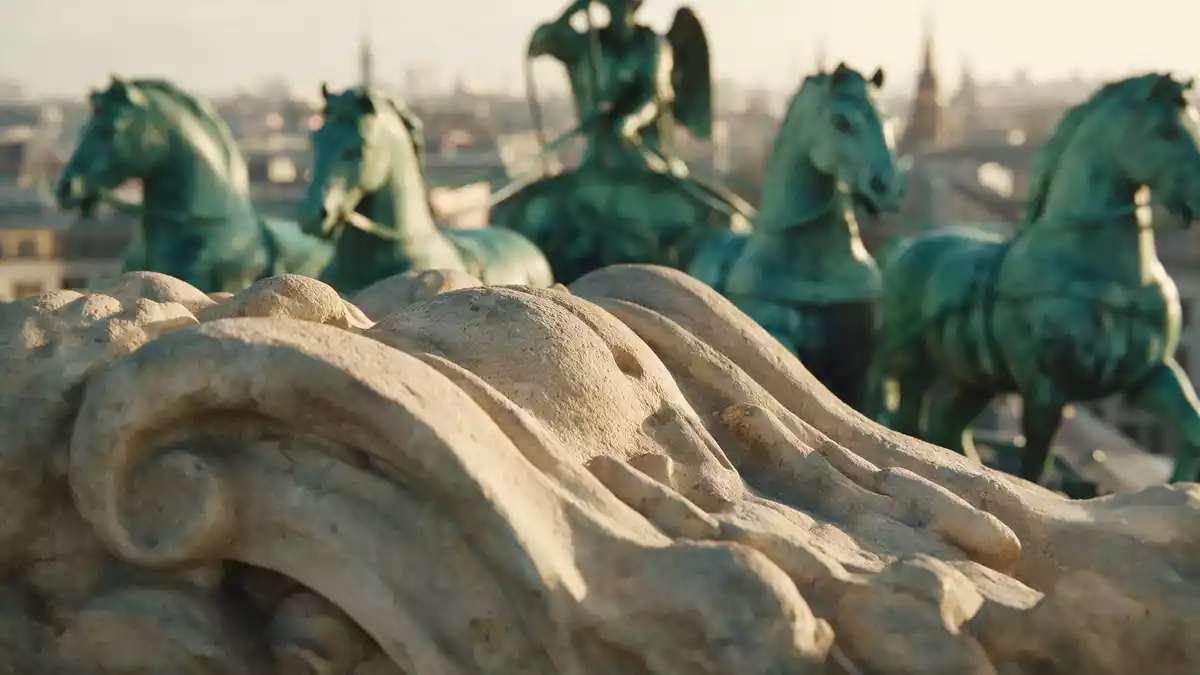
Brandenburger Tor in Berlin is an eighteenth-century neoclassical city gate where stone, columns and sculpture form a monumental entrance at the western end of Unter den Linden. Built in the late eighteenth century as a formal gateway for Prussian Berlin, it has stood through political upheavals and border changes, becoming closely associated with the story of Germany.
A classical city gate at Pariser Platz
Brandenburger Tor stands on the west side of Pariser Platz in the Mitte district, closing the long boulevard of Unter den Linden with a freestanding stone gateway. The present gate is a sandstone structure dating from the late eighteenth century, replacing an earlier city gate on the same line of Berlin’s former customs wall.earliest Bauwerke des Berliner Klassizismus Commissioned by King Frederick William II of Prussia, it was designed by the court architect Carl Gotthard Langhans and constructed between 1788 and 1791, giving Berlin a new monumental gate in dressed stone.Constructed between 1788 and 1791
The gate takes its overall form from the Propylaea, the ceremonial entrance to the Acropolis in Athens, translating a Greek temple-like gateway into civic architecture for the Prussian capital.after the model of the Propylaea It marks the point where the urban axis of Unter den Linden meets the open space that leads towards the Tiergarten and the government district, making it both an end point to the boulevard and a threshold towards wider Berlin.
Sandstone, Doric columns and the Quadriga
Architecturally, Brandenburger Tor belongs to the neoclassical movement and is one of the earliest neoclassical buildings in Prussia.frühklassizistisches Triumphtor The gateway rises in pale sandstone, with a strong horizontal entablature resting on two parallel rows of columns. In plan, twelve Doric columns are arranged in two sets of six, creating five passageways through the structure, with the central opening historically reserved for royal traffic.two rows of six Doric columns
Above the columns, the entablature carries reliefs and sculpted panels that draw on classical mythology, while a high attic gives the gate its recognisable profile against the sky.decorated with reliefs and sculptures In 1793 a bronze Quadriga was placed on top of the gate, depicting the goddess of victory standing in a four-horse chariot and bearing a symbol associated with peace.Quadriga statue The combination of heavy stone colonnade and light bronze sculpture gives Brandenburger Tor both the gravity of a classical temple front and the motion of a triumphal procession frozen above the city.
From customs wall to national symbol
When Brandenburger Tor was completed in 1791, it formed part of Berlin’s customs wall, acting as a controlled entry point on the western flank of the expanding city.einzige erhaltene Toranlage der Stadt Traffic passed through its passageways towards the town of Brandenburg and the roads leading to Prussian territories further west, while ceremonial processions used the central passage aligned with Unter den Linden and the royal palace.
Over the nineteenth and twentieth centuries, the gate moved from being infrastructure at the edge of the city to a freestanding monument associated with major episodes of German history.Walking Through Germany’s History Its stone colonnade witnessed Napoleonic occupation, imperial parades and the turbulent politics of the twentieth century. During the period when Berlin was divided, the line of the Berlin Wall ran close behind the monument, turning the area around Brandenburger Tor into a boundary zone between two political systems.symbolise Berlin’s Cold War division In the late twentieth century it became closely connected with the reunification of Germany, with Pariser Platz in front of the gate serving as a civic square where large public gatherings took place.
Visiting Brandenburger Tor: what travellers from Western Europe should know
- Brandenburger Tor stands on the west side of Pariser Platz in central Berlin, at the junction of Unter den Linden and the route towards the Tiergarten and Reichstag district. It is reached easily by Berlin’s urban transport system, with the nearby Brandenburger Tor station on the city’s rail network providing direct access.
- The area around the gate is paved and level, forming a broad open space in front of the colonnade and continuing as streets towards the Tiergarten and the government quarter. Approaching the monument involves walking across urban squares and wide pavements rather than negotiating steep gradients.
- Brandenburger Tor lies close to several other major Berlin landmarks, including the Reichstag building to the north-west and the Memorial to the Murdered Jews of Europe to the south, making this part of Mitte a compact area of civic and historical sites.
- Germany’s official language is German and the national currency is the euro.
Searching for Brandenburger Tor on social platforms
These links open searches for Brandenburger Tor on each platform.
Frequently asked questions about Brandenburger Tor
Where is Brandenburger Tor in Berlin?
Brandenburger Tor stands in the Mitte district on the west side of Pariser Platz, where Unter den Linden meets the streets leading towards the Tiergarten and Reichstag area.
What can visitors expect when they reach the gate?
Visitors encounter a large neoclassical sandstone gateway with Doric columns and a bronze Quadriga above, set within a broad paved urban square surrounded by civic and cultural buildings.
What makes Brandenburger Tor distinctive among Berlin landmarks?
The combination of its eighteenth-century neoclassical architecture, role as the only surviving historical city gate of Berlin and its association with major moments of German history gives Brandenburger Tor a particular prominence in the city’s landscape.


