
Boudhanath and its great white mandala above Kathmandu
Published on 09/22/2026 at 04:45 | Editorial responsibility: Rafael Müller, Editor-in-Chief AD HOC NEWS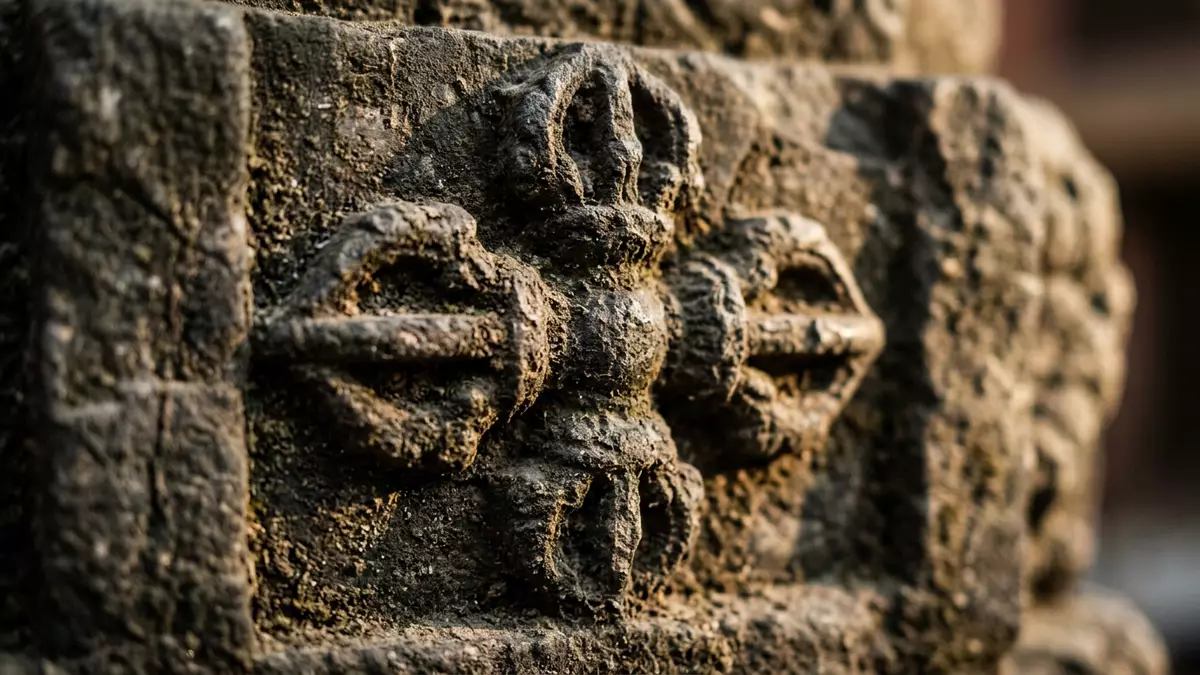
Boudhanath is a vast white Buddhist stupa on the north-eastern edge of Kathmandu, its dome and tiered spire rising above a mandala-shaped base that anchors an entire neighbourhood of monasteries and traders. The site is one of the principal centres of Tibetan Buddhism in Nepal and forms part of the group of monuments in the Kathmandu Valley inscribed on the UNESCO World Heritage list in 1979, reflecting its long religious and cultural significance in the Himalayan region.group of monuments in the Kathmandu Valley
A Licchavi-era foundation with a later monumental form
The story of Boudhanath reaches back into Nepal’s Licchavi period, when rulers such as King Manadeva in the fifth century and King Shivadeva in the sixth century are associated in chronicles with early stupas on this site.King Manadeva and King Shivadeva The traditional name Khasti Chaitya appears in Newar texts, and the site is linked in those records with Licchavi foundations that established major Buddhist monuments around the valley.history going back more than 1,500 years Legends tell of a poultry-keeping woman who secured land from a king to build a shrine to house relics of Kassapa Buddha, weaving mythology into the historical fabric of the place without offering a precise construction date.poultry-keeping woman and Kassapa Buddha
What visitors walk around today, however, largely reflects a monumental form that took shape centuries later, with scholarly assessments placing the present structure in the fourteenth century and linking a significant restoration in the fifteenth century to the lama Ngagchang Shakya Zangpo.present structure most likely built in the 14th century Tibetan and Himalayan art sources associate Shakya Zangpo, regarded as the first Yolmo Tulku, with work on both Boudhanath and Swayambhunath, underscoring the cross-cultural networks that have long linked Nepal and Tibet through religion and patronage.lama Ngagchang Shakya Zangpo
The great mandala: dome, cube and spire
Architecturally, Boudhanath is arranged as an enormous mandala, with a broad circular base supporting a whitewashed dome, a cube painted with pairs of watchful eyes and a gilded spire rising above layers of steps. The stupa reaches a height that is widely cited at around 36 m (118 ft), while the mandala base stretches to roughly 100–120 m (328–394 ft) across, a scale that places it among the largest stupas in Nepal.about 36 metres high on a mandala base The combination of dome, cube and tiered spire expresses a Buddhist cosmos in built form, translating ritual diagrams into three dimensions.
The mandala base carries platforms in geometrical patterns that visitors navigate as they perform circumambulations, while the dome itself is ringed at its lower edge by niches containing stone images of Buddhas and bodhisattvas.niches of different Buddha stone carvings Above the dome, the cube is painted on each side with pairs of large eyes and a stylised mark between them, a motif that has become closely associated with Kathmandu’s Buddhist stupas and is loaded with symbolism in Tibetan and Nepali traditions.giant painted eyes The stepped spire stacked above the cube evokes levels of spiritual ascent, crowned by a parasol that marks the summit of the structure.
A religious centre on an old trade route
Boudhanath stands on an ancient trade route that connected Tibet with the Kathmandu Valley, a position that has long made it a meeting point for merchants, monks and pilgrims moving between the high plateau and the Himalayan foothills.ancient trade route from Tibet As caravans arrived from the north, the stupa offered a place for rituals and rest, and over time Tibetan communities established monasteries around it, turning the surrounding area into a compact town structured around Buddhist practice.Tibetan refugees settled in the Boudha area
In the twentieth century, waves of Tibetan refugees crossing the Himalayas further strengthened Boudhanath’s role as a centre of Tibetan Buddhism in exile, adding monasteries, schools and businesses that serve both local residents and visiting pilgrims.center for Tibetan culture and spiritual learning The stupa’s presence defines the urban fabric around it, with lanes radiating from the circular plaza and prayer flags stretching from the cube and spire down towards buildings that echo its colours and forms in smaller details.
Visiting Boudhanath: what travellers from Western Europe should know
- Boudhanath lies in the north-eastern part of Kathmandu, reached by road from the city centre and from Tribhuvan International Airport, with the stupa forming the focus of the Boudha neighbourhood.
- The immediate area around the stupa is a paved circular plaza encircled by buildings, with circumambulation paths involving steps and gentle gradients rather than long climbs.
- The surroundings include monasteries, small shrines and a dense network of lanes, so moving beyond the plaza involves navigating narrow streets and occasional stairways between buildings.
- The official language is Nepali and the currency is the Nepalese rupee.
- Entry requirements depend on your nationality; UK travellers can check the FCDO travel advice at gov.uk/foreign-travel-advice, Irish travellers the Department of Foreign Affairs at ireland.ie.
Searching for Boudhanath on social platforms
These links open searches for Boudhanath on each platform.
Frequently asked questions about Boudhanath
Where is Boudhanath and what kind of place is it?
Boudhanath is a large Buddhist stupa and surrounding neighbourhood in the north-eastern part of Kathmandu in Nepal, standing beside an old route linking Tibet with the Kathmandu Valley.
What should visitors expect when they arrive at Boudhanath?
Visitors encounter a circular plaza dominated by the white dome and spire of the stupa, encircled by monasteries, shops and restaurants, with circumambulation paths and smaller shrines built into the urban fabric.
What makes Boudhanath distinctive among Buddhist sites in Nepal?
Boudhanath combines a Licchavi-era foundation with a monumental fourteenth-century structure, a mandala-shaped plan and strong ties to Tibetan Buddhism, all recognised within the Kathmandu Valley UNESCO World Heritage inscription.


