
Bosque de Chapultepec, Mexico City’s historic urban forest
Published on 09/14/2026 at 20:22 | Editorial responsibility: Rafael Müller, Editor-in-Chief AD HOC NEWS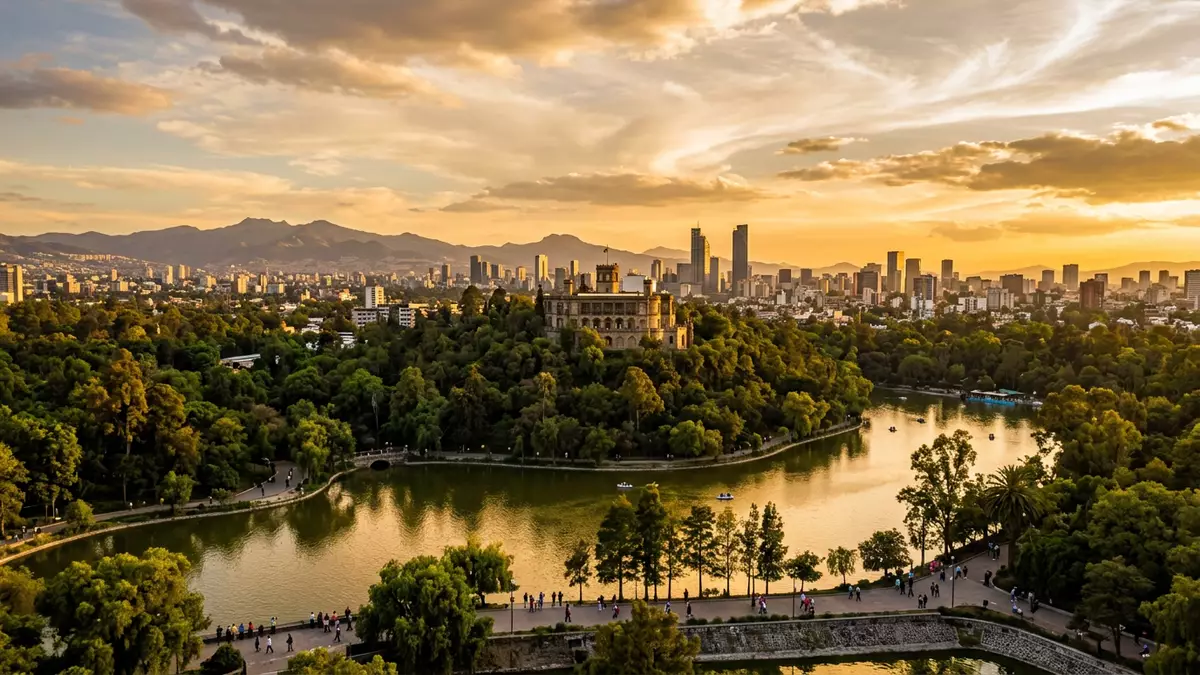
Bosque de Chapultepec in Mexiko-Stadt is one of the great urban green spaces of Latin America, combining an ancient wooded hillside, formal avenues and large cultural institutions in a single parkland landscape. Its history as a royal retreat, water source and public park stretches back many centuries, and the hill and forest remain closely tied to major moments in Mexico’s story.
A hill of springs, emperors and armies
The name Bosque de Chapultepec derives from a Nahuatl term that can be translated as “grasshopper hill”, a reference to the wooded rise that anchors the park within the Valley of Mexico.grasshopper hill Long before Mexiko-Stadt took shape, people settled around the nearby lakes, and archaeological evidence places human activity here as far back as the Preclassic period.Preclassic period For the Mexica, or Aztecs, Chapultepec was a sacred hillside linked to springs that supplied fresh water to their island capital of Mexico-Tenochtitlan through aqueducts that crossed the lake basin.springs that supplied drinking water
In the fifteenth century, the poet-king Nezahualcóyotl of neighbouring Texcoco is associated with the design of landscaped gardens and an aqueduct network at Chapultepec, creating a planned environment that combined wooded slopes, water channels and resting places for Mexica rulers.designed by Nezahualcóyotl Later, the hill became a site of conflict as well as ritual, with battles fought around Chapultepec during the final stages of the Spanish conquest in 1521 and, centuries afterwards, during the Mexican-American War in the 1840s, when fighting concentrated around the slopes and fortifications near the summit.Mexican-American War battle These overlapping uses leave the forest dotted with monuments that recall imperial rulers, cadets and political figures from different eras.
From royal reserve to public park
Under Spanish rule, Chapultepec remained significant as both a forest and a source of water for the colonial capital, with royal decrees in the sixteenth century confirming the area as property of Mexico City and a designated place of recreation for its inhabitants.Royal Decree of 1530 Viceroys used the woods as a retreat, and paths through the trees linked resting areas with views over the older lake basin. On the hill itself, a fortress-like residence took shape in the late eighteenth century, with construction of Chapultepec Castle beginning in the 1780s on the summit above the forest.Chapultepec Castle
During the nineteenth century, Chapultepec Castle served multiple roles: as a military academy, an imperial palace under Emperor Maximilian and Empress Carlota, and later as the official residence of Mexico’s heads of state.imperial residence In the Porfirian era around the turn of the twentieth century, the surrounding forest was reshaped into a French-style urban park, with tree-lined avenues, ornamental lakes and formal layouts reminiscent of Parisian precedents such as the Bois de Boulogne.French park in the style of the Bois de Boulogne Chapultepec’s status as a major public park was consolidated around 1910, when redesign work culminated in an opening that marked its transformation into an accessible urban landscape tied into the expanding city.redesigned, opening in 1910
Forest, lakes and museums on a single hillside
Bosque de Chapultepec today covers a broad expanse of wooded ground and landscaped parkland, divided into sections that include older forest near the hill, later recreational areas and newer extensions towards the west of Mexiko-Stadt.Bosque de Chapultepec expanse Tree cover has been studied extensively, and historical-dendrological research traces the evolution of the woodland canopy from pre-Hispanic times through colonial management and modern replanting, reflecting the park’s role as a main component of Mexico City’s urban forest.main component of the urban forest The terrain varies from the steeper slopes leading up to Chapultepec Castle to gentler lawns, lakeshores and shaded pathways that run between groves of mature trees.
Culture and nature intersect throughout the park. Chapultepec Castle now houses Mexico’s National Museum of History, with galleries arranged inside the former palace overlooking the forest and city.National Museum of History Nearby, the National Museum of Anthropology stands within the park, alongside institutions such as the Museum of Modern Art and a zoological garden founded in the 1920s.National Museum of Anthropology and Museum of Modern Art Lakes set within the forest provide open water surfaces for boating and views back towards the wooded slopes, while monuments and sculptures line avenues and plazas, linking the landscape to key episodes in Mexican political and cultural life. Chapultepec’s combined wooded area, historic hill and cultural buildings have also been recognised on UNESCO’s tentative list under the title “Chapultepec Woods, Hill and Castle”, reflecting its importance as a cultural landscape.Chapultepec Woods, Hill and Castle
Visiting Bosque de Chapultepec: what travellers from Western Europe should know
- Bosque de Chapultepec lies to the west of Mexiko-Stadt’s historic centre, with major avenues such as Paseo de la Reforma and public transport routes leading directly to its edges.
- The hill that carries Chapultepec Castle rises above the surrounding parkland, and access to the summit involves a sustained walk on sloping paths or stairways through the forest.
- Several large museums stand within the park boundaries, including the National Museum of Anthropology and the National Museum of History in Chapultepec Castle, so a visit often involves moving between extensive indoor and outdoor spaces.
- The official language is Spanish and the currency is the Mexican peso.
- Entry requirements depend on your nationality; UK travellers can check the FCDO travel advice at gov.uk/foreign-travel-advice, Irish travellers the Department of Foreign Affairs at ireland.ie.
Searching for Bosque de Chapultepec on social platforms
These links open searches for Bosque de Chapultepec on each platform.
Frequently asked questions about Bosque de Chapultepec
Where is Bosque de Chapultepec located?
Bosque de Chapultepec is a large forested and landscaped park on the western side of Mexiko-Stadt, extending around the hillside crowned by Chapultepec Castle.
What can visitors expect during a visit?
A visit combines walks through wooded paths and lakeside areas with time inside major museums such as the National Museum of Anthropology and the National Museum of History in Chapultepec Castle.
What makes Bosque de Chapultepec distinctive?
The park brings together pre-Hispanic springs, a historic hill with an eighteenth-century castle and a concentration of leading national museums within one continuous urban forest.


