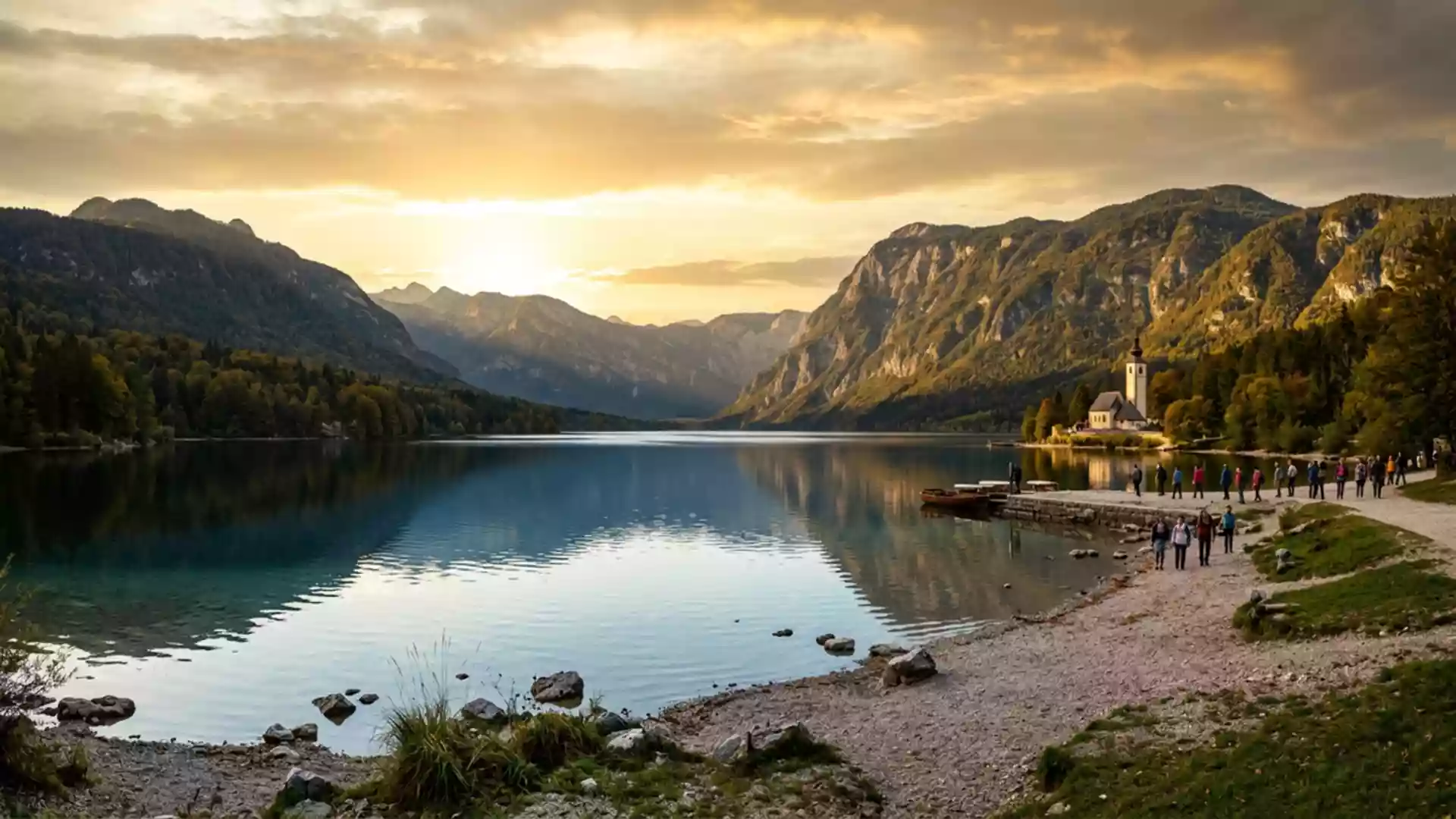
Bohinjsko jezero, a high Alpine lake in Bohinj
Published on 08/30/2026 at 13:55 | Editorial responsibility: Rafael Müller, Editor-in-Chief AD HOC NEWS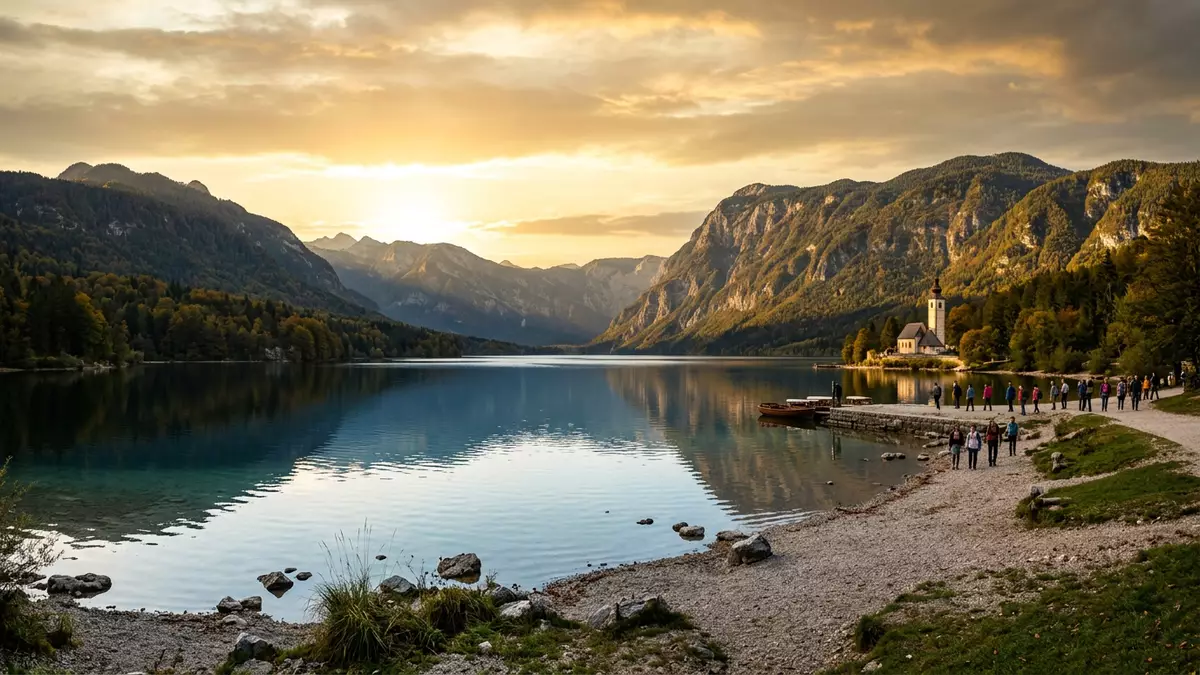
Bohinjsko jezero, known in English as Lake Bohinj, is a high Alpine lake in the municipality of Bohinj in north?western Slovenia, enclosed by the Julian Alps and lying within Triglav National Park. The lake occupies a glacial basin, with clear water held in a long, narrow bowl that has become one of the defining landscapes of this corner of Upper Carniola.
An Alpine lake shaped by ice and rock
Bohinjsko jezero is the largest permanent lake in Slovenia, covering about 318 hectares and stretching for over 4 km along the valley floor.largest permanent lake in Slovenia It lies at an altitude of around 525–526 m (1,722–1,726 ft), framed by steep mountain slopes on both its northern and southern shores.lies in the Julian Alps The basin itself is glacial?tectonic in origin, carved and deepened by the Bohinj glacier during the last ice ages, which left behind moraines that help form the lake’s present outline.glacier-tectonic origin
In plan, the lake reads as an elongated curve, with a maximum width of around 1.2 km (0.7 miles) and a shoreline that runs for more than 11 km (about 7 miles) around the water.length and width of the lake The water is notable for its depth: measurements give a maximum of about 45 m (148 ft), and a large share of the lake basin drops quickly away from the shore into deeper water.maximum depth of 45 m On the surface, light and weather pick out different hues in the water, but underneath lies a substantial volume, with around 92.5 million cubic metres of water held in the basin.
Water, valley and national park
The lake sits in the Bohinj Valley, on the southern side of the main Julian Alps ridge, in the north?western part of Slovenia’s Upper Carniola region.Bohinj Valley in Upper Carniola The municipality of Bohinj wraps around the lake and includes river gorges, smaller valleys and the southern shore of Bohinjsko jezero.municipality of Bohinj Glacier?carved peaks such as Pršivec to the north and Vogel to the south define the skyline, giving the lake a clear relationship to the surrounding mountains.between Pršivec and Vogel
Bohinjsko jezero lies entirely within Triglav National Park, Slovenia’s only national park, and is one of the park’s major bodies of water.part of Triglav National Park The lake is fed and drained by the Sava Bohinjka river system, which connects the basin with the wider Alpine watershed. Around the shore, mixed forest comes close to the waterline in many places, while open meadow and small settlement areas form shorter stretches of accessible bank. In clear conditions the lake mirrors the surrounding peaks, underlining the way the water and the valley form a single, enclosed landscape.
Shapes, depths and ways of experiencing Bohinjsko jezero
From end to end, Bohinjsko jezero runs for roughly 4.1 km (2.5 miles), with its long axis aligned along the valley, giving visitors a sense of travelling through a corridor of water and rock.length of around 4100 m Most of the basin is comparatively deep: only a small fraction of the lake is shallower than 10 m (33 ft), while large areas maintain depths beyond 20 m (66 ft).share of deep water This balance of steep, wooded slopes and deep water close to shore is one of the defining physical characteristics of Bohinjsko jezero.
Access points around the shore make it possible to experience the lake from different angles. Near the eastern end, where the valley opens slightly, the bank is more gently sloping and meadows reach down to the water, while elsewhere narrow strips of lakeside path run between forest and shore. The lake’s cold, clear character is reflected in measured water temperatures, which range from low single digits in winter to figures around the high teens in late summer at the surface.surface temperature figures For many visitors from Western Europe, Bohinjsko jezero offers a chance to see how a glacial basin, Alpine forest and protected waterscape combine in a single, coherent setting.
Visiting Bohinjsko jezero: what travellers from Western Europe should know
- Bohinjsko jezero lies in the municipality of Bohinj in north?western Slovenia, in the Julian Alps; it is reached by roads that follow the Sava Bohinjka valley from larger regional centres.
- The terrain around the lake includes sections of flat meadow near the eastern shore and steeper, forested slopes elsewhere, with lakeside paths that can involve uneven ground and short gradients.
- The lake sits at around 525–526 m (1,722–1,726 ft) above sea level in a mountainous area, so the approach from any direction includes noticeable altitude gain compared with lowland Slovenia.
- The official language is Slovene and the currency is the euro.
Searching for Bohinjsko jezero on social platforms
These links open searches for Bohinjsko jezero on each platform.
Frequently asked questions about Bohinjsko jezero
Where is Bohinjsko jezero?
Bohinjsko jezero is in the municipality of Bohinj in north?western Slovenia, in the Bohinj Valley on the southern side of the Julian Alps and within Triglav National Park.
What should visitors expect on a visit?
Visitors encounter a long, deep Alpine lake with clear water, steep wooded slopes, meadows near the eastern shore and lakeside paths that follow the edge of the basin.
What makes Bohinjsko jezero distinctive among Slovenian lakes?
Bohinjsko jezero is distinctive as Slovenia’s largest permanent natural lake, lying in a glacial?tectonic basin at around 525–526 m (1,722–1,726 ft) and enclosed by high Alpine peaks.