
Bohinjsko jezero: a glacial lake framed by the Julian Alps
Published on 09/07/2026 at 19:18 | Editorial responsibility: Rafael Müller, Editor-in-Chief AD HOC NEWS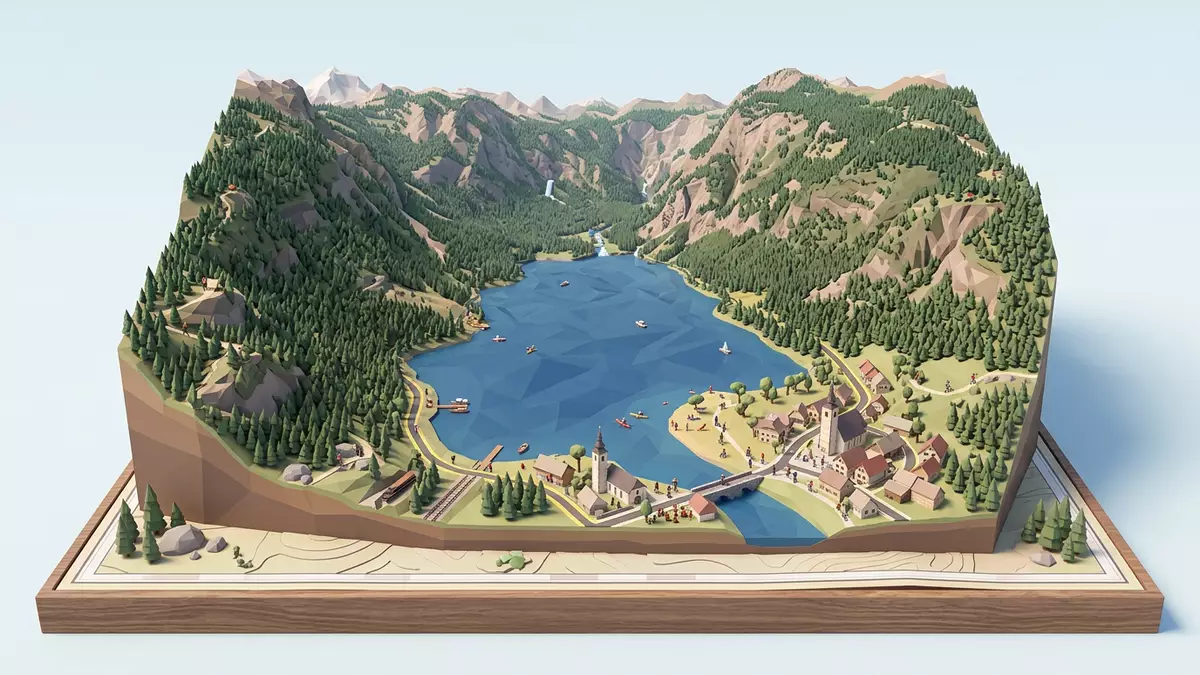
Bohinjsko jezero, known in English as Lake Bohinj, fills a long glacial basin in the municipality of Bohinj in north-western Slovenia, where the Julian Alps descend directly to the water. Rising at around 525 m (1,722 ft) above sea level and ringed by forested slopes and high ridges, it is recognised as the largest permanent natural lake in Slovenia and forms part of Triglav National Park, the country’s only national park.
A long, quiet lake shaped by ice
The defining feature of Bohinjsko jezero is its stretched, corridor-like shape, occupying the central part of the Bohinj Basin between steep northern cliffs and softer southern ridges. The lake surface covers about 318 ha in an elongated basin that reaches a length of a little over 4 km and a width of just over 1 km at its broadest point, figures that underline its role as Slovenia’s largest permanent lake.largest permanent natural lake The shoreline runs for roughly 11 km, tracing gentle curves where meadows reach the water and sharper angles where slopes fall directly into the lake basin.length of the lake shore
Geologists describe Bohinjsko jezero as a glacial–tectonic lake, occupying a depression that was reshaped by the Bohinj Glacier during the Pleistocene. The water body is relatively deep for its size, reaching a maximum depth of around 45 m, and holding more than 90 million cubic metres of water within its basin.maximum depth and water volume Only a small portion of the lake is shallow, while most of the basin plunges quickly beneath the surface, a structure that fits with its origin in a steep-sided glacial trough.glacial–tectonic origin
Water, mountains and protected landscapes
Bohinjsko jezero sits within Triglav National Park, a protected area centred on Mount Triglav and covering much of the Julian Alps in this corner of Slovenia.part of Triglav National Park The lake lies between the northern slopes of Pršivec and the southern ridge of the Lower Bohinj Mountains, creating a strong contrast between steep rock faces, high alpine pastures and densely wooded hillsides.between Pršivec and the Lower Bohinj Mountains Towards its eastern end the basin opens gently towards the villages of Stara Fužina and Rib?ev Laz, while the western end narrows into the trough around Ukanc.
The lake is a through-flowing body of water, fed mainly by Savica at its western end and draining via Jezernica at the eastern shore, which soon joins the Mostnica to form the Sava Bohinjka river.Savica inflow and Jezernica outflow Together with surrounding streams and forests, this water network links Bohinjsko jezero to the wider river systems of the region and contributes to the lake’s reputation as clear and cold, with surface temperatures that can nevertheless reach the mid-twenties °C in summer.summer and winter temperature range
Bohinj’s lake as a place to spend time
From the villages on its eastern shore, Bohinjsko jezero presents a long view westwards, with the water framed by rounded meadows and backed by the high skyline of Vogel and Komna. Footpaths and small roads allow visitors to follow the shoreline, passing bathing areas, boat landings and stretches of untouched forest. The lake lies in the north-western Upper Carniola region and sits about 20 km west of Bled, placing it within reach of other well-known alpine and karst landscapes in Slovenia.location in Upper Carniola
Tourism around Bohinjsko jezero developed during the nineteenth century, when visitors from Slovenia and abroad began to treat the lake and its valley as a summer retreat, followed in the early twentieth century by the establishment of lakeside hotels and organised bathing areas.early hotels and bathing areas After the Second World War, infrastructure expanded to include campsites and ski lifts on nearby Vogel, integrating lake-based activities with winter sports in the surrounding mountains.post-war tourism development Since 1981 Bohinjsko jezero has been formally included in Triglav National Park, shaping a framework in which recreation and conservation share the same landscape.
Visiting Bohinjsko jezero: what travellers from Western Europe should know
- Bohinjsko jezero lies in the municipality of Bohinj in north-western Slovenia, in the Julian Alps; the nearest well-known town is Bled to the east, and the lake is linked by road to the wider Upper Carniola region.
- The lakeshore combines level meadows with forested slopes, and the full circuit on foot is long, with sections where paths follow close to the water and others where they climb slightly above it.
- The surrounding mountains reach well above 1,000 m (3,281 ft), and access routes from the lake to upland pastures and viewpoints involve sustained gradients and, in places, narrow paths on alpine terrain.
- The official language is Slovene and the currency is the euro.
Searching for Bohinjsko jezero on social platforms
These links open searches for Bohinjsko jezero on each platform.
Frequently asked questions about Bohinjsko jezero
Where is Bohinjsko jezero located?
Bohinjsko jezero is in the municipality of Bohinj in north-western Slovenia, in the Bohinj Valley of the Julian Alps and the Upper Carniola region.
What should visitors expect at the lake?
Visitors encounter a long alpine lake with clear, relatively deep water, backed by steep mountains and forests, with shoreline paths, meadows and small lakeside settlements.
What makes Bohinjsko jezero distinctive among Slovenian lakes?
Bohinjsko jezero is distinctive as Slovenia’s largest permanent natural lake, lying in a glacial–tectonic basin within Triglav National Park and directly enclosed by the Julian Alps.


