
Boccadasse, the Ligurian cove within the city of Genua
Published on 09/14/2026 at 10:25 | Editorial responsibility: Rafael Müller, Editor-in-Chief AD HOC NEWS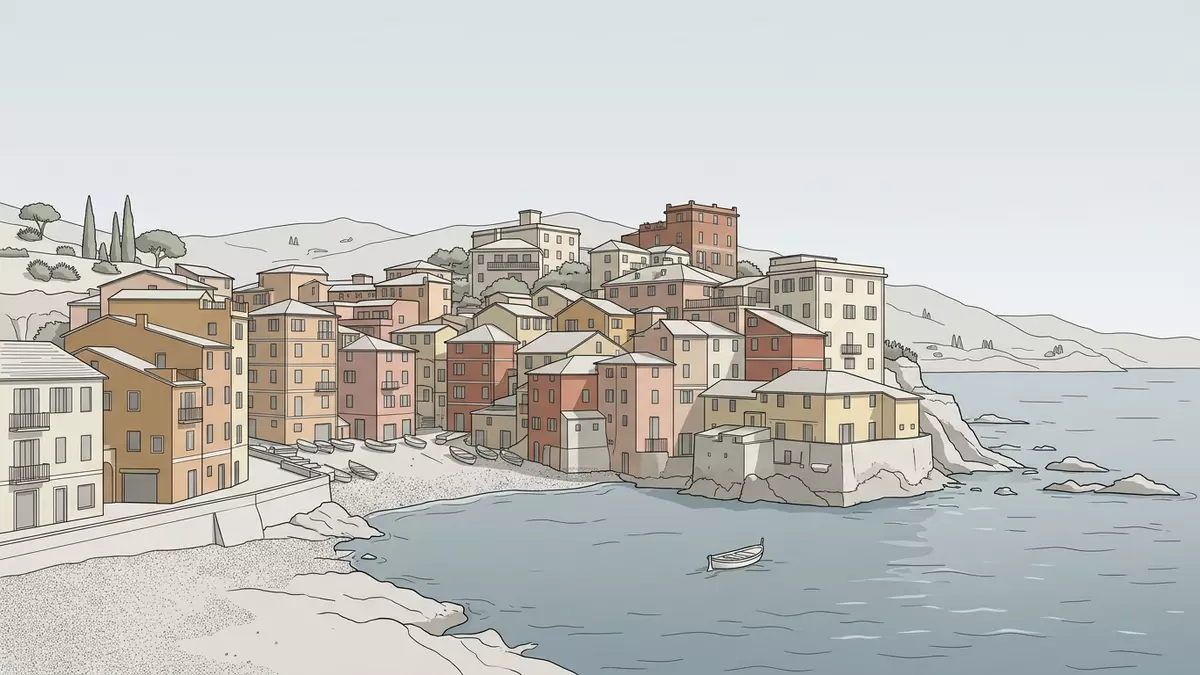
Boccadasse is an old fishing cove on the Ligurian coast of Genua, folded into the Albaro district yet still centred on a small pebble beach and pastel houses.old mariners' village The cove sits at the eastern end of Corso Italia, where the city’s seafront promenade meets a natural inlet backed by narrow lanes and a small piazza.Corso Italia promenade
A Ligurian fishing inlet inside Albaro
Boccadasse forms part of the residential Albaro quarter, within the Municipio VIII Medio Levante that also includes Foce and San Martino.Albaro neighbourhood It lies between Corso Italia and the low headland of Capo Santa Chiara, with Vernazzola and Sturla along the shoreline further east.between Corso Italia and Capo Santa Chiara
The name Boccadasse is linked to the shape of the inlet, described as a narrow mouth in the rock where boats could be hauled onto the shingle. A dense cluster of fishermen’s houses rises directly behind the landing place, creating a compact amphitheatre of buildings overlooking the water.
Pastel houses, church and pebble beach
The core of Boccadasse is a tiny bay lined with dark pebbles and beach-launched wooden boats.small dark pebble beach Around it stand tall, narrow houses in typical Ligurian pastel shades, tightly packed and stepped along the slope, with external stairways and balconies facing the sea.pastel-coloured houses
Behind the beach lies Piazza Nettuno, a small paved space that serves as the village’s central meeting point.Piazza Nettuno A parish church stands just above this square on the seafront, raised slightly on the slope and looking out along the coast towards the Riviera di Levante.ancient fishermen village
From medieval village to Genua neighbourhood
Boccadasse has roots as a mariners’ settlement dating back many centuries; sources place a fishing community here since at least the eleventh century, linked to coastal trade and small-scale fisheries along the Ligurian Sea.fishing village since at least the 11th century In the nineteenth century it was absorbed into the expanding urban fabric of Genua, becoming an integral neighbourhood without losing its compact harbour and working boats.inglobato nel tessuto urbano della città nel 1874
As Genua’s seafront developed, Corso Italia was laid out as a wide coastal promenade linking the Foce district with Albaro, bringing a continuous urban frontage almost to the edge of Boccadasse.built in the early twentieth century The cove retained its village-scale layout, with stepped caruggi, low retaining walls and short flights of steps connecting the upper streets with the beach and piazza.
Visiting Boccadasse: what travellers from Western Europe should know
- Boccadasse lies east of central Genua within the Albaro district, at the eastern end of the seafront Corso Italia promenade that runs out from the Foce area.
- The approach from Corso Italia drops down towards the cove on sloping streets and stairways, and the final access to the pebble beach itself runs over uneven shingle.
- Vernazzola and Sturla line the coast just beyond Capo Santa Chiara to the east, so Boccadasse can form part of a longer shoreline walk through several small bays.
- The official language is Italian and the currency is the euro.
Searching for Boccadasse on social platforms
These links open searches for Boccadasse on each platform.
Frequently asked questions about Boccadasse
Where is Boccadasse in relation to Genua?
Boccadasse lies on the eastern side of Genua within the Albaro district, between the Foce area and the headland of Capo Santa Chiara along the Ligurian coast.
What should visitors expect when they arrive?
Visitors find a compact pebble cove framed by pastel Ligurian houses, with stepped lanes leading to a small piazza and a seafront church just above the beach.
What makes Boccadasse distinctive among Genua’s districts?
Boccadasse stands out for its preserved fishing-village layout, with working boats on the shore, dense historic housing and an inlet that feels separate from the broader grid of streets.


