
Bocas del Toro’s low islands and wooden Caribbean town
Published on 09/09/2026 at 20:45 | Editorial responsibility: Rafael Müller, Editor-in-Chief AD HOC NEWS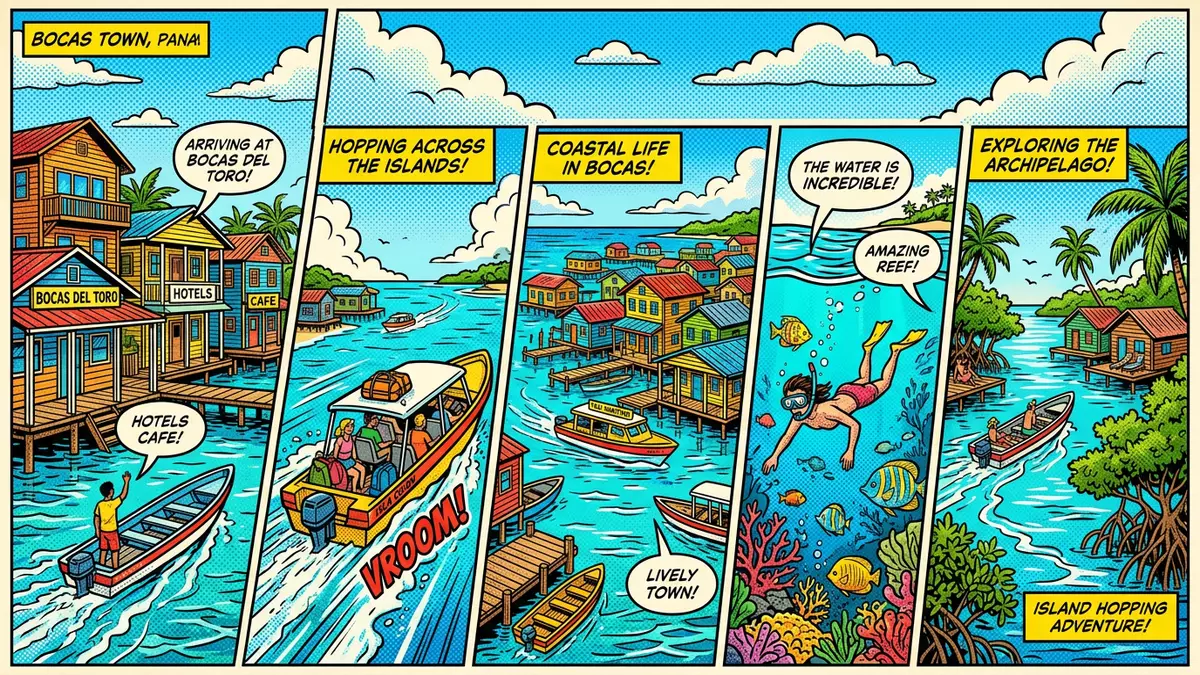
On Panama’s north?western Caribbean coast, Bocas del Toro brings together a weathered wooden port town on Isla Colón and a broad scatter of low, green islands across Almirante Bay and the Chiriquí Lagoon. The provincial capital, a small town built along the water on the southern tip of Colón Island, looks out over channels, mangroves and reef?lined shores that define the wider Bocas del Toro Archipelago.
Caribbean archipelago at Panama’s north?western edge
Bocas del Toro is both a province of Panama and a group of tropical islands lying off the country’s north?western coast near the border with Costa Rica, forming an archipelago in the Caribbean Sea together with adjacent mainland, bays and lagoon.province and town on Colón Island The provincial territory includes the Bocas del Toro Archipelago itself, Almirante Bay and the Chiriquí Lagoon, so sea channels, islands and humid lowland forest interlock across more than 4,600 km² (around 1,800 sq mi) of land and water.area including bay and lagoon
The archipelago is made up of several main islands and numerous smaller cays and islets scattered in the Caribbean Sea. Among the larger islands are Colón, where the town of Bocas del Toro stands at the southern tip, Bastimentos, Solarte, San Cristóbal, Popa and Cayo de Agua, each separated by channels that connect outward to the open sea.group of tropical islands The result is a landscape in which low islands and mangrove fringes alternate with shallow reef patches and deeper water, giving visitors a sense that land and sea mesh rather than meet at a single shoreline.
Bocas Town: wooden waterfront port turned Caribbean hub
The town of Bocas del Toro, often called Bocas Town, forms the urban heart of the province and district, lying at the southern tip of Colón Island in Almirante Bay.capital on Isla Colón Founded in the early nineteenth century by African immigrants, it later grew as a banana port before shifting towards other exports such as cacao, coconuts and plantains and a broader role as a regional commercial centre.banana port and commercial centre
Much of Bocas Town’s built fabric consists of timber architecture along and above the waterfront, with houses, small hotels and shops lining streets close to the sea and some structures extending out on piles above the water. Domestic airlines link its small airport on Colón Island with Panama City and other parts of the country, so flights approach over Almirante Bay to a runway within walking distance of the town centre.island as main tourist attraction Water taxis and small boats connect Bocas Town with nearby islands and coastal villages, reinforcing the impression that streets, jetties and sea routes together form a single, extended public space.
Islands, reefs and rainforest: nature around Bocas del Toro
The Bocas del Toro Archipelago sits within warm Caribbean waters rich in coral reefs, seagrass meadows and mangrove thickets, making marine and coastal ecosystems a core part of the province’s character.coral reefs and mangrove The islands rise only modestly above sea level, so forested slopes descend quickly towards beaches and mangrove roots, and shallow bays often reveal coral heads and sandy patches beneath clear water.
On many islands, humid tropical forest covers interior ridges and slopes, while coastlines alternate between sandy beaches, rocky stretches and mangrove belts. The combination of low elevation, rainforest and surrounding sea gives Bocas del Toro a setting where boat journeys pass from open channels into narrow mangrove passages and then out again to wider bays backed by green hills.isolated border region Protected areas on some islands safeguard sections of forest and reef, adding a conservation dimension to the province’s mix of settlement, agriculture and tourism.
Visiting Bocas del Toro: what travellers from Western Europe should know
- Bocas del Toro lies in north?western Panama near the border with Costa Rica, with Bocas Town on the southern tip of Colón Island in Almirante Bay; domestic flights link the town with Panama City and overland routes reach ports such as Almirante by road before onward travel by boat.
The setting combines island channels, bays and adjacent mainland forest rather than a single, continuous coastline. - Movement within the archipelago depends heavily on boats and water taxis, so reaching beaches, snorkelling spots and neighbouring islands involves boarding small vessels from jetties or simple waterfront landings.
Within Bocas Town, streets are level but some access paths on the islands make use of simple tracks, wooden walkways and short flights of steps. - The official language is Spanish and the currency is the Panamanian balboa, which is used alongside the United States dollar in everyday transactions.
- Entry requirements depend on your nationality; UK travellers can check the FCDO travel advice at gov.uk/foreign-travel-advice, Irish travellers the Department of Foreign Affairs at ireland.ie.
Searching for Bocas del Toro on social platforms
These links open searches for Bocas del Toro on each platform.
Frequently asked questions about Bocas del Toro
Where is Bocas del Toro and what does it include?
Bocas del Toro is a province in north?western Panama on the Caribbean coast, comprising the Bocas del Toro Archipelago together with parts of the adjacent mainland, Almirante Bay and the Chiriquí Lagoon.province including main islands
What should visitors expect on a first visit?
Visitors encounter a small wooden waterfront town on Isla Colón connected by boats and water taxis to low, green islands, mangrove passages and reef?lined bays where forest, sea and settlement sit in close proximity.
What makes Bocas del Toro distinctive among Panama’s regions?
The combination of a Caribbean island capital on Colón Island, a wide archipelago of tropical islands and coastal ecosystems of coral reef, mangrove and lagoon gives Bocas del Toro a character where maritime and rainforest landscapes are closely intertwined.


