
Bocas del Toro: Caribbean islands where rainforest meets reef
Published on 09/22/2026 at 17:21 | Editorial responsibility: Rafael Müller, Editor-in-Chief AD HOC NEWS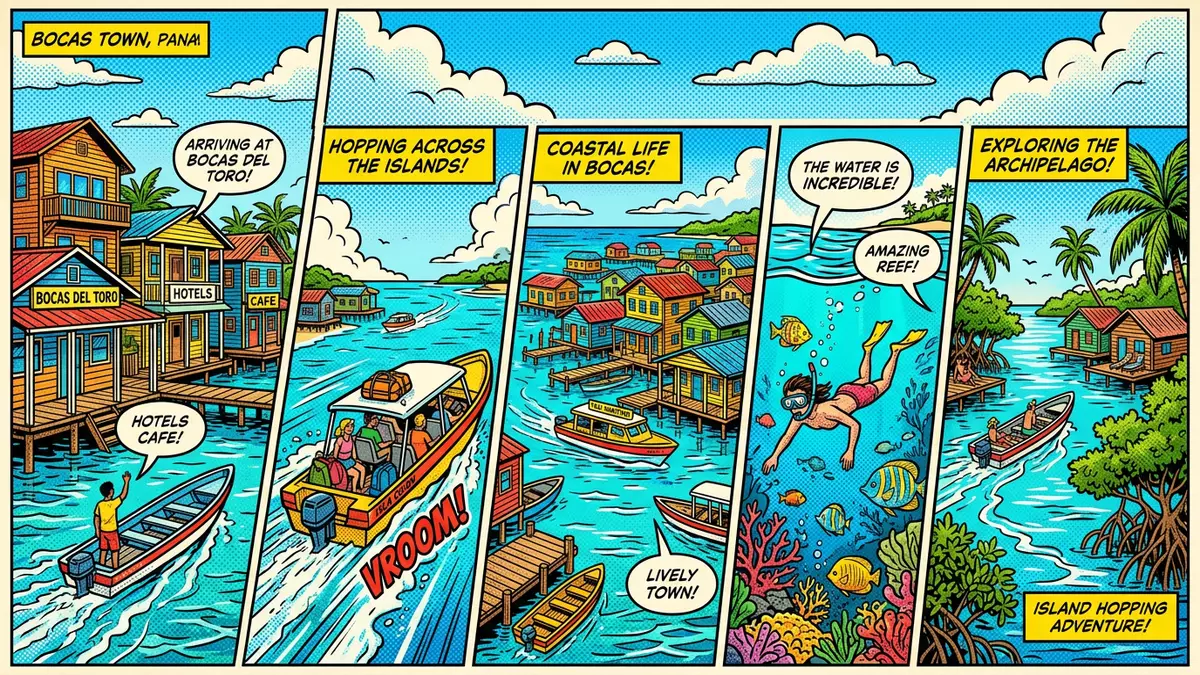
Bocas del Toro on Panama’s Caribbean coast brings together low-lying rainforest islands, coral reefs and a small provincial capital spread across sea and shore in the country’s north-western corner. The province includes an archipelago in the Caribbean Sea, the Almirante Bay and Chiriquí Lagoon, along with a strip of mainland facing Costa Rica to the north.northwestern Panama
Islands, lagoons and a town at the edge of the Caribbean
Bocas del Toro Province covers mainland forest and a chain of tropical islands in the Caribbean Sea, with the Bocas del Toro Archipelago lying off the north?western coast of Panama near the border with Costa Rica.area is 4,643.9 square kilometres The archipelago sits around Almirante Bay and Chiriquí Lagoon, with mangroves and seagrass meadows in the sheltered waters between islands and mainland.group of tropical islands
The provincial capital, Bocas Town, lies at the southern tip of Colón Island, facing Almirante Bay and acting as a hub for boats, small domestic flights and local commerce.town at the southern tip of Colón Island The town developed in the nineteenth and early twentieth centuries as a Caribbean port for agricultural exports and was founded by African immigrants in the early 1800s before fires in the early 1900s reshaped its built fabric.founded by African immigrants in the early 19th century
Rainforest, coral reefs and Indigenous territories
The landscape of Bocas del Toro alternates between lowland rainforest on the mainland, mangrove shores and coral reefs around the islands, creating one of Panama’s most biodiverse coastal regions.richest ecosystems in the Caribbean The archipelago includes islands with forested interiors, shallow reef shelves and seagrass beds that support marine species, while the continental side stretches towards the forested slopes of the Cordillera Talamanca.between the Caribbean and the forested slopes of the Cordillera Talamanca
Among the islands, Colón serves as the main settlement, while Bastimentos carries much of the country’s marine national park area, and Carenero and other smaller islands host villages and coastal communities.Parque Nacional Marino Isla Bastimentos Indigenous Ngäbe?Buglé communities live on several of the islands and parts of the mainland, contributing languages and cultural practices alongside Spanish in everyday life across the province.Ngäbe-Buglé Indigenous population
From cacao ports to sea-facing travel base
Historically, Bocas del Toro grew as a Caribbean port connected to the agricultural interior, with banana exports shaping its early twentieth?century economy before later shifts towards other crops such as cacao, coconuts and plantains.banana port but now exports primarily cacao, coconuts, and plantains The town’s position on Colón Island turned it into a regional commercial centre for neighbouring communities around Almirante Bay, with boats linking villages on Bastimentos, Popa and smaller islands.
In the twentieth and twenty?first centuries, domestic flights began linking Panama City with the small airport on Colón Island, making Bocas Town a starting point for travellers exploring the wider archipelago of low?lying islands, mangrove bays and reef?fringed shores.Captain José Ezequiel Hall International Airport Alongside the town, settlements such as Almirante and Changuinola on the mainland continue to anchor commerce and transport for the province.other major cities or towns include Almirante and Changuinola
Visiting Bocas del Toro: what travellers from Western Europe should know
- Bocas del Toro lies in north?western Panama facing the Caribbean Sea, with flights connecting Panama City to the airport on Colón Island and boats linking mainland ports such as Almirante to Bocas Town.
- The terrain combines low?lying rainforest, coastal lagoons and flat island interiors, with approaches to village jetties and waterfront areas often involving short walks over wooden walkways and simple piers.
- The archipelago sits near the border with Costa Rica, and overland approaches from the Pan?American Highway reach ports on the mainland before onward travel by boat to the islands.
- The official language is Spanish and the currency is the United States dollar.
- Entry requirements depend on your nationality; UK travellers can check the FCDO travel advice at gov.uk/foreign-travel-advice, Irish travellers the Department of Foreign Affairs at ireland.ie.
Searching for Bocas del Toro on social platforms
These links open searches for Bocas del Toro on each platform.
Frequently asked questions about Bocas del Toro
Where is Bocas del Toro in Panama?
Bocas del Toro lies in Panama’s north?west, facing the Caribbean Sea near the border with Costa Rica, with the provincial capital on Colón Island in Almirante Bay.
What should visitors expect on a trip to Bocas del Toro?
Visitors encounter a mix of low?lying rainforest, coastal towns and island villages connected by boats, with coral reefs, mangroves and shallow lagoons surrounding the archipelago.
What makes Bocas del Toro distinctive among Panama’s regions?
The combination of Caribbean islands, mainland rainforest, Indigenous territories and a small capital town on Colón Island gives the province a sea?oriented character that differs from Panama’s Pacific regions.


