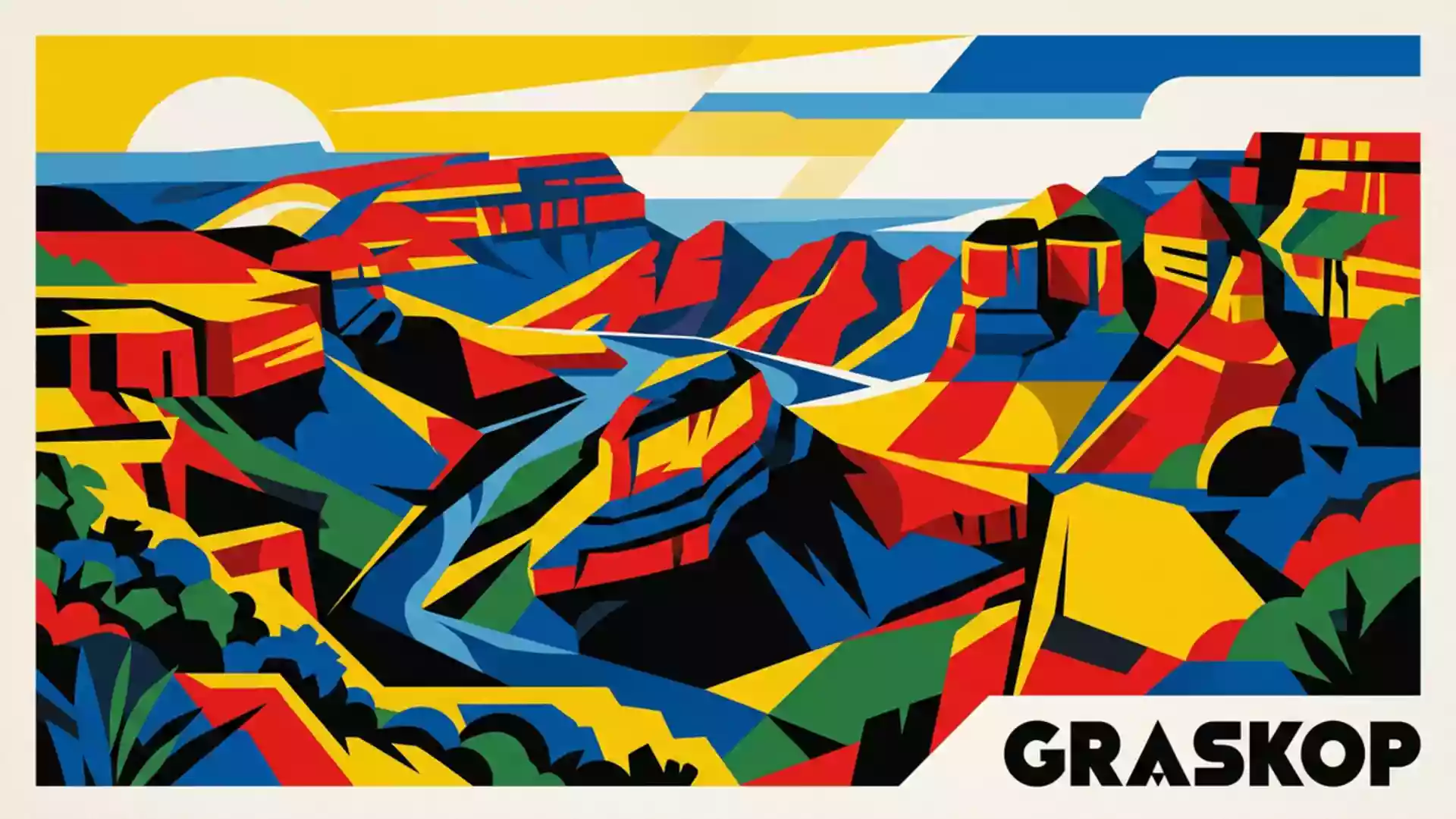
Blyde River Canyon, a green sandstone gorge above Graskop
Published on 09/11/2026 at 20:33 | Editorial responsibility: Rafael Müller, Editor-in-Chief AD HOC NEWS
Blyde River Canyon in Mpumalanga province is a long, winding gorge where the Blyde River has cut deeply into sandstone and quartzite north of Graskop, leaving high cliffs above green, subtropical slopes. This river-carved landscape occupies part of the Drakensberg escarpment, a geological feature linked to the breakup of the ancient supercontinent Gondwana during the late Triassic and early Jurassic periods. The canyon forms the core of the Blyde River Canyon Nature Reserve, a protected area mapped near 24.6°S, 30.8°E and recognised as one of South Africa’s major scenic landscapes.
A green canyon on the Drakensberg escarpment
Blyde River Canyon runs for around 26 km (16 mi) along the course of the Blyde River, following a curving line through the northern part of the Drakensberg escarpment in eastern Mpumalanga.around 26 km Over this length the land drops on average about 800 m (2,625 ft) from the high plateau near Graskop down towards the riverbed and the lower plains.around 800 m deep The result is a corridor of cliffs, terraces and buttresses, with forested slopes giving the valley a markedly green appearance compared with many other large canyons.
The nature reserve surrounding the gorge covers tens of thousands of hectares and lies north of the small town of Graskop on the Panorama Route, a scenic drive that threads viewpoints and waterfalls along the escarpment edge.Panorama Route section From the plateau, travellers look down on the river bending far below, its course framed by steep rock walls and dense subtropical foliage. In many places the contrast between rust-coloured sandstone layers and the green cover of cycads, ferns and indigenous forests gives Blyde River Canyon its characteristic “green canyon” identity.green canyon description
Sandstone, quartzite and long geological history
The canyon sits within the Greater Drakensberg escarpment, a line of cliffs and stepped slopes formed as southern Africa’s high ground broke away from the lowveld during the fragmentation of Gondwana around 200 million years ago.origins around 200 million years ago In this region layers of sedimentary rock from the Transvaal Supergroup record ancient lakes, shallow seas and river systems that later hardened into quartzite, shale and sandstone. Over millions of years the Blyde River and its tributaries have eroded these strata, cutting a deep gorge and revealing cliffs that display the rock sequence along the escarpment.
Geological descriptions of Blyde River Canyon identify named formations such as the Black Reef Quartzite and the Timeball Hill Shale, together with dolerite intrusions that weather differently and help shape the varied skyline above the gorge.Black Reef Quartzite and Timeball Hill Shale Hard quartzite forms steep cliff faces and prominent buttresses, while softer shale and sandstone tend to break into inclines that carry soil and vegetation. In places dolerite dykes and sills erode into recesses or shelves, adding variety to the ridge lines and creating viewpoints where travellers can see the river turning between rock walls below.geological formations near Bourke’s Luck Potholes
Rivers, viewpoints and named rock formations
The Blyde River has its source in the Drakensberg near Pilgrim’s Rest and flows north to meet the Treur River at Bourke’s Luck Potholes before entering the great gorge and continuing towards the Blyde Dam.Blyde and Treur confluence At this confluence whirlpools have carved cylindrical potholes into the bedrock, forming a cluster of rounded basins that reveal cross-sections of the sedimentary layers. Further along the escarpment, formations such as the Three Rondavels, Pinnacle Rock and viewpoints like God’s Window mark places where rock walls rise as distinct towers or pillars above the forested slopes.Three Rondavels and Pinnacle Rock
Many of these features are reached from the plateau side, where roads lead to short paths and terraces on the rim of the canyon. From high ground the river appears as a narrow band, curving between sandstone walls and broad bends before widening near the Blyde Dam at the lower end of the gorge.red rock escarpment above Graskop The nature reserve around the canyon is mapped as a biosphere reserve, with rock walls and forested slopes forming habitats that differ between misty highlands, mid-level terraces and warmer country near the dam.biosphere reserve description
Visiting Blyde River Canyon: what travellers from Western Europe should know
- Blyde River Canyon lies in Mpumalanga in north-eastern South Africa, north of Graskop, along a section of the Panorama Route on the Drakensberg escarpment. It is reached by road along the plateau, with access points near Graskop and other small towns on the escarpment.
- The terrain combines high plateau viewpoints with steep slopes and deep valleys. Approaches to lookouts typically involve short walks on paths and terraces near the canyon rim, where drops towards the river are substantial and rock edges demand care.
- Within the reserve, rock walls, forested slopes and river valleys form varied ground. Travellers encounter sandstone and quartzite cliffs, subtropical vegetation and, near Bourke’s Luck Potholes, exposed bedrock along the river where cylindrical basins have been eroded.
- Blyde River Canyon lies in South Africa. The official languages include English among others and the currency is the South African rand.
- Entry requirements depend on your nationality; UK travellers can check the FCDO travel advice at gov.uk/foreign-travel-advice, Irish travellers the Department of Foreign Affairs at ireland.ie.
Searching for Blyde River Canyon on social platforms
These links open searches for Blyde River Canyon on each platform.
Frequently asked questions about Blyde River Canyon
Where is Blyde River Canyon?
Blyde River Canyon is in Mpumalanga province in north-eastern South Africa, north of Graskop, on the Drakensberg escarpment along the Panorama Route.
What kind of landscape does Blyde River Canyon offer?
It is a long sandstone and quartzite gorge where the Blyde River has carved deep cliffs and terraces, with subtropical vegetation covering slopes between the plateau and the river.
What makes Blyde River Canyon distinctive among South African sights?
The combination of a very deep, river-cut canyon, rust-coloured sedimentary rock and lush subtropical foliage gives it a recognisable “green canyon” character within the Drakensberg escarpment.