
Blue Nile Falls and the smoking water of Ethiopia
Published on 08/28/2026 at 16:09 | Editorial responsibility: Rafael Müller, Editor-in-Chief AD HOC NEWS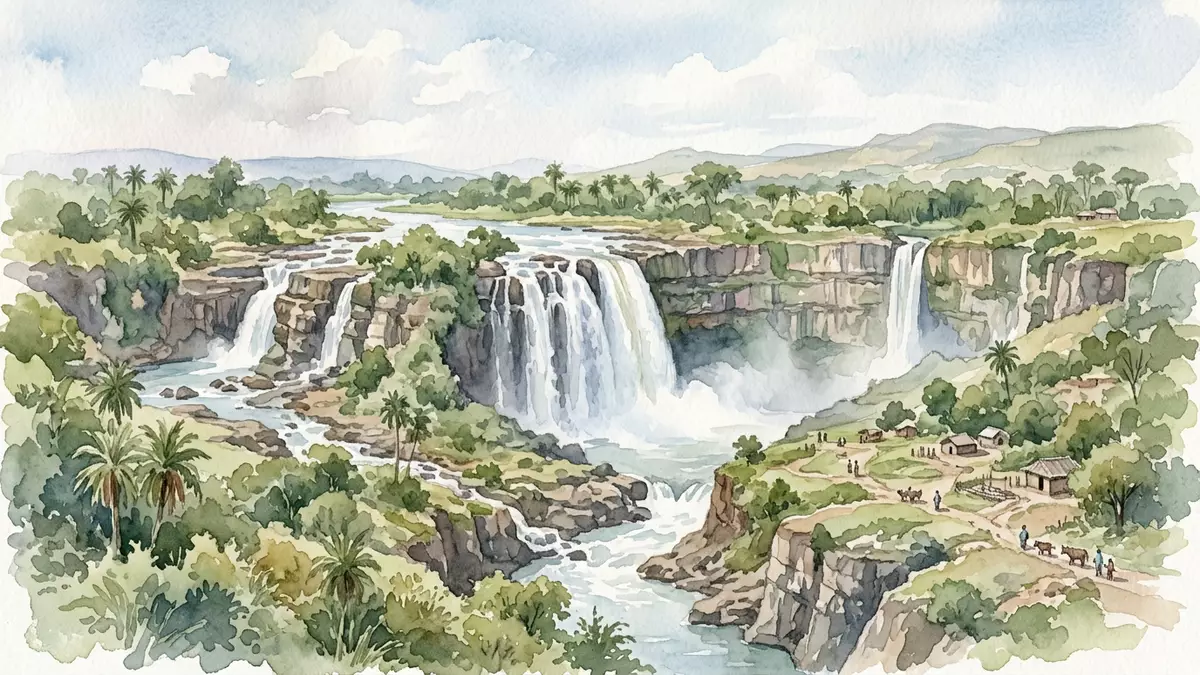
Blue Nile Falls near Bahir Dar in northern Ethiopia takes the otherwise steady Blue Nile River and hurls it over a basalt escarpment in a broad, thundering drop. Known in Amharic as Tis Issat or Tis Abay, meaning “water that smokes”, the waterfall combines height, width and setting to create one of the most dramatic river falls in the Ethiopian Highlands.
Basalt cliffs and a smoking curtain of water
Blue Nile Falls is a waterfall on the Blue Nile River in the Amhara Region of Ethiopia, on the river’s upper course south of Bahir Dar and Lake Tana.waterfall on the Blue Nile The river drops around 42 m (138 ft) over a basalt ledge into a rocky gorge, sending up a dense veil of spray that gave the falls its “smoking water” name.drops around 42 m The cliffs around the falls are formed from dark volcanic rock, cut by the river into a sharp step that concentrates the flow into the main plunge.
In the rainy season the Blue Nile spreads across several channels before reaching the edge, and the combined flow can reach a width of around 400 m (1,312 ft).width of around 400 m The falls are divided into multiple streams separated by rocky outcrops, so that visitors see not a single narrow chute but a broad curtain broken by pillars of basalt and patches of vegetation clinging to the cliff.
The Blue Nile on its way from Lake Tana
Blue Nile Falls lies downstream from Lake Tana, where the Blue Nile emerges from Ethiopia’s largest lake and begins its journey towards Sudan and the wider Nile system.emerges from Ethiopia’s largest lake From the lakeside city of Bahir Dar the river flows south-east across cultivated highland, then drops at the falls near the village of Tis Issat before continuing in a narrower gorge. The surrounding landscape is a patchwork of fields, scattered trees and small settlements, with footpaths running towards the river.
Locally the area around the falls is known by the Amharic name Tis Issat, “water that smokes”, a reference to the cloud of spray and fine mist that hangs above the gorge when the river is in full flood.Amharic name Tis Issat On clear days the plume can be seen from surrounding hills, rising above the dark line of the river and marking the point where the Blue Nile leaps off the basalt shelf.
A rural approach and paths around the falls
The approach to Blue Nile Falls runs through rural Ethiopia rather than dense city streets. Travellers reach the falls via the town of Tis Abay or Tis Issat, south-east of Bahir Dar, then follow paths that descend towards the river and cross older stone structures.reach the falls via the town of Tis Abay One well-known route passes a historic bridge built in the seventeenth century under Portuguese influence, regarded as the first bridge to span the Blue Nile.historic bridge built in the seventeenth century
Footpaths in the area wind across uneven ground, including stony sections and slopes that lead down to vantage points opposite the falls. Routes on different sides of the river give varied views: some look straight onto the main drop, others reveal side channels and the shape of the gorge downstream. Simple boat crossings operate on parts of the river, linking paths and allowing circuits that take in both banks as well as villages and farmland near the water.
Visiting Blue Nile Falls: what travellers from Western Europe should know
- Blue Nile Falls lies south-east of Bahir Dar in northern Ethiopia, with access commonly arranged via the village of Tis Issat or Tis Abay and the surrounding highland roads.
- Paths around the falls involve walking over uneven, rocky ground and slopes, including sections that descend towards the river, so sturdy footwear is advisable for the approach.
- The official language is Amharic and the currency is the Ethiopian birr.
- Entry requirements depend on your nationality; UK travellers can check the FCDO travel advice at gov.uk/foreign-travel-advice, Irish travellers the Department of Foreign Affairs at ireland.ie.
Searching for Blue Nile Falls on social platforms
These links open searches for Blue Nile Falls on each platform.Frequently asked questions about Blue Nile Falls
Where is Blue Nile Falls located?
Blue Nile Falls is on the Blue Nile River in Ethiopia’s Amhara Region, south-east of Bahir Dar and downstream from Lake Tana.
What should travellers expect on a visit?
Travellers encounter a high waterfall dropping over basalt cliffs, approached via rural roads and footpaths that cross rocky ground and pass villages near the river.
What makes Blue Nile Falls distinctive?
The combination of a drop of around 42 m (138 ft), a rainy-season width of around 400 m (1,312 ft) and the “smoking water” spray above basalt cliffs gives the falls their character.


