
Blue Mountains near Kingston, where forest and memory meet
Published on 09/10/2026 at 18:59 | Editorial responsibility: Rafael Müller, Editor-in-Chief AD HOC NEWS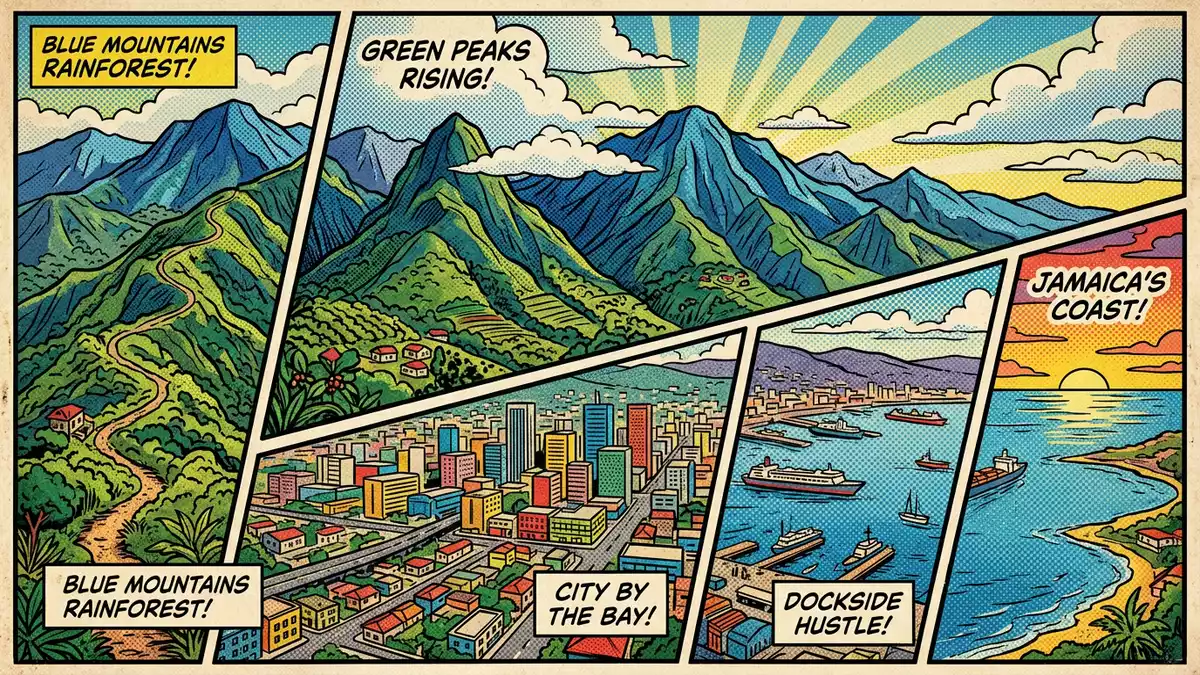
Blue Mountains rises east of Kingston as a long, forested range with Blue Mountain Peak at 2,256 m (7,402 ft). The high slopes, deep greenery and layered ridgelines give the range its clearest identity.
The area forms part of the Blue and John Crow Mountains, inscribed as a UNESCO World Heritage site in 2015. The name also carries the history of Maroon settlement, trail networks and mountain refuge.
Blue Mountains and the eastern ridge of Jamaica
The range extends from the hills above Kingston towards the Caribbean side of Jamaica. Britannica places it in eastern Jamaica and gives the summit height of Blue Mountain Peak.
UNESCO describes the wider property as rugged and heavily forested, with a landscape that includes montane rainforest and a rich spread of plant life. That mix of height, forest and steep terrain defines the range more than any single viewpoint.
Maroon trails, settlements and mountain memory
The Blue Mountains are closely tied to the Windward Maroons, who used the uplands as a refuge. The World Heritage decision links the place to trails, hiding places and settlements that form the Nanny Town Heritage Route.
That historical layer sits beside the natural one rather than replacing it. The mountains hold forest, waterways and human traces in the same landscape, with Maroon association part of their formal heritage status.
A protected mountain landscape
The Blue Mountains sit within the Blue and John Crow Mountains National Park. The park material identifies Blue Mountain Peak, the national park setting and the link with Kingston.
The range is not only a summit and a forested skyline. It is also a named cultural landscape, with biodiversity, steep relief and a long record of mountain use in one place.
Visiting Blue Mountains: what travellers from Western Europe should know
- The range lies east of Kingston. Road access reaches the mountain communities and the park area from the city side.
- The terrain is steep and high. Blue Mountain Peak rises to 2,256 m (7,402 ft), and the landscape includes forested slopes and mountain trails.
- The official language is English and the currency is the Jamaican dollar.
- Blue Mountains sits within a national park and a UNESCO World Heritage landscape, so the place combines natural scenery with Maroon heritage.
Searching for Blue Mountains on social platforms
These links open searches for Blue Mountains on each platform.
Frequently asked questions about Blue Mountains
Where are the Blue Mountains?
They rise east of Kingston in Jamaica, within the larger Blue and John Crow Mountains landscape. The range reaches the island’s highest point at Blue Mountain Peak.
What should a visit to the Blue Mountains involve?
The place combines steep mountain terrain, forest and a national park setting. It also carries Maroon heritage, so the landscape reads as both natural and historical.
What makes Blue Mountains distinctive?
The clearest feature is the combination of high relief, dense forest and cultural memory. UNESCO recognition, Blue Mountain Peak and the Maroon trail heritage all belong to the same mountain system.


