
Blue Mountains near Katoomba, a sandstone plateau of forests and cliffs
Published on 09/08/2026 at 12:56 | Editorial responsibility: Rafael Müller, Editor-in-Chief AD HOC NEWS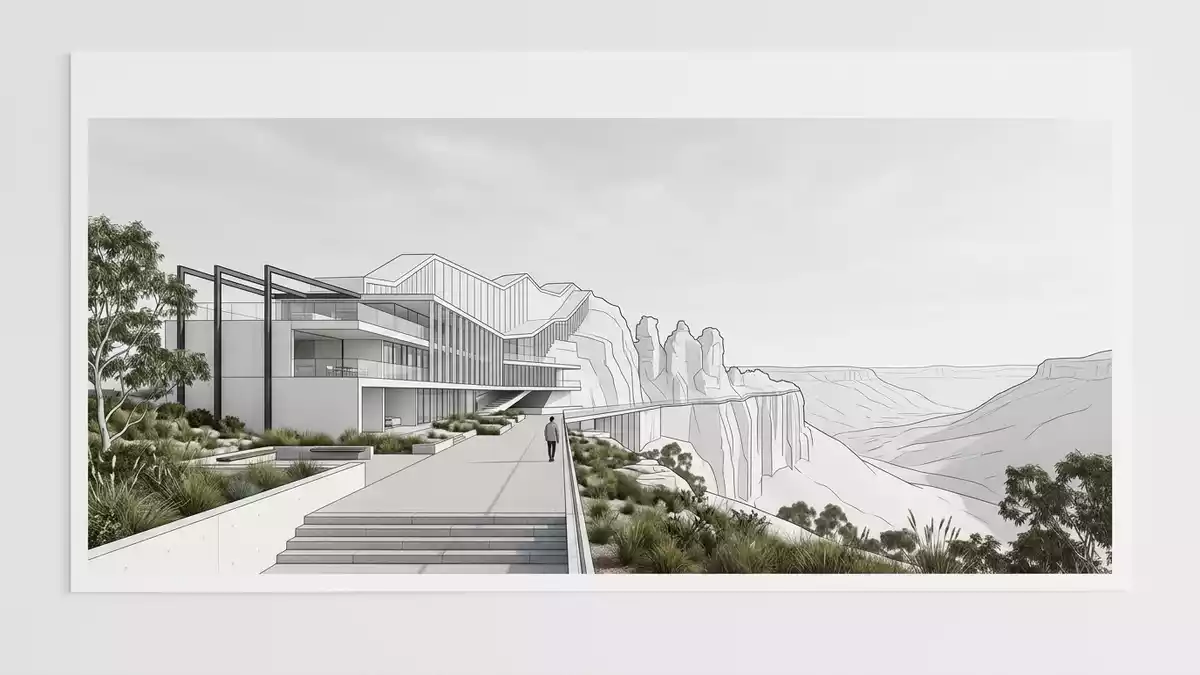
West of Sydney, the Blue Mountains rise as a broad sandstone plateau cut by deep valleys and cliffs, with Katoomba sitting close to some of the most accessible lookouts. The area forms part of the Greater Blue Mountains Area, which was inscribed as a World Heritage property in 2000 for its extensive eucalypt forests and varied habitats. This plateau landscape, with its mix of forested ridges and sheer escarpments, shapes almost every view from Katoomba’s clifftop walks and scenic rides.
Sandstone plateau and forested valleys
The Blue Mountains are built on a sandstone plateau that stretches inland from Sydney and is carved into plateaux, escarpments and gorges by rivers and creeks. The broader Greater Blue Mountains Area covers over 10,000 km2 of mostly forested landscape on this plateau, with elevations ranging from low hills near the coastal plain to higher points around 1,300 m (4,265 ft).over 10,000 km2 of mostly forested landscape Sandstone cliffs drop to valleys lined with temperate eucalypt forest, and the plateau surface carries towns, roads and walking tracks close to the edges.
The Greater Blue Mountains Area covers 1,032,649 ha in eight protected areas, including Blue Mountains National Park, Wollemi, Yengo and several other reserves.1,032,649 ha in eight areas Within this system, Blue Mountains National Park is one of the core sections and surrounds Katoomba with forest and cliffs.Blue Mountains National Park The combination of dissected sandstone and extensive forest cover creates long ridges, narrow gorges and broad valley floors, giving visitors a sense of scale when looking out from Echo Point or similar viewpoints.
A World Heritage landscape of eucalypts
The Greater Blue Mountains Area was inscribed on the World Heritage List in 2000 under natural criteria based on its eucalypt vegetation and biodiversity.inscribed on the World Heritage List in 2000 Ninety-two species of eucalyptus are recorded within the property, showing how this genus adapted and diversified on the Australian continent in geological isolation.ninety-two species of eucalyptus Temperate eucalypt forest dominates the valleys and slopes around Katoomba, and pockets of rainforest and heath appear where shelter and soil depth differ.
The protected areas within the Greater Blue Mountains Area include Blue Mountains National Park, Wollemi, Yengo, Nattai, Kanangra-Boyd, Gardens of Stone and Thirlmere Lakes National Parks, as well as the Jenolan Karst Conservation Reserve.eight protected areas The mix of forests, cliffs and gorges preserves habitats for a range of species, including the Wollemi pine in remote pockets. Around Katoomba, marked tracks and viewing areas bring visitors onto clifftop sections where valley forests and rock formations are visible without leaving the main settled area.
Katoomba and its cliff-edge viewpoints
Katoomba is described as the nearest city to Blue Mountains National Park and lies close to some of the most used access points for clifftop walks.nearest city Katoomba The Katoomba area within the park is presented as the heart of the Blue Mountains, with well-known views of formations such as the Three Sisters and waterfalls like Wentworth Falls.Katoomba area is the heart of Blue Mountains National Park Roads reach the cliff edge near Echo Point, from where walkways and viewing platforms look out across the Jamison Valley toward successive sandstone ridges.
Within Katoomba, Scenic World operates transport systems that descend from the plateau to the valley floor and return to the top.Scenic World The Scenic Railway, Scenic Cableway and Scenic Walkway form a network that links clifftop facilities with a forested valley section, giving visitors controlled access to a lower level of the landscape.Scenic Railway, Scenic Cableway and Scenic Walkway From these structures and paths, views shift from wide panoramas to close-up trunks, ferns and rock faces, while the sandstone cliffs remain visible above.
Visiting Blue Mountains: what travellers from Western Europe should know
- Blue Mountains National Park lies in New South Wales, west of Sydney, with Katoomba identified as the nearest city and a key access point by road and rail.
- Clifftop viewpoints around Katoomba are reached on paved paths and boardwalks, while descents to valley level use steep transport systems and forest tracks with uneven ground.
- The official language is English and the currency is the Australian dollar.
- Entry requirements depend on your nationality; UK travellers can check the FCDO travel advice at gov.uk/foreign-travel-advice, Irish travellers the Department of Foreign Affairs at ireland.ie.
Searching for Blue Mountains on social platforms
These links open searches for Blue Mountains on each platform.
Frequently asked questions about Blue Mountains
Where are the Blue Mountains in relation to Katoomba?
The Blue Mountains lie west of Sydney in New South Wales, with Katoomba identified as the nearest city to Blue Mountains National Park and a central access point.
What can visitors expect on a visit to the Blue Mountains near Katoomba?
Visitors encounter sandstone cliffs, forested valleys and structured viewpoints, with options to remain on clifftop paths or descend to valley tracks using Scenic World’s transport systems.
What makes the Blue Mountains distinctive as a landscape?
The combination of a dissected sandstone plateau, extensive temperate eucalypt forests and World Heritage recognition gives the Blue Mountains a distinct character among Australian upland regions.


