
Blue Mountains: Jamaica’s forested rise above Kingston
Published on 09/23/2026 at 09:16 | Editorial responsibility: Rafael Müller, Editor-in-Chief AD HOC NEWS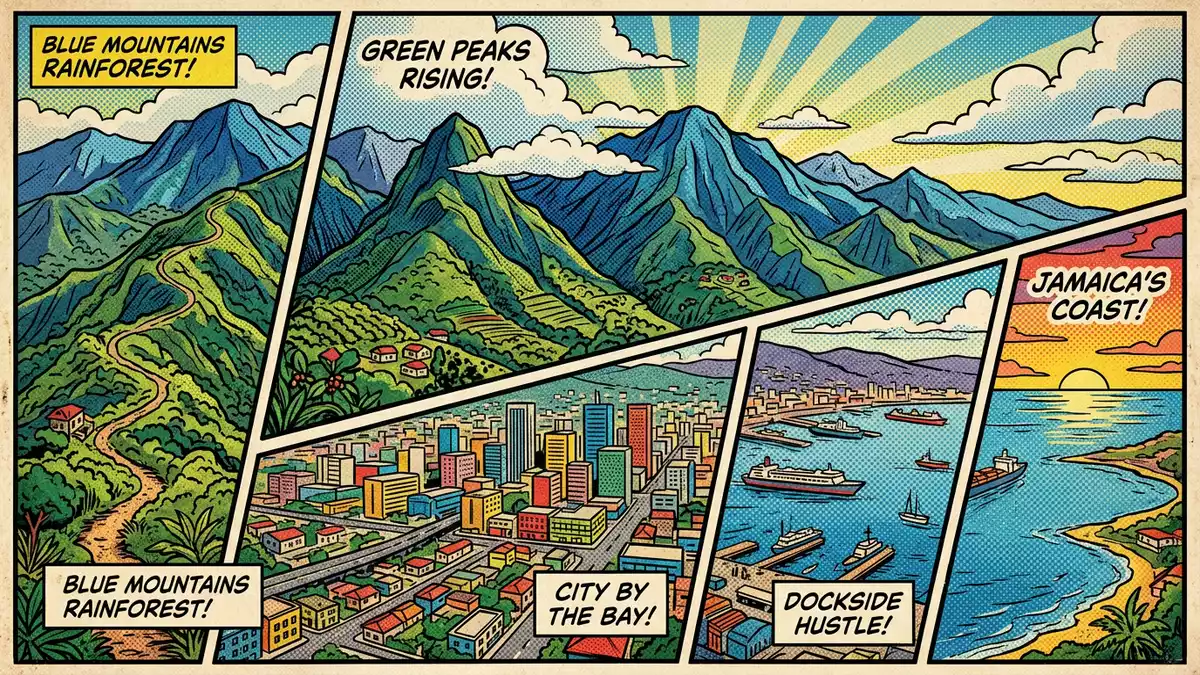
Blue Mountains rise east of Kingston as a long, forested mountain region whose highest point is Blue Mountain Peak, at 2,256 m (7,402 ft). The slopes combine tropical rainforest, coffee-growing communities, steep ridges and a cultural history shaped by Taíno and Maroon life.
Blue Mountain Peak and the shape of the range
The Blue Mountains form part of Jamaica’s eastern highlands, alongside the John Crow Mountains and the Port Royal Mountains. Blue Mountain Peak reaches 2,256 m (7,402 ft), making it Jamaica’s highest point. The upper landscape is rugged, deeply cut by valleys and covered by vegetation that changes with elevation.
The protected heritage property covers 26,252 hectares of tropical montane rainforest, within a broader national park extending across 41,198 hectares. Its elevations run from 850 m to 2,256 m, creating a sequence of forest habitats between lower slopes and summit ridges. Blue and John Crow Mountains are part of Jamaica’s eastern mountain system.
Cloud forest, endemic plants and Jamaican coffee
Above 1,000 m, the forest becomes montane, with mosses, ferns, orchids and bromeliads attached to trunks and branches. Higher ridges contain elfin forest, where trees become shorter and more twisted, with epiphytes covering the vegetation.
The World Heritage property contains 1,357 species of flowering plant. About 294 are endemic to Jamaica, while 87 occur only within the property. Birdlife includes Jamaican species and migratory visitors, while the forest also supports frogs, lizards and the Jamaican hutia, a threatened native rodent.
Coffee cultivation gives the lower Blue Mountains another distinctive identity. Estates and small farms around communities such as Mavis Bank produce Jamaican Blue Mountain Coffee, associated with high-elevation slopes and a recognised Jamaican agricultural tradition. The cultivated landscape sits beside dense forest, creating a visible transition between managed hillsides and protected mountain vegetation.
Maroon heritage in the mountain forest
The Blue Mountains also preserve the history of communities that used the uplands as refuge during Jamaica’s colonial period. Taíno people sought shelter in the mountains, followed by Africans who escaped enslavement and formed Maroon communities.
Windward Maroons established trails, settlements, lookouts and hiding places across the forest. These elements form the Nanny Town Heritage Route, a cultural landscape connected with resistance, autonomy and continuing Maroon traditions. Religious rites, traditional medicine, language and dance remain part of the heritage associated with the mountains.
On 3 July 2015, the Blue and John Crow Mountains entered the UNESCO World Heritage List as a mixed cultural and natural site. The designation recognises both the rainforest’s biodiversity and the Maroon cultural heritage preserved in the mountain landscape. Blue Mountain biodiversity includes extensive endemic plant life and upper-elevation forest communities.
The mountain region is connected with Kingston through roads leading towards the eastern highlands. Approaches from the capital pass through settled foothills, coffee communities and forested terrain before reaching higher recreational areas. The national park includes Holywell, Portland Gap and the Blue Mountain Peak Trail.
Visiting Blue Mountains: what travellers from Western Europe should know
- Blue Mountains lie east of Kingston in Jamaica’s eastern highlands. Road approaches lead from the capital towards the national park and mountain communities.
- The terrain includes steep ridges, forest trails, exposed rock and high-elevation paths. The Blue Mountain Peak Trail reaches Jamaica’s highest summit.
- Holywell and Portland Gap are named recreational areas within the national park. Coffee-growing communities occupy parts of the lower mountain landscape.
- The official language is English and the currency is the Jamaican dollar.
- Entry requirements depend on your nationality; UK travellers can check the FCDO travel advice at gov.uk/foreign-travel-advice, Irish travellers the Department of Foreign Affairs at ireland.ie.
Searching for Blue Mountains on social platforms
These links open searches for Blue Mountains on each platform.
Frequently asked questions about Blue Mountains
Where are Blue Mountains?
Blue Mountains lie in eastern Jamaica, east of Kingston. They form part of the wider Blue and John Crow Mountains National Park.
What can visitors expect in the mountains?
Visitors encounter forest trails, coffee-growing communities, high ridges and named recreational areas including Holywell and Portland Gap.
What makes Blue Mountains distinctive?
The region combines Jamaica’s highest summit, montane rainforest, endemic species and living Maroon cultural heritage within a UNESCO World Heritage property.


