
Blue Mountains Jamaica: coffee, cloud forest and Kingston’s eastern wall
Published on 08/21/2026 at 15:33 | Editorial responsibility: Rafael Müller, Editor-in-Chief AD HOC NEWS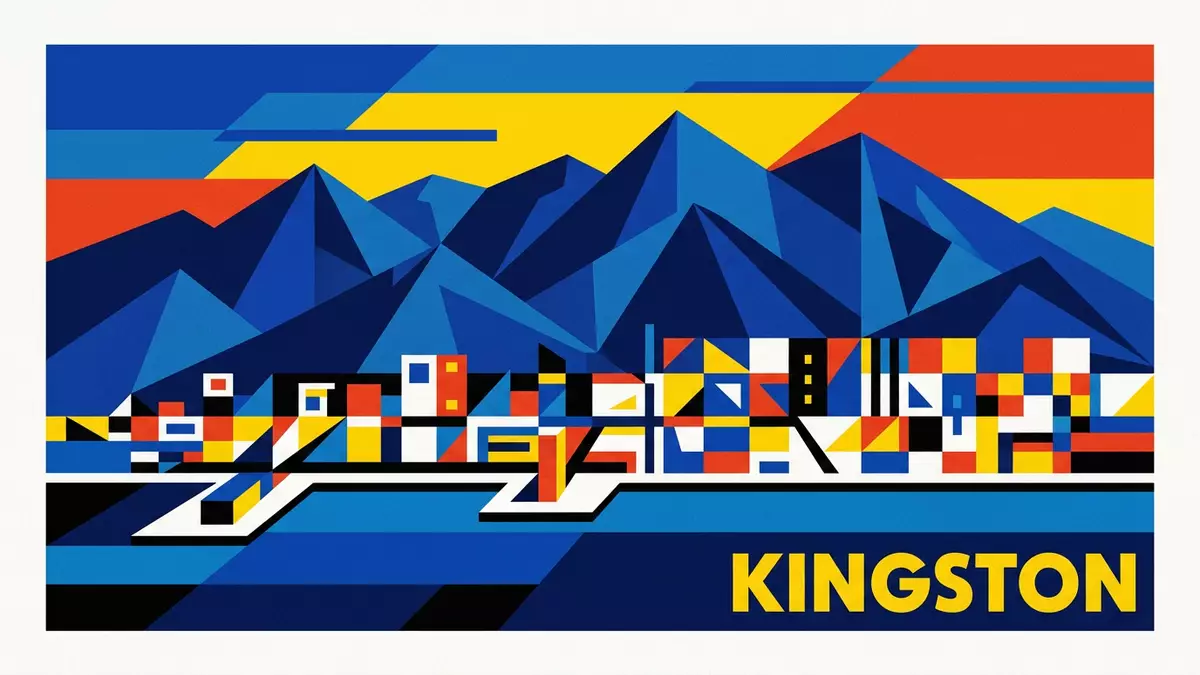
East of Kingston, the Blue Mountains form a steep green wall that shapes the skyline of Jamaica’s capital and rises towards Blue Mountain Peak, the island’s highest point in the eastern highlands.
Ridge above the city and Jamaica’s highest summit
The Blue Mountains are a mountain range in eastern Jamaica that extend from near Stony Hill, north of Kingston, towards the Caribbean Sea on the island’s north-eastern coast.range in eastern Jamaica The ridge runs across several parishes, including Portland, Saint Thomas, Saint Mary and Saint Andrew, forming a continuous band of high relief that dominates the eastern third of the island.spans four parishes
Blue Mountain Peak rises to about 2,256 m (7,402 ft), making it the highest point in Jamaica and one of the loftiest summits in the Caribbean region.Blue Mountain Peak From the upper slopes and summit, ridges and valleys drop towards Kingston to the south and towards coastal lowlands around Port Antonio and Buff Bay to the north, with views across several parishes when conditions are clear.view of five parishes
Cloud forest, rainfall and protected highland landscapes
The climate of the Blue Mountains is markedly wetter and cooler than Jamaica’s coastal plains, as north-easterly trade winds bring heavy rain to the windward slopes.slopes facing the trade winds Thick cloud and mist frequently cling to the ridges, and large parts of the higher slopes are covered in forest with tree ferns, broadleaf trees and dense undergrowth that give the range its characteristic bluish appearance when seen from a distance.mists and colour
Much of the central highland area is protected within Blue and John Crow Mountains National Park, which was established in the early 1990s to safeguard remaining forest and important watersheds.national park established in 1992 In 2015 the Blue and John Crow mountains were collectively inscribed on the UNESCO World Heritage List as a mixed natural and cultural site, recognising both biodiversity and the historical presence of communities who used the highlands as a refuge.UNESCO World Heritage site
Coffee slopes between Kingston and Port Antonio
The lower and middle slopes of the Blue Mountains, especially between Kingston to the south and Port Antonio to the north, are associated worldwide with Jamaica Blue Mountain coffee.classification of coffee grown Coffee was introduced to Jamaica in 1728, and the highland climate, rich volcanic soils and steep terrain in parishes such as Saint Andrew, Saint Thomas, Portland and Saint Mary became the core growing region for this Arabica Typica variety.introduced to Jamaica in 1728
Only coffee grown within a legally defined zone of the Blue Mountains at elevations broadly between about 910 m (2,985 ft) and 1,700 m (5,577 ft) can be certified as Jamaica Blue Mountain, a designation protected by Jamaican law and international certification marks.altitude band designated by law Estates and smallholdings on these slopes cultivate coffee under shade among other vegetation, and harvested beans are processed and exported as a single-origin product known for a mild, balanced cup profile.
Access routes, walking terrain and Kingston links
From Kingston, several roads climb into the Blue Mountains, connecting the city with south-facing valleys and ridgelines where villages, coffee holdings and viewpoints overlook the capital and coastal plains.access from Kingston via Papine One of the main routes follows the B1 road from the outskirts of Kingston through settlements such as Irish Town and Newcastle before eventually descending towards Buff Bay on the north coast.road B1 from Kingston to Buff Bay
The terrain is steep, with narrow mountain roads, sharp bends and sections where slopes rise directly above valleys. Walking paths and tracks in the highlands can involve significant gradients, uneven surfaces and long ascents or descents, especially on approaches towards Blue Mountain Peak or around high passes such as Hardwar Gap. Weather on the range can change quickly, and mist or cloud may limit visibility along ridges and forest paths.
Visiting Blue Mountains: what travellers from Western Europe should know
- Blue Mountains lie north and east of Kingston in eastern Jamaica, with access from Kingston via Papine and mountain roads that climb into the highlands.
- Walking in the range involves steep gradients, uneven paths and narrow mountain roads; approaches to higher viewpoints and ridges require sustained uphill sections on foot.
- The surrounding area includes parishes such as Saint Andrew and Saint Thomas on the southern slopes and Portland and Saint Mary towards the north, with coastal plains beyond the mountains.
- The official language is English and the currency is the Jamaican dollar.
- Entry requirements depend on your nationality; UK travellers can check the FCDO travel advice at gov.uk/foreign-travel-advice, Irish travellers the Department of Foreign Affairs at ireland.ie.
Searching for Blue Mountains on social platforms
These links open searches for Blue Mountains on each platform.
Frequently asked questions about Blue Mountains
Where are the Blue Mountains in relation to Kingston?
The Blue Mountains rise to the north and east of Kingston in eastern Jamaica, forming a mountain range that stretches towards the island’s north-eastern coast.
What should travellers expect when visiting the Blue Mountains?
Travellers encounter steep mountain roads, misty forested ridges, coffee-growing slopes and views across several parishes when weather conditions permit clear visibility.
What makes the Blue Mountains distinctive among Caribbean landscapes?
The combination of Jamaica’s highest summit, a cloud forest climate, protected national park status and certified coffee estates gives the range a distinctive character in the region.


