Blue Lagoon in Grindavik and its lava-field waters
Published on 09/05/2026 at 22:43 | Editorial responsibility: Rafael Müller, Editor-in-Chief AD HOC NEWS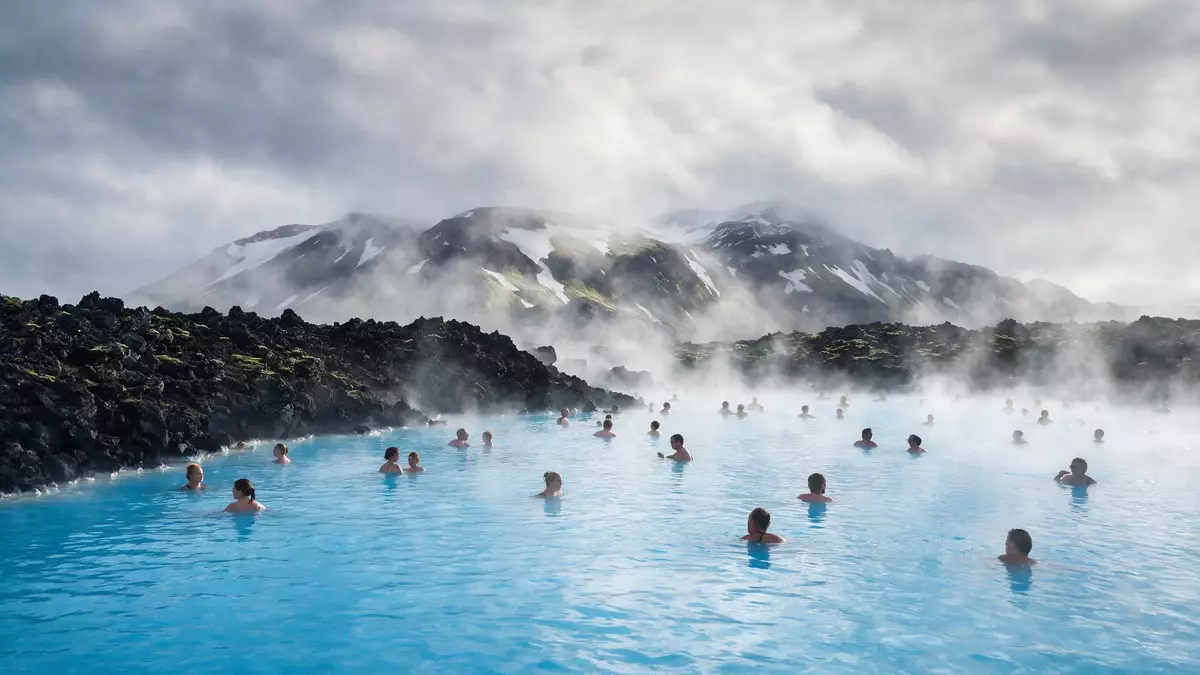
Blue Lagoon in southwest Iceland is a geothermal spa where pale, mineral-rich water gathers in a dark lava field near Grindavik on the Reykjanes Peninsula. Open as a bathing site since the 1980s, it developed into a purpose-built spa beside the Svartsengi geothermal power station, whose processed geothermal seawater feeds the pools.
Lava, geothermal water and a man-made lagoon
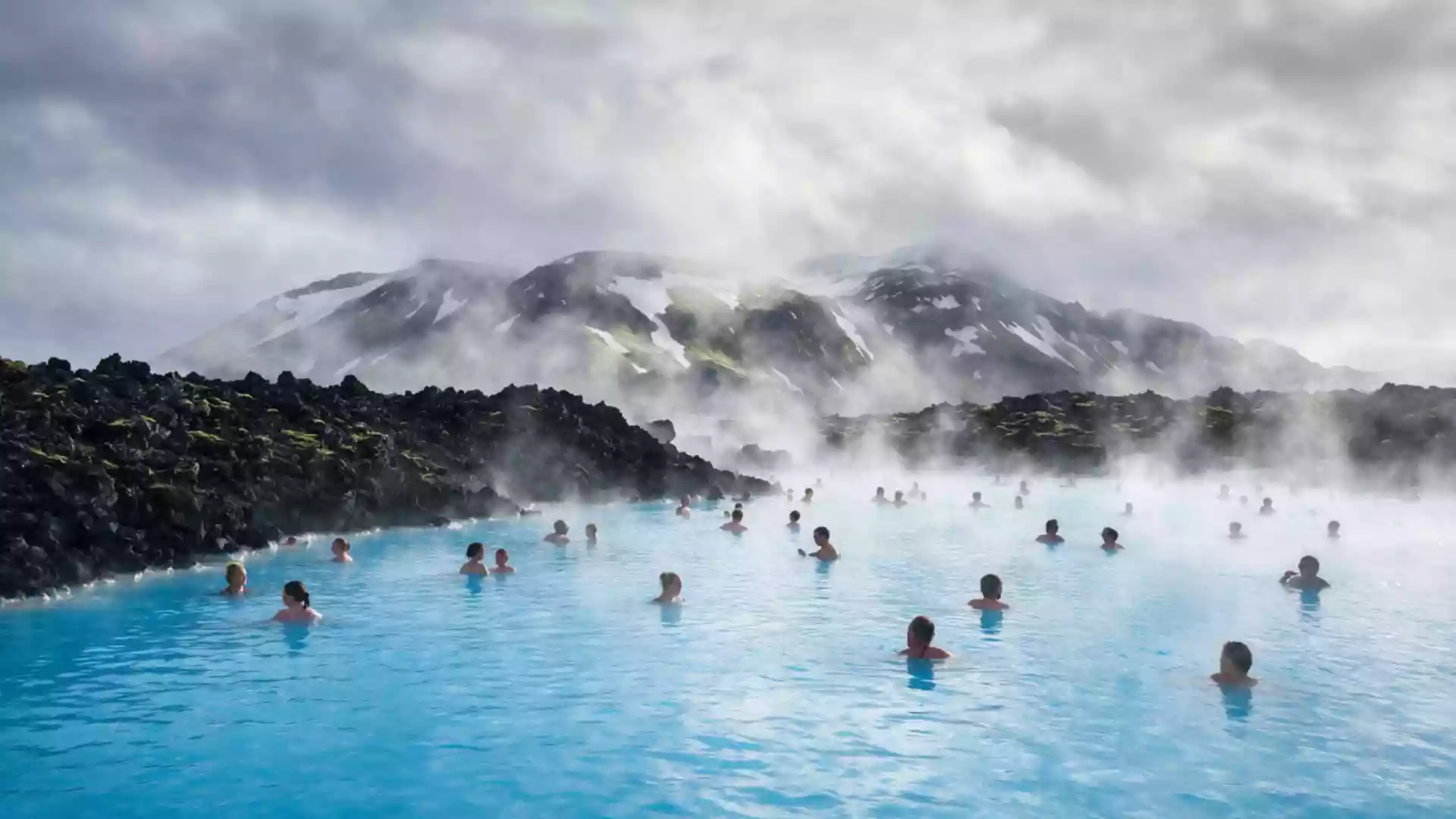
Blue Lagoon lies in a moss-covered lava field on the Reykjanes Peninsula, a geothermally active corner of Iceland shaped by volcanic eruptions and fissures. The contrast between the black lava and the opaque, light-blue water has become one of its defining visual qualities, as the lagoon’s basins spread between jagged rock and low, rounded mounds.geothermal spa in southwestern Iceland The water in Blue Lagoon is not a natural hot spring; it is geothermal seawater drawn from depth, used to produce energy at the Svartsengi geothermal power station and then channelled into the lagoon, where it gathers in sheltered basins enclosed by concrete edges and lava formations.output of the nearby geothermal power plant Svartsengi
Minerals dissolved in the geothermal seawater give Blue Lagoon its characteristic milky colour. Silica precipitates as a soft white layer on the lava and pool walls, while other dissolved components, including salts, contribute to the water’s density and feel. The lagoon’s water is kept at a comfortable bathing temperature in the high thirties Celsius, warm enough for long immersion in Iceland’s cool, oceanic climate.water kept at 37–40°C year-round The volume in the basins is regularly renewed as fresh geothermal seawater flows in and older water is released, maintaining clarity and mineral balance.
From bathing pool to spa resort
The origins of Blue Lagoon as a bathing place go back to the early 1980s, when people began to enter the warm outflow water from the Svartsengi plant and discovered that the combination of heat and minerals lent itself to soaking. Over the following decade, the area evolved from an informal bathing site into an organised facility with changing rooms, walkways and safety structures, and in 1992 the spa opened in a more formal sense as a destination in its own right.open since 1992
Blue Lagoon’s present complex brings together several elements around the water. Bathing areas extend across different sections of the lagoon, separated by lava ridges and man-made walls, while walkways and bridges connect viewing points and access ramps. On one side, a main building houses reception areas, changing facilities and lounges; nearby stand restaurant spaces such as Lava Restaurant and accommodation wings that form part of Blue Lagoon Iceland’s wider resort, including hotel structures integrated into the lava field. Skincare products developed from lagoon minerals, especially silica and algae, have become part of the site’s identity, and research programmes have examined their effects in dermatological contexts.silica mud from the lagoon is used in skincare treatments
Blue Lagoon’s location on the Reykjanes Peninsula
Geographically, Blue Lagoon lies in south-west Iceland, in the municipality of Grindavik on the Reykjanes Peninsula. The peninsula projects into the North Atlantic at Iceland’s south-western corner and is marked by lava deserts, low hills and geothermal plants. Blue Lagoon is set inland from the coast, a short distance from the fishing town of Grindavik, whose harbour lies to the south, and it sits between Keflavik International Airport and Reykjavík, making it accessible from both the country’s main gateway and its capital.set amid endless moss-covered lava fields on the Reykjanes Peninsula
The spa’s address is recorded as Norðurljósavegur in the Grindavik area, reached by Road 43 (Grindavíkurvegur) branching from Route 41, the highway that links Reykjavík with Keflavik Airport across the peninsula.Norðurljósavegur 9, 240 Grindavík Approaching Blue Lagoon by road, travellers leave the main highway and cross low, open lava fields before reaching the spa buildings, which rise with their white, grey and glass surfaces against the darker rock. Car parks and access roads sit slightly apart from the water, while the lagoon itself wraps around the structures, giving views of water and lava from terraces and windows.
Visiting Blue Lagoon: what travellers from Western Europe should know
- Blue Lagoon stands in southwest Iceland on the Reykjanes Peninsula, inland from the fishing town of Grindavik and between Reykjavík and Keflavik International Airport; it is reached by Road 43 off Route 41.
- The bathing areas occupy a lava field with uneven volcanic rock and shallow basins; walkways and ramps provide access, but sections of the ground away from the paths remain rough underfoot.
- The official language is Icelandic and the currency is the Icelandic króna.
- Entry requirements depend on your nationality; UK travellers can check the FCDO travel advice at gov.uk/foreign-travel-advice, Irish travellers the Department of Foreign Affairs at ireland.ie.
Searching for Blue Lagoon on social platforms
These links open searches for Blue Lagoon on each platform.
Frequently asked questions about Blue Lagoon
Where is Blue Lagoon in relation to Grindavik and Reykjavík?
Blue Lagoon is in southwest Iceland on the Reykjanes Peninsula, in the Grindavik area, between Reykjavík and Keflavik International Airport and a short drive inland from Grindavik.
What should visitors expect when entering the lagoon itself?
Visitors step into pale, mineral-rich geothermal seawater enclosed by lava and concrete edges, with bathing areas spreading between volcanic rock formations and linked by walkways and bridges.
What makes Blue Lagoon distinctive among Iceland’s geothermal sites?
The combination of man-made lagoon basins, geothermal seawater drawn from depth, a setting in a lava field and integrated spa, restaurant and hotel facilities gives Blue Lagoon a particular character.