
Blue Lagoon in Grindavik and its lava-field thermal waters
Published on 09/17/2026 at 09:44 | Editorial responsibility: Rafael Müller, Editor-in-Chief AD HOC NEWS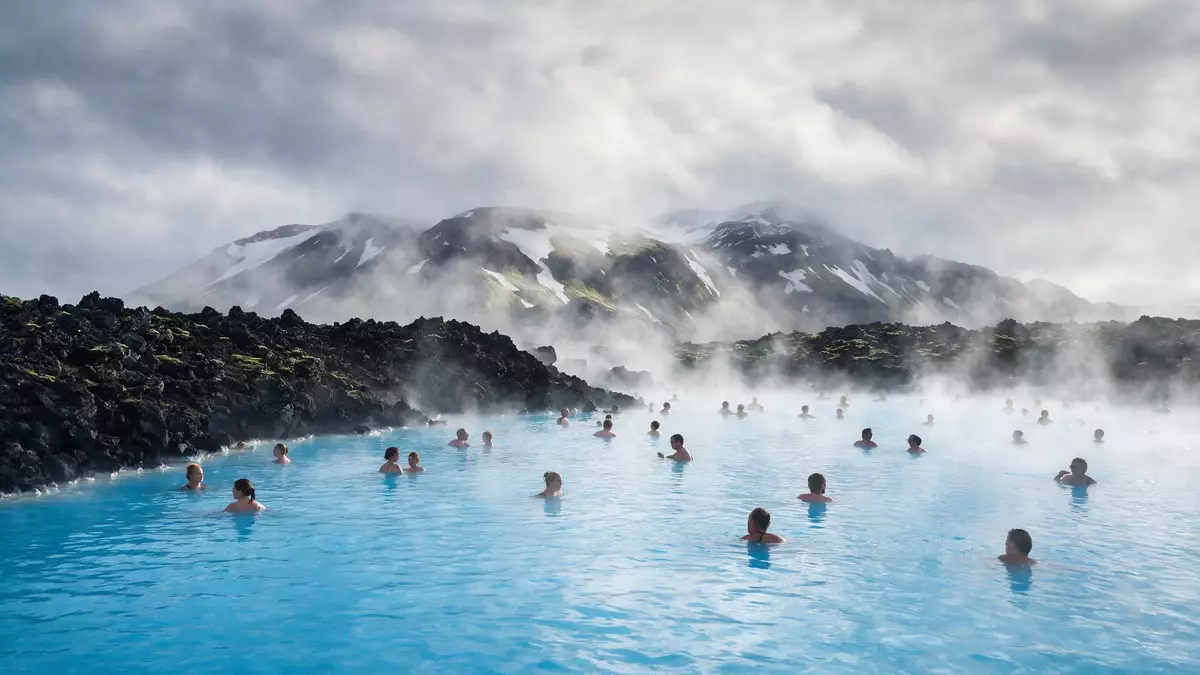
Blue Lagoon in southwest Iceland is a geothermal spa where pale, mineral-rich water gathers in a dark lava field near Grindavik on the Reykjanes Peninsula. It formed as a man-made bathing site in the 1980s beside the Svartsengi geothermal power station and developed into a purpose-built spa complex in the decades that followed, drawing on geothermal seawater from the plant to feed its pools.geothermal spa in southwestern Iceland
Lava, water and colour at Blue Lagoon
The defining impression of Blue Lagoon is the contrast between its pale, opaque water and the surrounding dark lava landscape. The spa occupies part of an extensive lava field on the Reykjanes Peninsula, a geothermally active region shaped by volcanic eruptions and rift geology, and the pools sit in basins edged by jagged black rock and low, weathered formations covered in moss.lava field on the Reykjanes Peninsula The water itself appears milky blue or turquoise, an effect linked to high levels of dissolved silica and minerals that scatter light inside the lagoon and give it a soft, luminous surface. Visitors see this colour most strongly where the water meets the rock and at the edges of the bathing areas, where white silica deposits form crusts and ridges along the lava.
The lagoon is fed by geothermal seawater drawn from depth at the Svartsengi geothermal power station, mixed and cooled before it emerges into the bathing basins. The water combines seawater and freshwater that have circulated through hot volcanic rock, gaining silica, minerals and geothermal heat before entering the spa site as warm, mineral-rich water suitable for bathing.mixture of seawater and freshwater heated by volcanic activity From above, the bathing pools trace irregular outlines against the darker lava, and paths and terraces run between them, giving views across water, rock and the low silhouettes of the Reykjanes landscape.
A geothermal spa shaped since the 1980s
Blue Lagoon took shape as a bathing place in the early 1980s, when people began to enter pooled water that had collected near the outlet of the Svartsengi geothermal plant. Over time, the site was formalised into a spa with constructed basins, controlled water circulation and buildings for changing, reception and treatment, turning what had been an informal bathing spot into a recognised geothermal spa destination.man-made geothermal spa on Iceland's Reykjanes Peninsula The lagoon water is renewed regularly, with processed geothermal seawater from the power station circulating through the pools and then returning to the geothermal field, maintaining a consistent temperature that suits extended bathing.
The wider setting anchors Blue Lagoon in a particular Icelandic landscape and energy system. The spa lies in south-west Iceland on the Reykjanes Peninsula, in front of the low volcanic bulk of Mount Þorbjörn and close to the Svartsengi geothermal field, where boreholes and steam infrastructure serve the power station.lava field in Grindavik on the Reykjanes Peninsula The bathing complex sits slightly apart from the industrial structures, with its pools and buildings arranged to face the lava field and low hills rather than the machinery, yet the link between geothermal power generation and the spa’s water remains a defining part of its identity.
Setting between Grindavik, Keflavik and Reykjavík
Geographically, Blue Lagoon lies in south-west Iceland, in the municipality of Grindavik on the Reykjanes Peninsula. It stands in a lava field a short distance north of the fishing town of Grindavik, between Keflavik International Airport and the capital Reykjavík, in a position that places it within reach of both the main international gateway and the urban centre.set amid moss-covered lava fields on the Reykjanes Peninsula The spa’s address is recorded as Norðurljósavegur 9 in the Grindavik area, reached by Road 43 (Grindavíkurvegur) branching from Route 41, the highway that links Reykjavík with Keflavik Airport across the peninsula.Norðurljósavegur 9, 240 Grindavík
Approaching Blue Lagoon by road, travellers leave the main highway and cross low, open lava fields before reaching the spa buildings, which rise with white, grey and glass surfaces against the darker rock. The complex includes reception and service buildings, bathing areas with access points into the lagoon, and paths that lead out towards viewpoints where the surrounding lava and moss can be seen stretching away towards distant low hills and the wider Reykjanes geothermal landscape.
Visiting Blue Lagoon: what travellers from Western Europe should know
- Blue Lagoon lies on the Reykjanes Peninsula in south-west Iceland, in the municipality of Grindavik, reached by Road 43 from the main Route 41 highway between Reykjavík and Keflavik Airport.
- The terrain around the spa consists of uneven lava fields and low rock formations; paths and walkways are constructed, but some areas involve walking over hard, irregular ground.
- In winter, snow can settle across the lava fields of the Reykjanes Peninsula, while in summer the dark rock and pale water sit under long daylight hours typical of high-latitude locations.
- Blue Lagoon is in Iceland, where the official language is Icelandic and the currency is the Icelandic króna.
- Entry requirements depend on your nationality; UK travellers can check the FCDO travel advice at gov.uk/foreign-travel-advice, Irish travellers the Department of Foreign Affairs at ireland.ie.
Searching for Blue Lagoon on social platforms
These links open searches for Blue Lagoon on each platform.
Frequently asked questions about Blue Lagoon
Where is Blue Lagoon in relation to Grindavik and Reykjavík?
Blue Lagoon lies in a lava field in the municipality of Grindavik on the Reykjanes Peninsula in south-west Iceland, between Keflavik International Airport and Reykjavík.
What can visitors expect when they arrive at Blue Lagoon?
Visitors arrive through constructed buildings and paths into a landscape where pale, mineral-rich geothermal water fills basins edged by dark lava, with facilities for bathing and viewing the surrounding rock.
What makes Blue Lagoon distinctive among geothermal spas?
Blue Lagoon is distinctive for its milky-blue silica-rich water set within extensive lava fields, its link to the Svartsengi geothermal power station and its setting between Grindavik, Keflavik Airport and Reykjavík.


