
Blejsko jezero and its island lakescape above Bled
Published on 09/14/2026 at 07:16 | Editorial responsibility: Rafael Müller, Editor-in-Chief AD HOC NEWS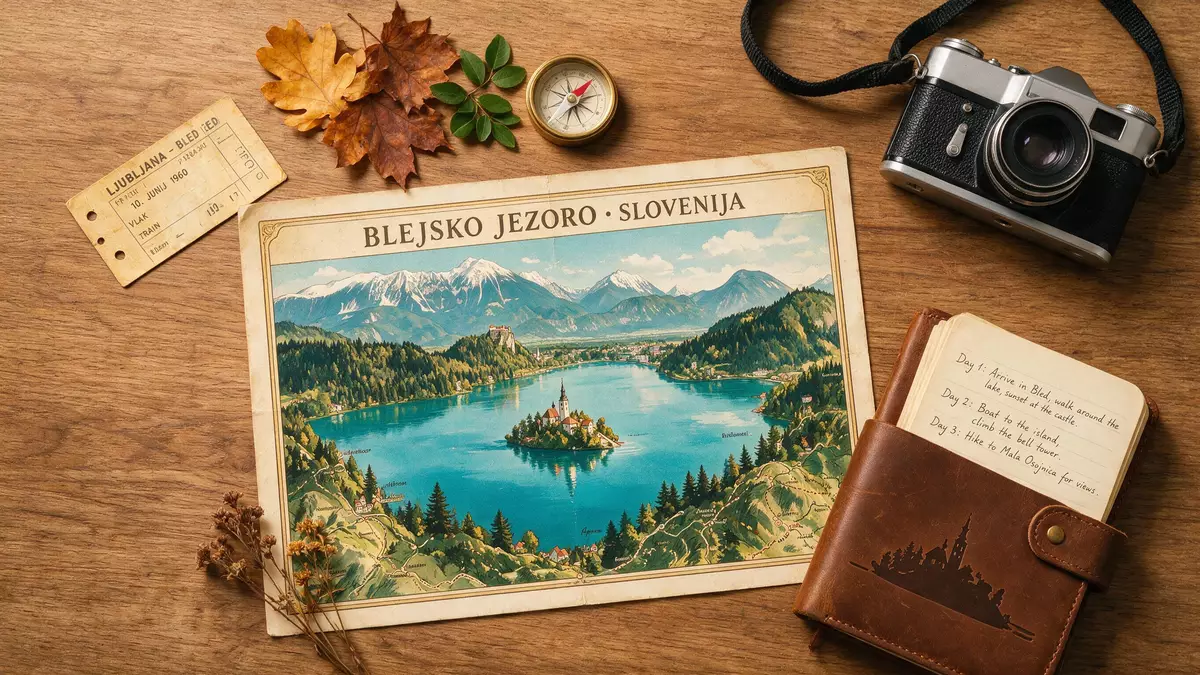
Blejsko jezero, known in English as Lake Bled, is a small alpine lake above the town of Bled in north-western Slovenia, framed by hills and a church-topped island. The lake lies in the Julian Alps in the Upper Carniolan region, at an altitude of around 475 m (1,558 ft) above sea level. The setting brings together water, rock and a single island in a way that makes the lake’s compact basin feel like a complete landscape in its own right.
An alpine basin shaped by ice and tectonics
Blejsko jezero occupies a tectonic basin on the edge of the Julian Alps, in the part of Slovenia traditionally known as Gorenjska. The basin was sculpted in the Ice Age, when the Bohinj Glacier filled the valley and retreated again, leaving a hollow that later filled with waterduring the ice-age. The lake surface stands at about 475 m (1,558 ft) above sea level, with steep slopes rising around it towards the Pokljuka Plateau and other nearby hillsheight of 475 m.
In plan, Blejsko jezero is elongated, measuring roughly 2,120 m in length and about 1,380 m at its widest point. The water covers around 1.45 km², and reaches a maximum depth of just over 30 m (about 100 ft), deep enough to form distinct colour bands across the basinlength, width and depth. The lake is relatively enclosed, with no large surface inflow; water arrives mainly through springs, some of them geothermally warmed beneath the north-eastern shoresprings in the basin. At the eastern end, the Jezernica stream carries the lake’s water towards the Sava Bohinjka river, linking Blejsko jezero hydrologically to the wider alpine watershedJezernica and Sava Bohinjka.
The island of Blejski otok and lakeside landmarks
One of the defining features of Blejsko jezero is its single natural island, Blejski otok, rising from the centre of the lake. The island carries a church dedicated to the Virgin Mary, reached by a staircase from the landing place at the water’s edgeMarienkirche on Blejski otok. Traditional wooden boats cross the water to the island from various points on the shore, forming part of the lake’s everyday scene as they move across the reflections of the surrounding slopes.
Above the north shore, Bled Castle stands on a rocky outcrop looking down onto Blejsko jezero and its island. The castle is among the oldest fortified sites in Slovenia, with records tracing it back for more than 1,000 yearscastle over 1,000 years old. Between the lake shore and the slopes, promenades and paths run near the water, including the Veslaška promenada, where local institutions such as the diving club base their activitiesDruštvo za podvodne dejavnosti Bled. From the edge of the water, views open towards the Julian Alps, with the lake acting as a calm foreground to the higher summits.
Water, colour and climate
Blejsko jezero lies in a sub-alpine climate zone, with warm summers and cold winters shaping how the lake appears across the yearsub-alpine climate. In summer, the water is warmed both by the air temperatures and by the mild thermal springs beneath the basin, helping it reach water temperatures in the mid-twenties in degrees Celsius. The relatively shallow average depth, around 18 m, means the lake responds readily to seasonal conditionsaverage depth and warming.
The colour of Blejsko jezero shifts between blue and green shades as light moves across the surface. On clear days, the water reflects the forested slopes and the pale stone of Bled Castle’s cliff, while the island and church form a vertical accent near the centre of the basinblue and emerald hues. The absence of motorboats on the lake supports water clarity, with management policies limiting powered craft as part of the wider use of the lakemotorboats banned. In winter, colder air temperatures can bring freezing conditions, and the lake occasionally supports surface ice strong enough for traditional skating, adding another seasonal image to the placecold enough to skate.
Visiting Blejsko jezero: what travellers from Western Europe should know
- Blejsko jezero lies beside the town of Bled in north-western Slovenia, in the Julian Alps, around 55 km north-west of Ljubljana. It is reached by road and regional bus services connecting the capital and other Slovenian townslocation in Slovenia.
- The lake shore is encircled by a path on generally gentle terrain, with some sections running close to the water and others rising slightly above it; reaching viewpoints at Bled Castle or on nearby hills involves steeper gradients and stairways.
- Rail travellers can arrive at the Lesce–Bled and Bled Jezero stations, which stand in the wider Bled area and provide access to the lake by local transport or on footLesce-Bled and Bled Jezero.
- The surrounding land includes low hills, forest and rocky outcrops, so some walks away from the shore involve uneven surfaces and occasional narrow paths, especially towards viewpoints above the lake.
- The official language is Slovene and the currency is the euro; entry requirements depend on your nationality, UK travellers can check the FCDO travel advice at gov.uk/foreign-travel-advice, Irish travellers the Department of Foreign Affairs at ireland.ie.
Searching for Blejsko jezero on social platforms
These links open searches for Blejsko jezero on each platform.
Frequently asked questions about Blejsko jezero
Where is Blejsko jezero located?
Blejsko jezero lies beside the town of Bled in the Upper Carniolan region of north-western Slovenia, in the Julian Alps near the Pokljuka Plateaulocation in the Julian Alps.
What can travellers expect when visiting the lake?
Travellers encounter a compact alpine lake with a continuous shore path, a central island carrying a church, and Bled Castle on a cliff above the water, all set against forested hills.
What makes Blejsko jezero distinctive among alpine lakes?
Blejsko jezero combines a tectonic and glacial basin with a single island, thermal springs and a thousand-year-old castle above its shore, creating a layered landscape around a relatively small body of waterthermal springs and castle.


