

Biomuseo: Frank Gehry’s colourful biodiversity landmark in Panama-Stadt
Published on 08/20/2026 at 18:15 | Editorial responsibility: Rafael Müller, Editor-in-Chief AD HOC NEWS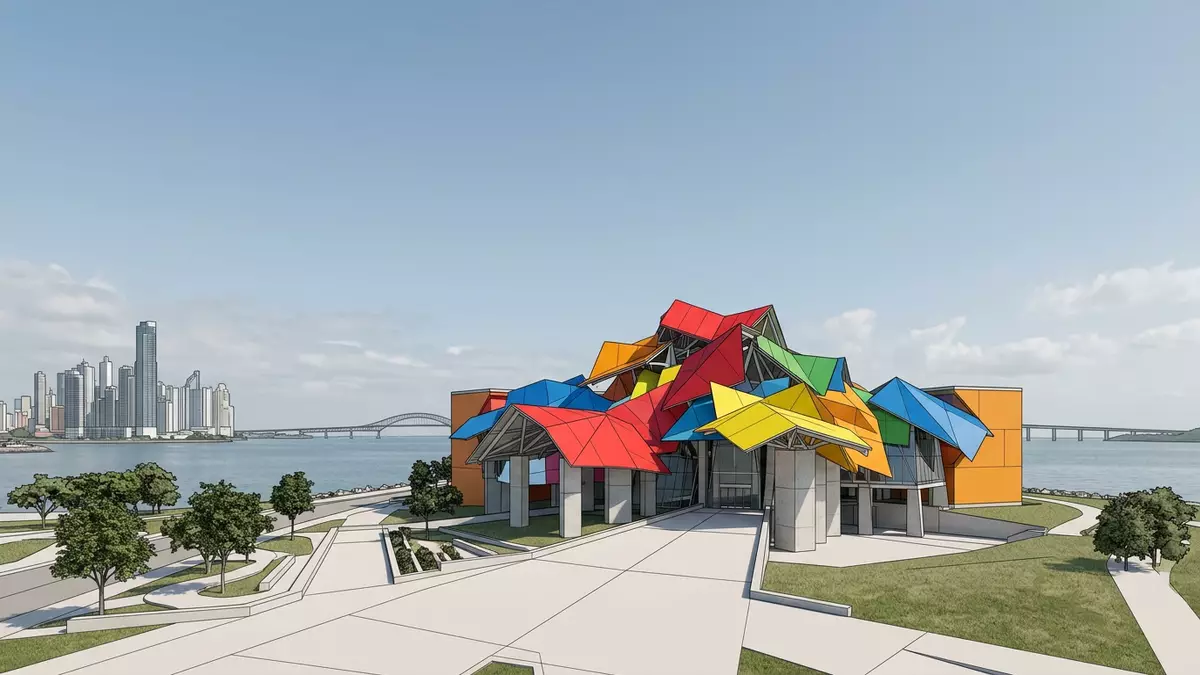
Biomuseo in Panama-Stadt is a museum of biodiversity whose vivid, folded roof has become one of the most recognisable silhouettes on the Amador Causeway. Designed by Frank Gehry and conceived in 1999, it presents Panama as a geological bridge between continents and as a hotspot of biological and cultural diversity.
A riot of colour at the Pacific entrance to the canal
Biomuseo stands on the Amador Causeway at the southern entrance to the Panama Canal, facing the Pacific Ocean and looking across towards the islands linked by the roadway. The site is part of Amador, the strip of reclaimed land joining the city to small offshore islands and framing views of shipping lanes and the skyline of Panama-Stadt.Located on the Amador Causeway the museum immediately announces itself through a canopy of multi-coloured steel panels that rise and intersect above the galleries.
The building was designed by Gehry Partners as the architect’s first realised project in Latin America, giving Panama a cultural landmark whose form is as distinctive as its subject matter.Frank Gehry's first project in Latin America The museum opened to the public on 2 October 2014, after a prolonged development period, and has since framed exhibitions about the isthmus and its ecological impact within this striking envelope of folded metal and glass.The design was conceived in 1999 and opened in 2014
Inside the Bridge of Life: galleries about a land bridge that changed the world
Biomuseo’s permanent exhibitions are arranged around themes that link geology, ecology and human history, using eight main galleries to tell how Panama’s rise from the sea altered global biodiversity.Eight main galleries Visitors enter through the Gallery of Biodiversity, which introduces Panama’s natural heritage and explains what is meant by biodiversity and why variety of life matters. From there, the route leads into Panamarama, a three-level projection space where multiple screens surround the visitor with images of different Panamanian ecosystems, from tropical forests to marine environments.
Further galleries trace the story of the isthmus as a land bridge. Building the Bridge focuses on volcanic activity and sedimentation, describing how the strip of land between the Americas rose and eventually closed the seaway between Atlantic and Pacific.Building the Bridge explains geological formation Worlds Collide explores the great exchange of species between North and South America once that bridge existed, while The Human Path follows human presence on the isthmus, with columns that carry information about how people have affected the environment over millennia.
Biodiversity museum architecture in bold steel and garden spaces
The most immediately striking feature of Biomuseo is its roof: a composition of brightly coloured steel canopies that fold and overlap above the galleries and outdoor spaces. Architectural accounts describe how these panels refer to local metal roofs and canal-zone structures, while their intense colours draw attention at the scale of the city and the causeway.Coloured folded metal canopies Beneath this canopy the museum’s volumes step around courtyards and terraces, creating covered and open areas that connect interior exhibition spaces with views towards the bay and the canal.
The museum’s concept extends beyond the building envelope into surrounding landscaped areas, sometimes described as a botanical park. This planted terrain reinforces the museum’s focus on living systems by presenting native vegetation around paths and open-air interpretive elements.Permanent exhibitions and a botanical park Together, the colourful roof, steel structure, interior galleries and garden spaces present Biomuseo as both an architectural object and an educational landscape about biodiversity.
Visiting Biomuseo: what travellers from Western Europe should know
- Biomuseo is on the Amador Causeway at the Pacific entrance to the Panama Canal, south-west of Panama-Stadt’s city centre, and is reached by road or local bus services that run between Albrook station and Amador.
- The museum’s galleries are housed in interconnected interior spaces beneath the folded roof, with external terraces and garden paths around them; moving through the exhibitions involves walking between levels and across ramps and staircases.
- The surrounding terrain combines paved walkways and planted areas, and the building’s position on the causeway means that parts of the visit take place outdoors, with exposure to sun and sea breezes along the waterfront.
- The official language is Spanish and the currency is the Panamanian balboa, which is pegged to the US dollar and circulates alongside it.
- Entry requirements depend on your nationality; UK travellers can check the FCDO travel advice at gov.uk/foreign-travel-advice, Irish travellers the Department of Foreign Affairs at ireland.ie.
Searching for Biomuseo on social platforms
These links open searches for Biomuseo on each platform.
Frequently asked questions about Biomuseo
Where is Biomuseo located?
Biomuseo is located on the Amador Causeway in Panama-Stadt, at the southern, Pacific entrance to the Panama Canal.
What can visitors expect inside Biomuseo?
Visitors move through themed galleries that explain Panama’s geological formation, the exchange of species between continents and the intertwined stories of biodiversity and human presence.
What makes Biomuseo distinctive among museums?
The combination of Frank Gehry’s colourful folded-steel architecture, the focus on biodiversity and the position on the Amador Causeway beside the canal gives Biomuseo a character closely tied to Panama’s land bridge story.


