
Biltmore Estate and Asheville's Gilded Age mansion
Published on 08/06/2026 at 20:23 | Editorial responsibility: Rafael Müller, Editor-in-Chief AD HOC NEWS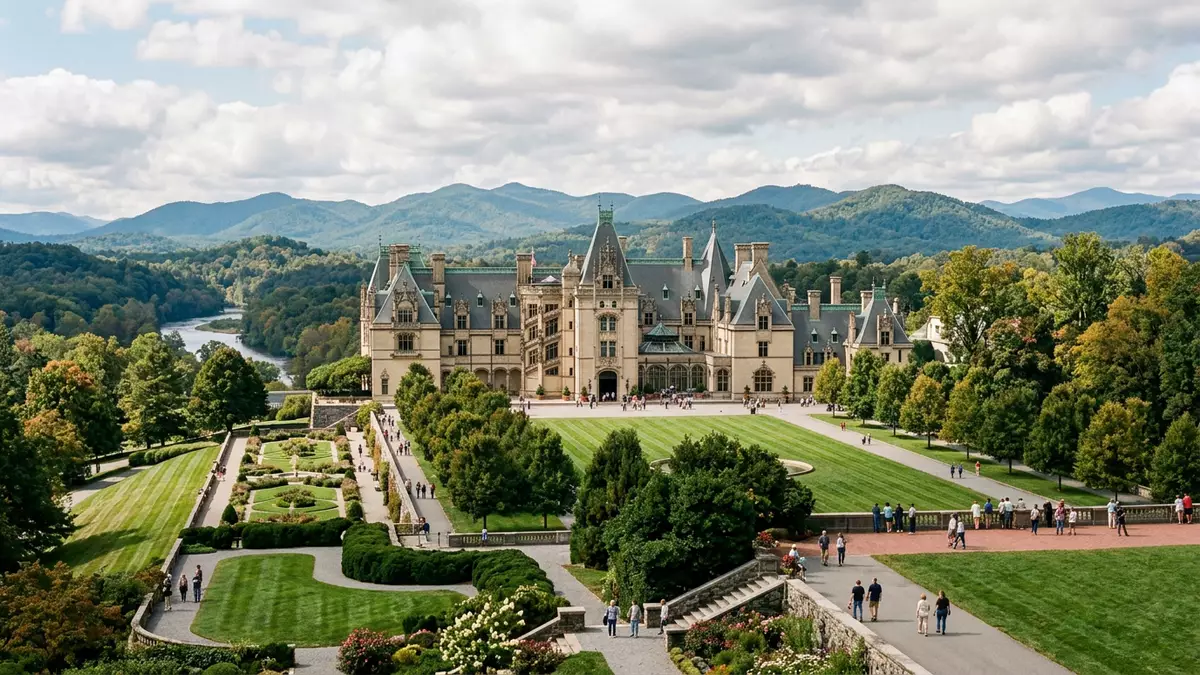
Biltmore Estate in Asheville is a late nineteenth-century country house and estate associated with George Washington Vanderbilt II and the Vanderbilt family. The main house, completed in 1895, brings French château forms into western North Carolina, while the surrounding grounds add gardens, woodland and estate buildings.
Biltmore House and its Gilded Age setting
The house is the estate’s most familiar feature: a large limestone mansion with towers, steep roofs and long facades. Its scale reflects the ambitions of the Gilded Age, when American industrial wealth produced houses that echoed European precedents.
Richard Morris Hunt designed Biltmore House, and Frederick Law Olmsted shaped the landscape around it. Their names matter here because the estate joins architecture and grounds as one carefully composed place, not as a single isolated mansion.
Gardens, woodland and estate grounds
The grounds extend beyond formal planting to woodland, water, and long views across the property. The gardens sit alongside more open areas, so the estate reads as both cultivated and rural.
Olmsted’s landscape work gives the place its broad frame. Visitors move between clipped garden spaces, tree-lined approaches, and more natural slopes, with the house remaining the central anchor.
From private house to heritage destination
Biltmore Estate began as a private Vanderbilt residence and remains closely tied to that family name. Its present life includes historic house visits, gardens, and wider estate experiences, with the house itself preserved as the main focal point.
The estate also reflects the wider world of late nineteenth-century elite country houses in the United States. Its combination of domestic rooms, landscaped grounds and service areas gives it a layered character that rewards slow looking.
Visiting Biltmore Estate: what travellers from Western Europe should know
- It is in Asheville, North Carolina, reached by road from the city and via regional air connections to the wider area.
- Admission arrangements and opening hours are set by the site's operator and change with the season; the official website is the only binding source.
- Late spring and autumn suit the gardens and the wider landscape, while the interiors reward unhurried visits in quieter daylight.
- The estate covers a large area, so expect walking, steps, and uneven outdoor surfaces across parts of the grounds.
- Language is not usually a barrier for English-speaking travellers, and card payments are standard in most visitor settings.
- Entry requirements depend on your nationality. UK travellers should check the FCDO travel advice at gov.uk/foreign-travel-advice; Irish travellers the Department of Foreign Affairs at ireland.ie; EU and EEA citizens their own national foreign ministry.
Searching for Biltmore Estate on social platforms
These links open searches for Biltmore Estate on each platform.
Frequently asked questions about Biltmore Estate
Where is Biltmore Estate?
It is in Asheville, in western North Carolina, in the United States. The estate sits close to the city but occupies a much larger landscape than a city house.
What should visitors expect?
Expect a large historic house, landscaped grounds and substantial walking across a wide estate. The main rooms and the setting around them are the core of the visit.
What makes it distinctive?
The combination of Richard Morris Hunt’s house, Frederick Law Olmsted’s landscape, and the Vanderbilt association gives Biltmore Estate its character. It reads as a house and a designed estate at the same time.


