
Big Ben and the vertical rhythm of Westminster
Published on 09/19/2026 at 06:46 | Editorial responsibility: Rafael Müller, Editor-in-Chief AD HOC NEWS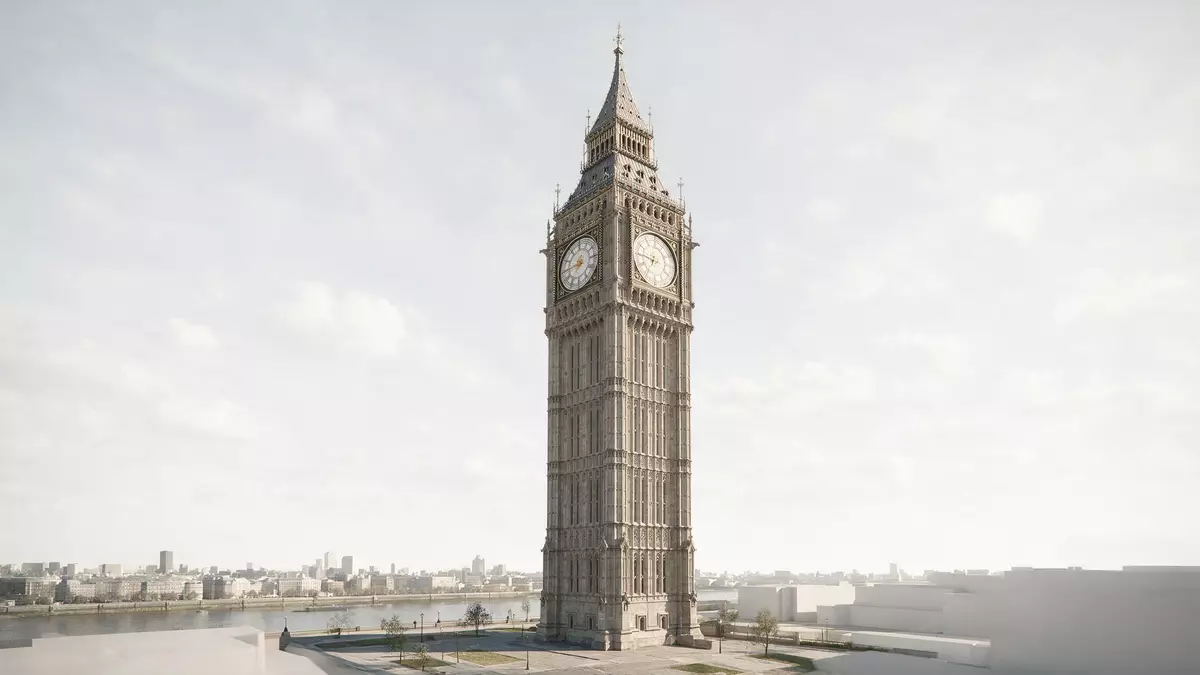
Big Ben is the familiar name given to the great bell and clock tower at the northern end of the Palace of Westminster in London, an ensemble officially known as the Elizabeth Tower since 2012. Rising over Westminster with its tall, narrow profile and four clock faces, the tower translates mid-nineteenth century Gothic Revival ideas into a vertical landmark tied closely to Britain’s parliamentary life.
A nineteenth-century Gothic tower of time
The Elizabeth Tower belongs to the rebuilt Palace of Westminster conceived after the major fire of 1834, with Sir Charles Barry leading the overall design and Augustus Welby Northmore Pugin shaping the Gothic character of the clock tower itself.Sir Charles Barry and Augustus Pugin The tower was completed in 1859 in a High Victorian Gothic style, tying ornamented stonework and ironwork to a precise public clock.completed in 1859
Structurally, the tower stands around 96 m (315 ft) high on a square plan about 12 m (40 ft) to each side, with a brick core clad in pale Anston limestone and other stone and topped by a cast-iron spire.96 m high on a square base The vertical emphasis of its corner buttresses, louvred openings, pinnacles and iron finial matches the rhythm of the adjoining palace, yet the clock faces and belfry give the tower a distinct identity in the Westminster riverfront skyline.
Clock faces, bell and the mechanics behind the chimes
Technically, Big Ben is the nickname of the great hour bell that hangs inside the belfry, weighing about 13.7 tonnes and sitting alongside quarter bells that mark the passing of each fifteen minutes.Big Ben, the great bell The bell’s profile and mass give the tower its distinctive sound, broadcast across Westminster and, for many decades, carried further through radio transmissions of the chimes.
Above the brick and stone shaft, four large clock dials are set into cast-iron frames, each measuring about 7 m in diameter and glazed with hundreds of pieces of opal glass held in place by metal tracery.clock dials and opal glass Behind them, a turret clock mechanism weighing around 5 tonnes drives the hands with remarkable precision, regulated by a pendulum whose rate can be subtly changed by adding or removing small coins from its tray.timekeeping regulated by coins on the pendulum
From Clock Tower to Elizabeth Tower
For much of its history the structure was officially known simply as the Clock Tower or St Stephen’s Tower, but in 2012 it was renamed the Elizabeth Tower to honour Queen Elizabeth II’s Diamond Jubilee.renamed Elizabeth Tower in 2012 The new name acknowledges the modern constitutional role of the monarch while the everyday use of “Big Ben” continues to refer informally to the entire ensemble of tower, clock and bell.
The tower’s Latin inscription around the clock faces refers to Queen Victoria, linking the structure to the nineteenth-century royal and political context in which it was built.Latin words under the clock face Together with the adjoining Houses of Parliament, the tower forms part of a riverside frontage that presents British parliamentary government in stone, brick and iron, with Big Ben acting as the most recognisable vertical element at the corner facing Westminster Bridge and the Thames.
Visiting Big Ben: what travellers from Western Europe should know
- Big Ben stands at the north end of the Palace of Westminster in central London, beside the Thames and close to Westminster Underground station on the city’s transport network.
- The tower rises to about 96 m (315 ft) and the internal ascent to the belfry follows a long spiral staircase of several hundred steps, reflecting its tall, narrow proportions.
- The official language is English and the currency is the pound sterling (GBP).
Searching for Big Ben on social platforms
These links open searches for Big Ben on each platform.
Frequently asked questions about Big Ben
Where is Big Ben in London?
Big Ben stands at the northern end of the Palace of Westminster in the borough of Westminster, beside the Thames and near Westminster Bridge.
What can visitors see at Big Ben?
Visitors encounter the tall Gothic Revival clock tower with its four large clock faces and the wider parliamentary complex lining the riverfront.
What makes Big Ben distinctive among London landmarks?
The combination of a nineteenth-century Gothic tower, a precisely engineered clock mechanism and the heavy hour bell known as Big Ben gives the Elizabeth Tower a distinctive role in London’s skyline.


