
Bibi-Xonim masjidi, Samarkand’s vast Timurid courtyard mosque
Published on 09/08/2026 at 08:38 | Editorial responsibility: Rafael Müller, Editor-in-Chief AD HOC NEWS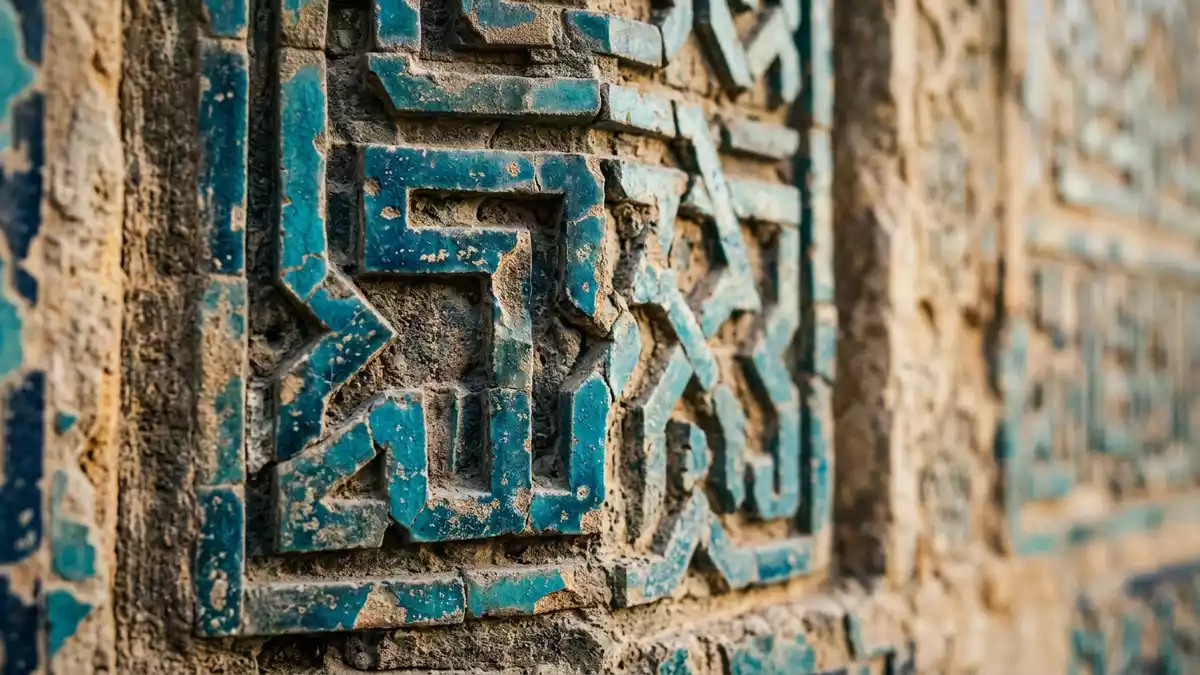
Bibi-Xonim masjidi is a monumental Friday mosque in Samarkand, built under Timur at the turn of the fifteenth century and named for his consort Bibi Khanym. Rising over the historic centre of this Silk Road city, it combines a vast open courtyard with lofty domes and towering entrance portals characteristic of Timurid architecture. The ensemble belongs to the period when Samarkand flourished as the capital of the Timurid empire, and its scale still conveys the ambition of that era.
A Timurid giant on the Silk Road
Bibi-Xonim masjidi stands in central Samarkand in eastern Uzbekistan, close to the historic Registan and within the city’s UNESCO-listed core that preserves the Timurid urban landscape.UNESCO-listed core The mosque was commissioned by Timur, also known as Tamerlane, whose rule in Samarkand ran from 1370 to 1405 and whose campaigns along the Silk Road brought artisans and materials to his capital.Timur’s rule in Samarkand Construction of the congregational mosque began in 1399 and is dated to the first years of the fifteenth century, when Timur’s empire reached from Iran towards India.Construction began in 1399
The complex takes its name from Bibi Khanym, also known as Saray Mulk Khanym, a senior princess of the Timurid court whose tomb lies nearby.Saray Mulk Khanym In Timurid architecture the combination of an imperial patron, a named consort and a congregational mosque was a way of inscribing family and dynasty into the urban fabric. At Bibi-Xonim masjidi, the patronage and the location along the main axis of the Timurid city underline the mosque’s status as Samarkand’s principal Friday place of worship.
Courtyard plan and triple-domed sanctuaries
The layout of Bibi-Xonim masjidi follows the four-iwan plan that had become established in Persian lands by the twelfth century, with monumental vaulted halls opening on each side of a rectangular courtyard.Four-iwan plan At the western side of the courtyard stands the main sanctuary, crowned by a large dome that rises above a high drum, while two smaller domed chambers anchor the north and south sides of the complex.Three domed sanctuaries This trio of separate domed units, each on a cruciform plan, marks the mosque out within the wider history of Islamic congregational architecture.
Visitors entering from the eastern side pass through a tall portal clad in intricately patterned glazed tile, into the open courtyard framed by arcades and iwans. The mosque’s elevations combine pale carved marble with deep blue and turquoise ceramic decoration, forming bands of calligraphy and geometric ornament that run across domes, drums and façades.Glazed tile and carved marble Within the courtyard stands a massive stone reading stand for the Qur’an, hewn from marble, which reflects the mosque’s original role as a centre for Friday prayers and public recitation.
Decay, restoration and present appearance
Timur’s builders pushed construction techniques to their limits with the enormous scale of Bibi-Xonim masjidi, and structural problems emerged early in its history as masonry and domes settled under their own weight.Structural problems emerged Earthquakes in the nineteenth century caused major damage, leaving parts of the complex in ruins and reducing sections of the main dome and vaulting. For generations the mosque survived as a powerful but dilapidated relic of Timurid ambition, with fragments of tile and carved stone scattered across the site.
In the twentieth century extensive conservation and rebuilding work reshaped the visible form of Bibi-Xonim masjidi, reconstructing collapsed domes, portals and arcades to restore a coherent courtyard ensemble.Extensive conservation and rebuilding The mosque is now part of Samarkand’s museum-reserve and is presented as a historical and cultural monument, with stabilised masonry, renewed tilework and managed access to the interior spaces.Historical and cultural monument While the precise balance between original fabric and later reconstruction is debated among specialists, the site conveys the scale and decorative richness of Samarkand’s Timurid congregational mosque.
Visiting Bibi-Xonim masjidi: what travellers from Western Europe should know
- Bibi-Xonim masjidi stands east of Registan Square on Tashkent Road in central Samarkand, reached by city streets from Samarkand International Airport and the main railway station.
- The complex is set around a large open courtyard with stone paving and steps between levels, so a visit involves walking across uneven surfaces and climbing short flights of stairs.
- The mosque lies within Samarkand’s historic centre, close to the Shah-i-Zinda necropolis and other Timurid monuments, making it straightforward to combine with neighbouring sites on foot.
- The official language is Uzbek and the currency is the Uzbekistani som.
- Entry requirements depend on your nationality; UK travellers can check the FCDO travel advice at gov.uk/foreign-travel-advice, Irish travellers the Department of Foreign Affairs at ireland.ie.
Searching for Bibi-Xonim masjidi on social platforms
These links open searches for Bibi-Xonim masjidi on each platform.
Frequently asked questions about Bibi-Xonim masjidi
Where is Bibi-Xonim masjidi located in Samarkand?
Bibi-Xonim masjidi is in central Samarkand in eastern Uzbekistan, east of Registan Square along Tashkent Road within the city’s historic Timurid core.
What can visitors expect when entering the mosque complex?
Visitors pass through a high tiled entrance portal into a large open courtyard, surrounded by iwans and arcades, with domed sanctuaries and a monumental marble Qur’an stand.
What makes Bibi-Xonim masjidi distinctive among Timurid mosques?
The mosque combines an immense four-iwan courtyard with three separate domed sanctuaries on cruciform plans and richly decorated tile and marble surfaces on a monumental scale.


