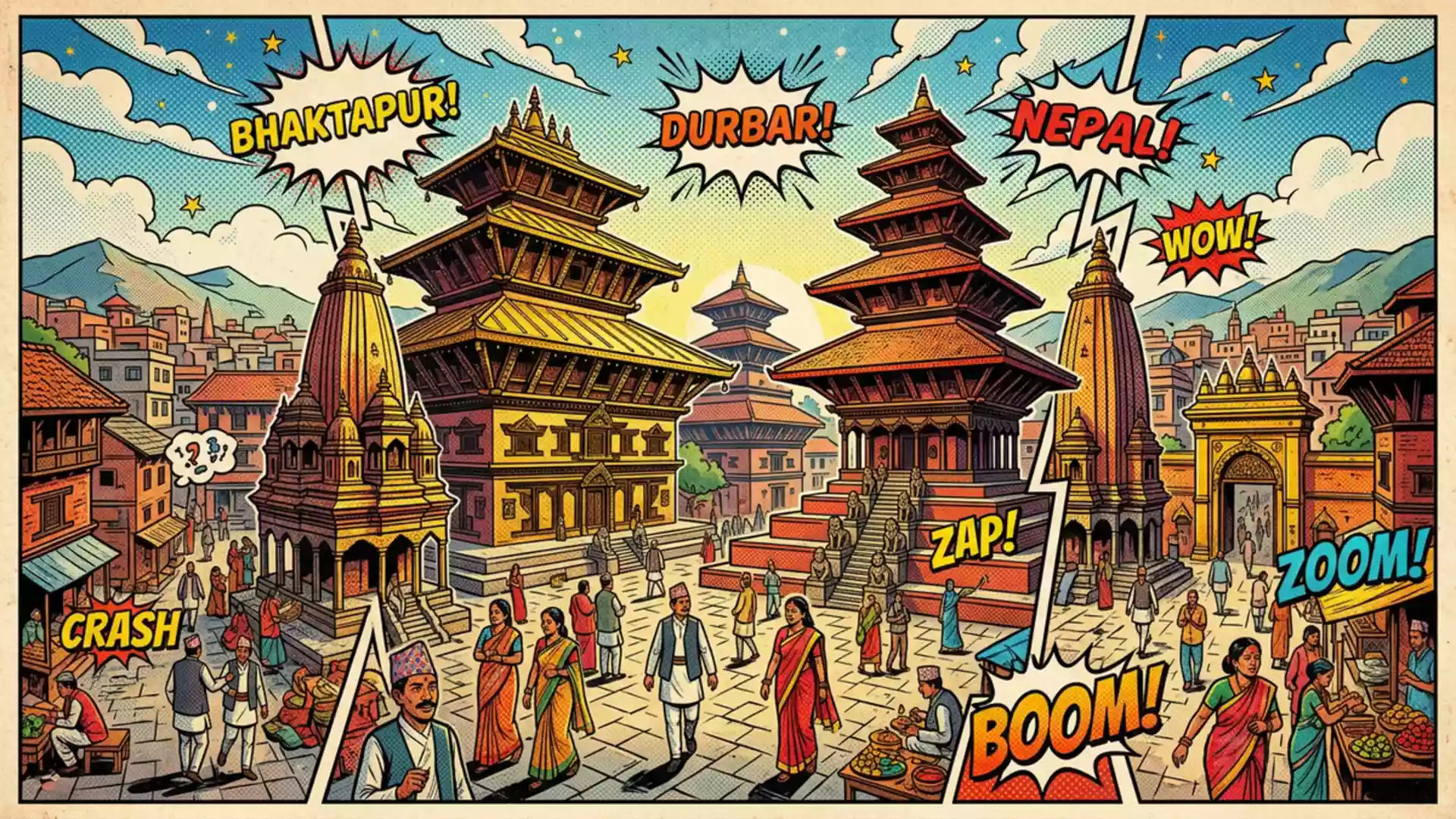
Bhaktapur Durbar Square and the palaces of the Malla kings
Published on 09/09/2026 at 06:23 | Editorial responsibility: Rafael Müller, Editor-in-Chief AD HOC NEWS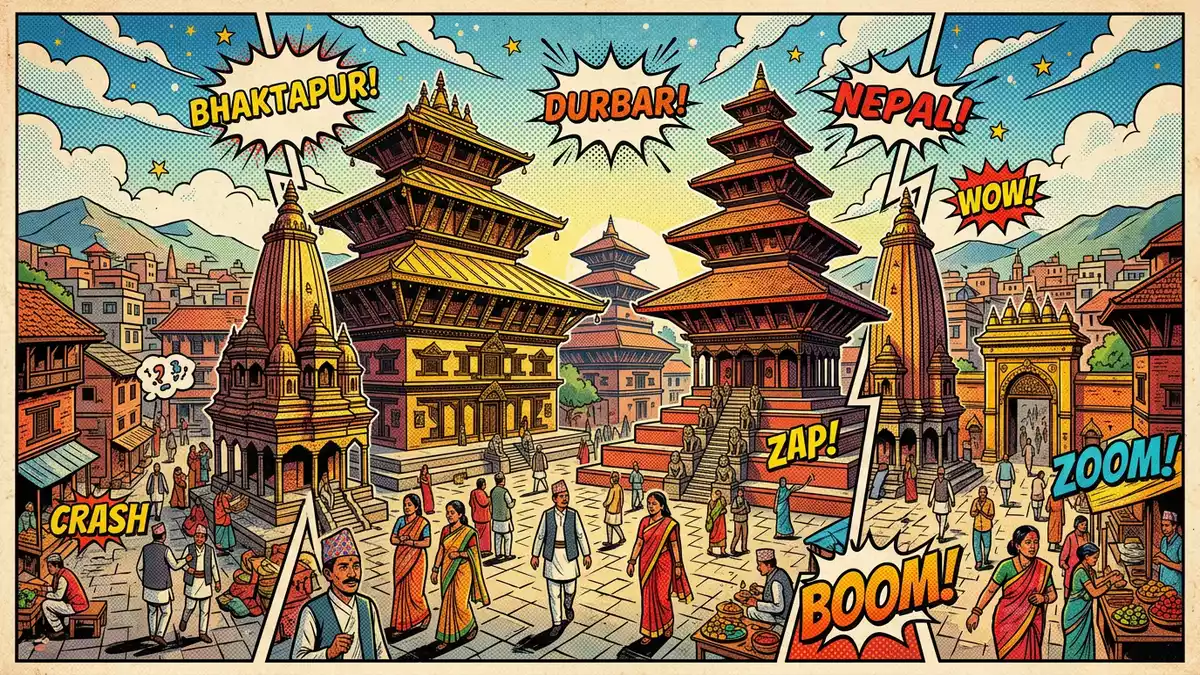
Bhaktapur Durbar Square in Bhaktapur, Nepal is the former royal palace complex of the Malla kings, a dense ensemble of brick palaces, temples and courtyards that still defines the centre of the old city.Bhaktapur Durbar Square Set in the eastern part of the Kathmandu Valley, it brings together traditional Newar architecture shaped between the thirteenth and eighteenth centuries.thirteenth and eighteenth centuries
Royal heart of a Newar city-state
Bhaktapur developed as a major Newar royal city under the Hindu Malla dynasty, which ruled much of the Kathmandu Valley from the thirteenth century until 1769.Hindu Malla dynasty Within this framework, Bhaktapur Durbar Square functioned as the political and ceremonial heart of the city, housing the palace complex and framing processions and royal rituals.royal palace complex
The first palace on the ground now occupied by the square is attributed to King Jayasthiti Malla in the thirteenth century, marking the beginning of the royal compound in its present form.King Jayasthiti Malla Later rulers such as Yaksha Malla, Jitamitra Malla and Bhupatindra Malla extended and remodelled the complex, adding new courtyards, gateways and temples that gradually formed the dense ensemble visitors recognise.Yaksha Malla and Bhupatindra Malla
Brick palaces, courtyards and Newar woodcarving
The architecture of Bhaktapur Durbar Square is dominated by the Newar tradition, with red brick walls, dark timber and stone sculpture arranged around interconnected courtyards.Newar tradition Palace buildings stand alongside pagoda-style temples and taller shikhara-style shrines, creating a skyline of tiered roofs, pinnacles and carved struts above the paved squares.palaces, temples and public spaces
Among the palace structures, the Palace of Fifty-five Windows is particularly associated with refined woodcarving on its long facade, while the Simhadhwakh? Ly?k? palace houses the National Art Gallery in part of the former royal compound.Palace of Fifty-five Windows Gates such as the Golden Gate lead into inner courtyards including Mul Chowk, where shrines like the temple of Taleju Bhawani stand within a more enclosed palace environment.Golden Gate and Mul Chowk
Temples, living heritage and World Heritage recognition
Around and within Bhaktapur Durbar Square stand numerous temples dedicated to Hindu deities such as Shiva, Vishnu and local protective gods, forming a dense devotional landscape linked by stone plinths, votive shrines and water spouts.Hindu deities The larger Kathmandu Valley World Heritage inscription recognises Bhaktapur Durbar Square as one of three royal squares, alongside the palace complexes of Kathmandu and Patan.three royal squares
UNESCO recorded the monument zone of Bhaktapur Durbar Square as part of the Kathmandu Valley World Heritage Site in 1979, highlighting the ensemble of palaces, temples and public spaces as a unified historic urban landscape.World Heritage Site in 1979 Within Bhaktapur itself, the square forms one of several historic areas, linking the palace zone with surrounding streets, workshops and residential buildings that continue the Newar brick and timber vocabulary beyond the formal courtyards.historic areas of Bhaktapur
Visiting Bhaktapur Durbar Square: what travellers from Western Europe should know
- Bhaktapur Durbar Square lies in Bhaktapur in the eastern part of Nepal’s Kathmandu Valley, east of Kathmandu, and is reached over local roads from the wider valley.
- The palace and temple complex is built on gently sloping ground, with paved squares, stone plinths and stairways linking different courtyard levels.
- Bhaktapur Durbar Square sits within the old city of Bhaktapur, where narrow streets and traditional houses extend beyond the palace area.
- The official language is Nepali and the currency is the Nepalese rupee.
- Entry requirements depend on your nationality; UK travellers can check the FCDO travel advice at gov.uk/foreign-travel-advice, Irish travellers the Department of Foreign Affairs at ireland.ie.
Searching for Bhaktapur Durbar Square on social platforms
These links open searches for Bhaktapur Durbar Square on each platform.
Frequently asked questions about Bhaktapur Durbar Square
Where is Bhaktapur Durbar Square located?
Bhaktapur Durbar Square is in Bhaktapur in Nepal’s Kathmandu Valley, east of Kathmandu, within the historic centre of the city.
What should visitors expect when exploring the square?
Visitors encounter a sequence of brick palaces, temples and courtyards, with paved squares, stairways and carved wooden facades forming a compact historic environment.
What makes Bhaktapur Durbar Square distinctive among Nepal’s royal squares?
Bhaktapur Durbar Square stands out through its concentration of Newar brick and timber architecture and its role as a former palace complex of the Malla kings.