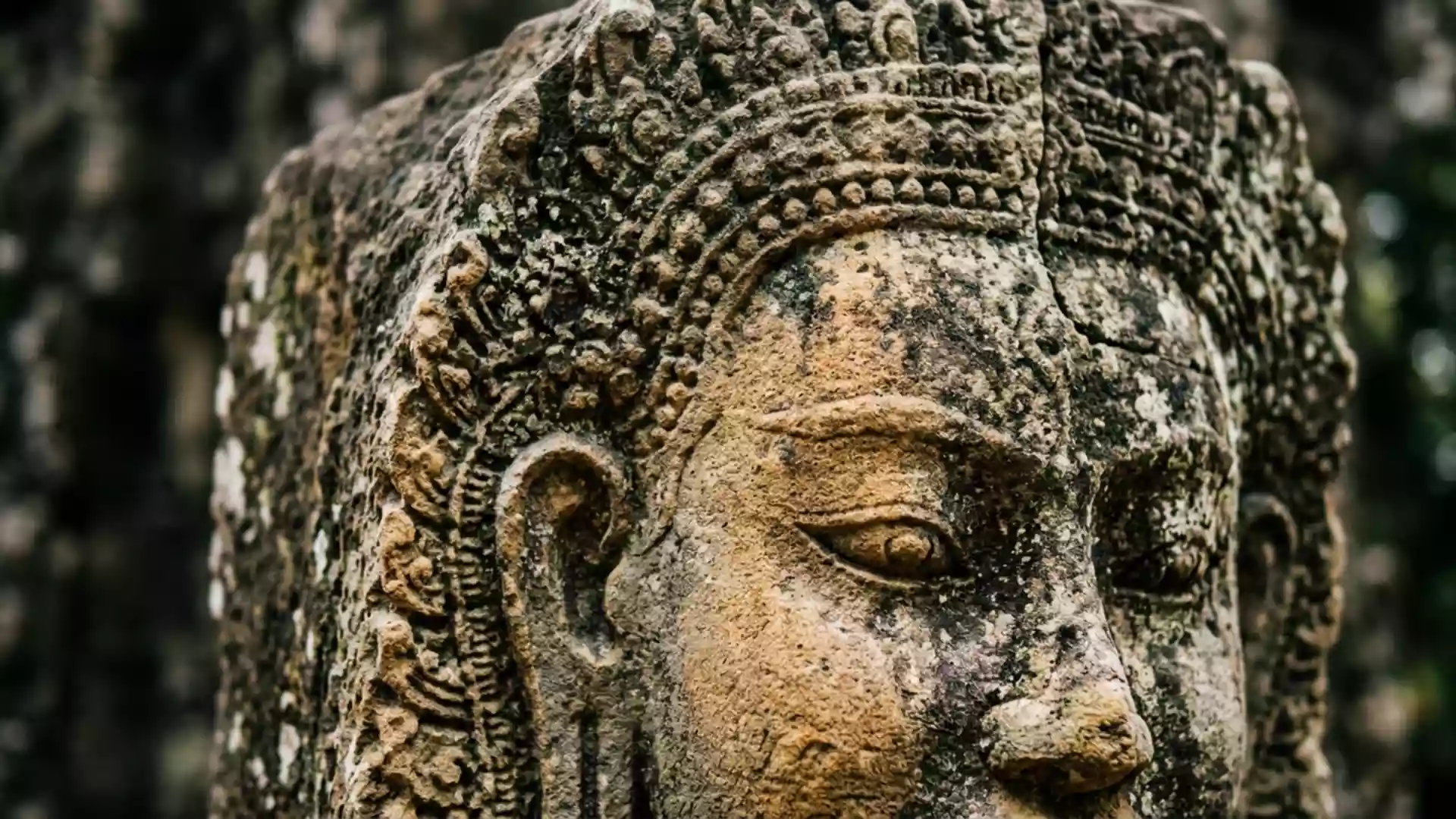
Bayon and the face-towers of Angkor Thom
Published on 08/31/2026 at 18:26 | Editorial responsibility: Rafael Müller, Editor-in-Chief AD HOC NEWS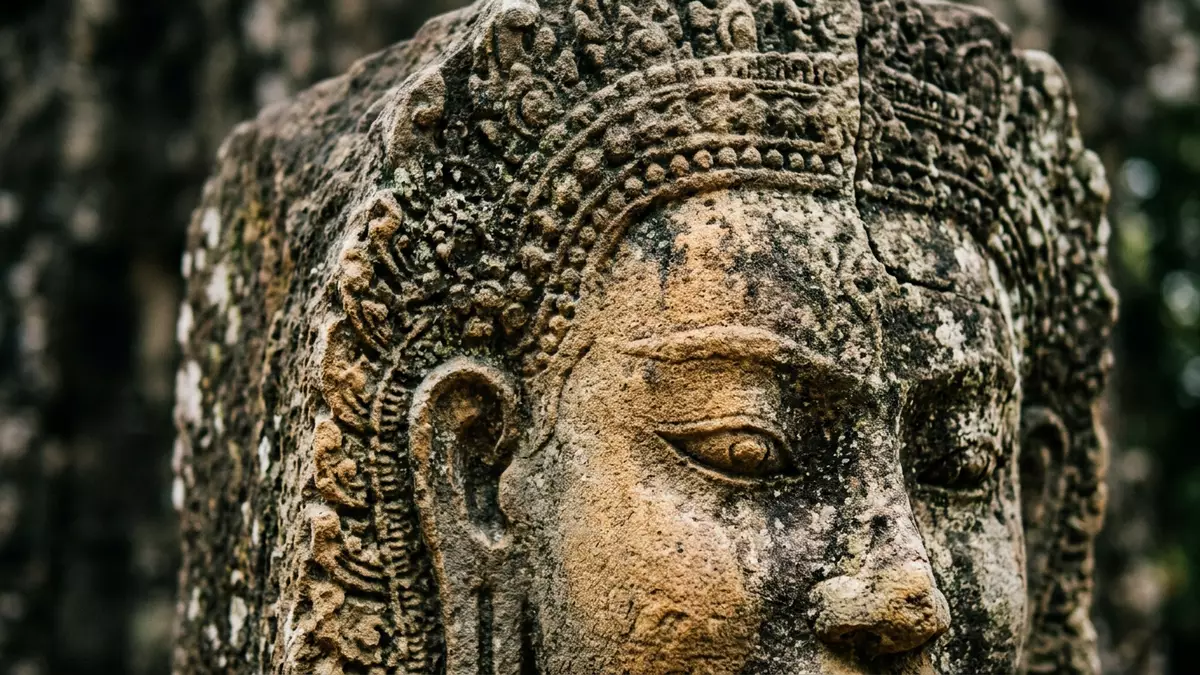
Bayon is the central temple of Angkor Thom in Siem Reap, built under Jayavarman VII in the late twelfth and early thirteenth centuries. Its stone mass is defined by towers, galleries and carved faces, with the temple standing at the centre of the royal city. the centre of Angkor Thom constructed around 1200
Jayavarman VII and the royal city
Bayon belongs to the Khmer world of Angkor, where Jayavarman VII transformed the capital into a walled city with a Buddhist temple at its geometric core. The monument is closely tied to his reign and to the broader shift in Khmer temple building during the late Angkor period. Jayavarman VII
The temple is made chiefly of sandstone and stands within the city plan of Angkor Thom. Its main profile is not a single tower but a complex stack of levels, with passages, enclosures and a central mass that rises above them. That layered composition gives Bayon a density that is visible from close range and from across the site. three levels
Faces, galleries and carved scenes
Bayon is best known for the faces on its towers. The temple’s surviving towers carry monumental stone faces turned towards the cardinal directions, while the lower galleries hold extensive bas-reliefs. smiling faces distinctive appearance
The reliefs give the building a second register of meaning through their scenes of court life, conflict and everyday activity. That combination of sculpted faces above and narrative carving below makes Bayon feel like a temple assembled from portraits and episodes at the same time. It also explains why the monument has long attracted attention from historians of Khmer art. bas-reliefs
Stone mountain in the middle of Angkor Thom
Bayon sits within the walled city of Angkor Thom, a planned urban space whose square layout is organised around the temple. The monument’s mass, its towers and its galleries give it the look of a stone mountain within the city. stone mountain
The site is part of the Angkor World Heritage area, and Bayon remains one of the clearest statements of Khmer royal architecture in the region. Its value lies in the way the city plan and the temple form meet in one place. The result is a monument where architecture, sculpture and urban layout are inseparable, yet each remains visible. Angkor Thom
Visiting Bayon: what travellers from Western Europe should know
- Bayon lies in Angkor Thom near Siem Reap, within the wider Angkor archaeological area. Access is by road through the city gates and across the planned inner avenues.
- The temple involves steps and uneven stone surfaces. The galleries and upper parts sit on several levels, so the route changes as the monument rises.
- The stonework is sandstone, with carved towers and corridors throughout the complex. The monument is open to the sky in many places, so the structure reads as both enclosed and open.
- The reliefs belong to different parts of the temple, so a circuit around the galleries reveals changing subjects and viewpoints. The faces above and the narrative carving below remain the defining pair of features.
- English is not an official language in Cambodia. The official language is Khmer and the currency is the Cambodian riel.
Searching for Bayon on social platforms
These links open searches for Bayon on each platform.
Frequently asked questions about Bayon
Where is Bayon?
Bayon stands in Angkor Thom, close to Siem Reap in Cambodia. It is part of the Angkor complex and sits at the centre of the old walled city.
What does a visit involve?
The monument is a walk through stone galleries, steps and courtyards with many carved surfaces. The structure rewards slow viewing, because the faces and reliefs appear at different heights and angles.
What makes Bayon distinctive?
Its identity rests on the combination of face-towers and narrative bas-reliefs. Few temples in Angkor present such a strong contrast between monumental portraiture and densely carved stories.