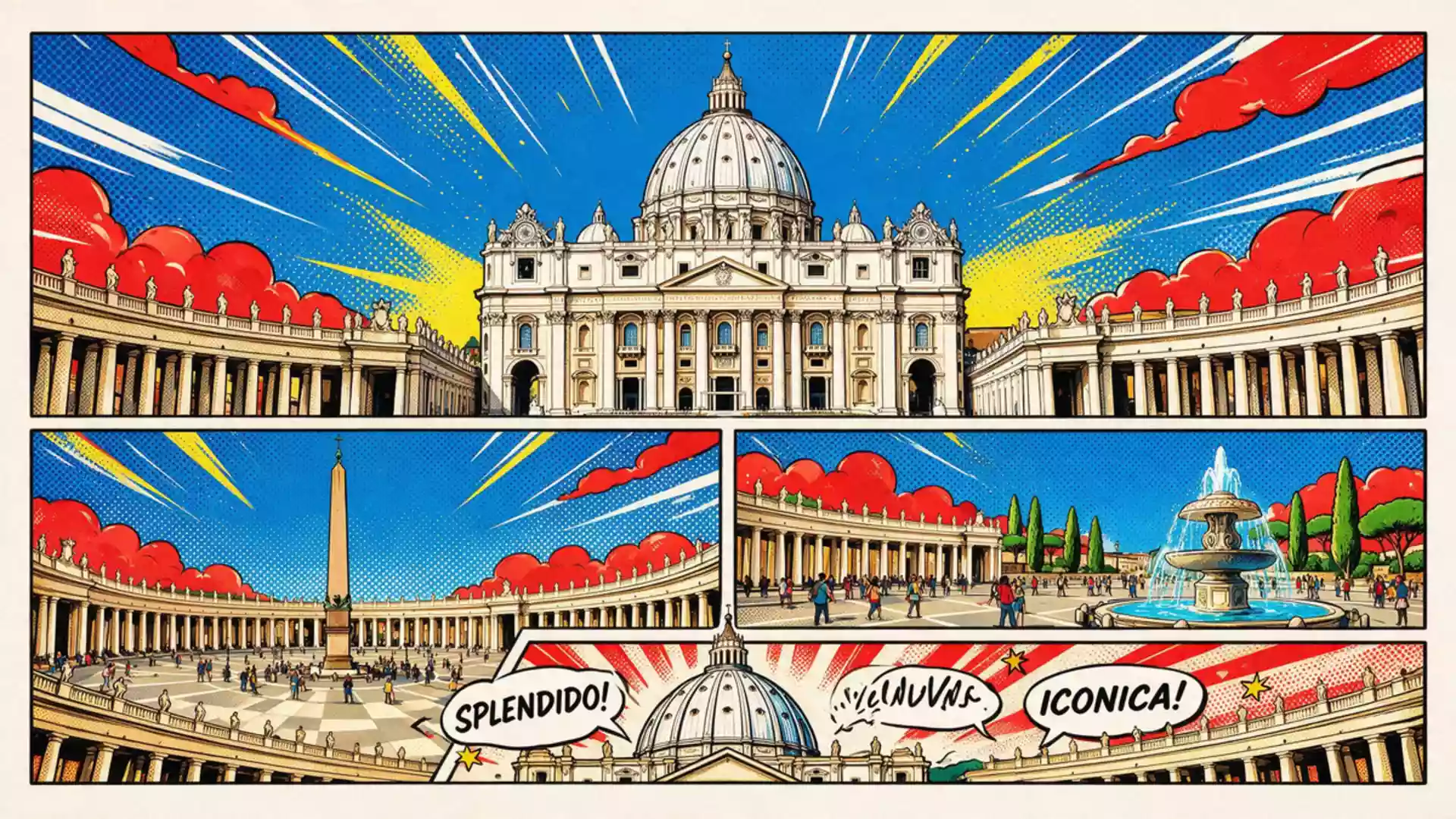
Basilica di San Pietro and the long span of stone and dome
Published on 09/02/2026 at 14:35 | Editorial responsibility: Rafael Müller, Editor-in-Chief AD HOC NEWS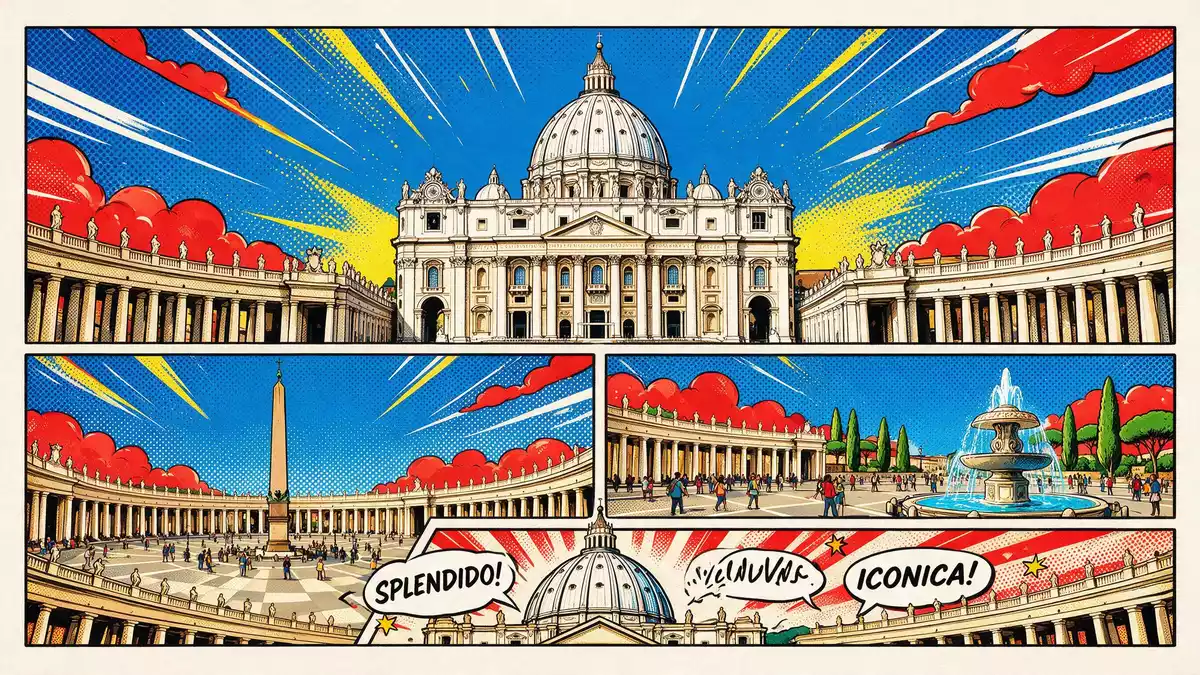
Basilica di San Pietro in Vatikanstadt is defined by scale, marble, and a dome that dominates the skyline above Saint Peter’s Square. Its long building campaign began in 1506 under Pope Julius II and ended in 1626, with Michelangelo, Giacomo della Porta, Carlo Maderno, and Gian Lorenzo Bernini all shaping its form. 1506 under Pope Julius II Vatican City
Michelangelo’s dome above the basilica
The dome is the basilica’s most recognisable external feature, rising above the crossing and capping the main volume with a strong vertical accent. Michelangelo conceived it, and Giacomo della Porta brought it to completion after his death, giving the building a profile that is visible across the Vatican precinct. Michelangelo conceived it
Inside, the basilica combines monumental nave space with richly worked surfaces, large piers, and major sculptural interventions by Bernini. The building belongs to the Renaissance and Baroque worlds at once, because its long construction history brought different hands into the same monumental shell. the Basilica
A papal church with a layered interior
The basilica stands at the heart of Vatican City, the sovereign city-state in Rome, and remains the central church of Roman Catholicism. That status gives the building a ceremonial weight, but its appeal begins with what can be seen: a vast nave, chapels, vaults, and a sequence of major works gathered under one roof. official website Roman world
The façade by Carlo Maderno completes the west front, while Bernini’s bronze baldacchino marks the area above the high altar. Beneath the church, the Vatican Grottoes form a lower level of vaults and memorial spaces that add another layer to the building’s vertical structure. Carlo Maderno
From the first stone to the finished monument
On 18 April 1506, Pope Julius II laid the first stone of the new basilica. The present church took shape over more than a century, and the completed building was consecrated in 1626 under Pope Urban VIII. 18 April 1506 Pope Urban VIII
That sequence of rulers and architects is visible in the fabric of the church itself. The result is not a single-period monument, but a layered basilica whose parts carry the marks of Renaissance planning and Baroque finish.
Visiting Basilica di San Pietro: what travellers from Western Europe should know
- The basilica stands in Vatican City, close to Saint Peter’s Square and the Vatican Museums. It is reached on foot from the surrounding streets and by Rome’s public transport network.
- The scale is large and the interior is divided by broad bays, tall piers, and long aisles. The dome and the lower crypt spaces create a strong vertical contrast.
- English is widely used alongside Italian in visitor-facing settings. The currency is the euro.
- Entry requirements depend on your nationality; UK travellers can check the FCDO travel advice at gov.uk/foreign-travel-advice, Irish travellers the Department of Foreign Affairs at ireland.ie.
Searching for Basilica di San Pietro on social platforms
These links open searches for Basilica di San Pietro on each platform.
Frequently asked questions about Basilica di San Pietro
Where is Basilica di San Pietro?
It stands in Vatican City, in Rome, beside Saint Peter’s Square. The church is the centrepiece of the Vatican’s religious and ceremonial landscape.
What does a visit involve?
The visit centres on the vast interior, the dome, the altar area, and the lower grotto level. The building is large enough that its major parts are experienced as separate spaces.
What makes it distinctive?
The basilica combines a Renaissance core, a Baroque façade, and major work by Michelangelo, Maderno, and Bernini. Its dome and layered interior make the whole building easy to read from both outside and within.