
Basilica di San Pietro and its vast stone interior
Published on 08/25/2026 at 13:30 | Editorial responsibility: Rafael Müller, Editor-in-Chief AD HOC NEWS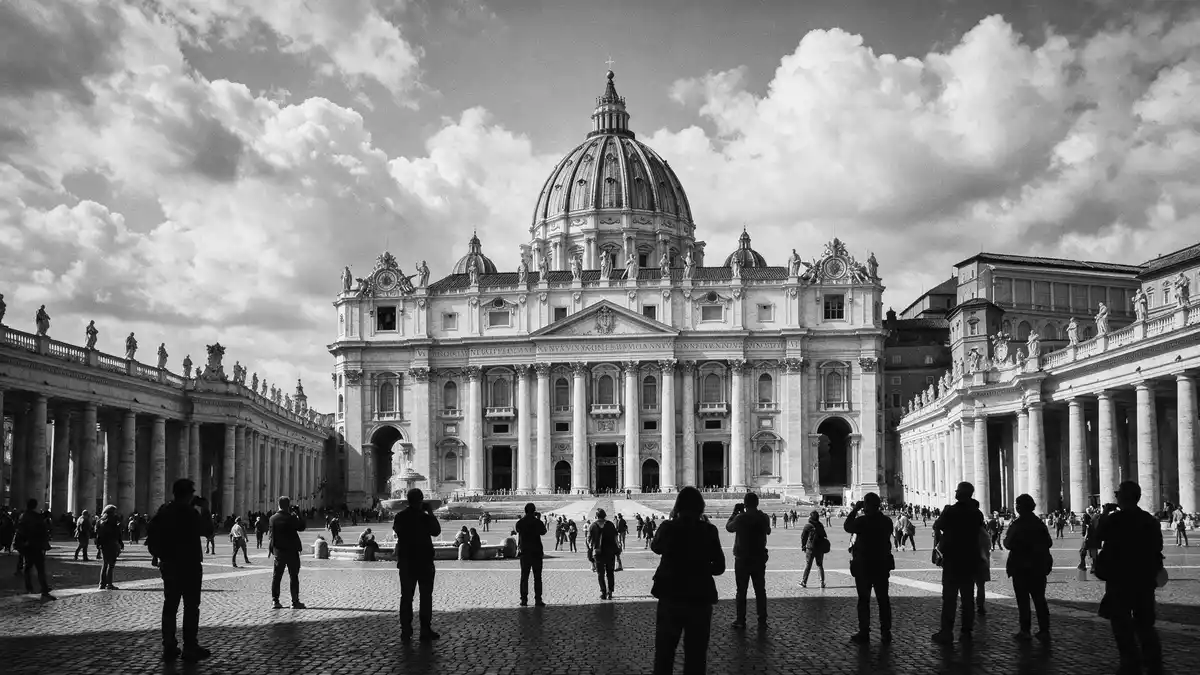
Basilica di San Pietro, better known in English as St Peter’s Basilica, rises from Piazza San Pietro at the heart of Vatikanstadt with a vast stone interior shaped by Renaissance and Baroque imagination. Completed in 1626 under Pope Urban VIII after a building campaign that began in 1506, it remains one of the largest churches in Christendom and a defining monument of Vatican City.
From Renaissance project to Baroque landmark
The present Basilica di San Pietro stands on a site associated with the grave of the apostle Peter and replaced an earlier Constantinian church that had stood there for more than a millennium.the earlier basilica, Old St Peter’s Construction of the new basilica began in 1506, when Pope Julius II ordered a complete rebuilding in line with Renaissance ideas of proportion and monumentality.construction of the Basilica began in April 1506
A succession of architects worked on the project, including Donato Bramante, Raphael and Antonio da Sangallo the Younger, before Michelangelo Buonarroti took charge in 1547 and imposed a powerful centralised design that still shapes the building.many great artists were involved in its construction Michelangelo’s work on the dome and the massive stone drum beneath it gave the basilica its unmistakable profile, while later additions in the early seventeenth century under Carlo Maderno extended the nave and created the long Latin-cross plan familiar to visitors.the basilica was completed in 1626 in a Renaissance and Baroque style
Inside one of the world’s largest churches
Seen from the piazza, the facade and dome of Basilica di San Pietro give only a hint of the scale inside: the church stretches about 218 m (715 ft) in length, with the dome rising to around 136 m (446 ft) including the cross at its summit.the building measures 218 metres in length and 136 metres in height The interior covers roughly 23,000 m² (about 247,500 sq ft) of floor area and has space for tens of thousands of worshippers beneath its coffered vaults and marble-clad walls.the basilica is about 218 metres long with a surface of 23,000 square metres
The nave and side aisles are lined with chapels, monuments and altars, many of them created in the Baroque period under Gian Lorenzo Bernini and his contemporaries.Bernini worked on the interior and on the piazza At the crossing stands Bernini’s bronze baldachin, a monumental canopy over the papal altar and the space traditionally associated with Peter’s tomb, while the apse holds his sculptural treatment of the Cathedra Petri, the monumental throne-like reliquary that frames the high altar.Bernini later added the great bronze baldachin and other works
Dome, piazza and the wider Vatican setting
The dome of Basilica di San Pietro dominates both the church and the skyline of Vatikanstadt, with a ribbed structure in masonry that spans about 42 m (138 ft) at its widest point and rises to more than 130 m (430 ft) above the floor.the dome stretches 138 feet in diameter and rises 452 feet above the street Michelangelo designed the basic form, while Giacomo della Porta and Domenico Fontana completed the upper parts of the structure in the late sixteenth century, giving the building its distinctive double-shell profile.Michelangelo designed the principal dome, completed after his death by Della Porta and Fontana
In front of the basilica lies the great space of St Peter’s Square, a Baroque piazza framed by curving colonnades that Gian Lorenzo Bernini designed in the 1650s and 1660s.the square was completed in 1667 with its famous colonnades The basilica, the piazza and the adjoining Apostolic Palace together form the ceremonial and administrative heart of the Vatican, with the church serving as the principal papal basilica and a major pilgrimage destination for Catholics from around the world.St Peter’s Basilica is the papal basilica in Vatican City
Visiting Basilica di San Pietro: what travellers from Western Europe should know
- Basilica di San Pietro stands in Piazza San Pietro on the western bank of the Tiber, within the walled territory of Vatikanstadt and immediately adjacent to central Rome.
- The basilica’s interior involves long stretches on polished stone floors, and the ascent towards the dome uses stairways that become progressively narrower and more confined.
- The official language of Vatican City is Italian and the currency is the euro, shared with surrounding Italy.
- Travellers commonly arrive by Rome’s public transport network, with the Ottaviano and Cipro metro stations on Line A providing access to the streets leading towards Piazza San Pietro.
- Entry requirements depend on your nationality; UK travellers can check the FCDO travel advice at gov.uk/foreign-travel-advice, Irish travellers the Department of Foreign Affairs at ireland.ie.
Searching for Basilica di San Pietro on social platforms
These links open searches for Basilica di San Pietro on each platform.
Frequently asked questions about Basilica di San Pietro
Where is Basilica di San Pietro?
Basilica di San Pietro stands in Vatican City, an independent city-state enclaved within Rome on the western side of the Tiber River.
What should visitors expect inside?
The interior offers a long nave, expansive side chapels and a richly decorated crossing beneath the dome, with extensive marble surfaces and major works by Renaissance and Baroque artists.
What makes Basilica di San Pietro distinctive?
Its combination of Michelangelo’s dome, Bernini’s sculptural works and the huge scale of the interior make it a central monument of Renaissance and Baroque church architecture.


