
Basilica di San Marco, Venice’s golden mosaic basilica
Published on 09/21/2026 at 20:38 | Editorial responsibility: Rafael Müller, Editor-in-Chief AD HOC NEWS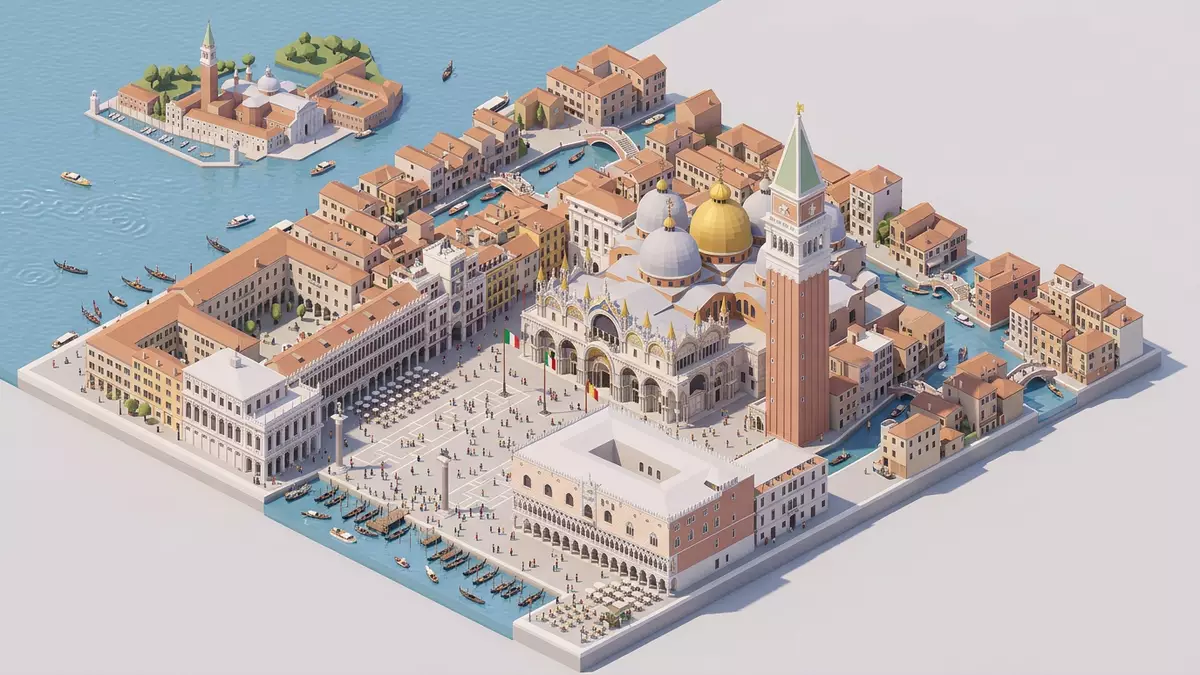
Basilica di San Marco in Venedig is the historic cathedral of Venice, renowned for its luminous gold mosaics and layered Byzantine, Romanesque and Gothic architecture. The church stands beside the Doge’s Palace on Piazza San Marco and in its present form dates to the eleventh century, when Venice’s rulers reshaped it as their chapel and ceremonial church.
A Byzantine basilica shaped by power and devotion
The story of Basilica di San Marco begins in the ninth century, when Venetian merchants brought the relics of Saint Mark the Evangelist from Alexandria to Venice around 828, inspiring the construction of a first church dedicated to the apostle.St Mark’s relics arrived in Venice in 828 That early building served as the Doge’s private chapel and a symbol of the city’s growing independence from both Byzantine and Frankish powers, even as it drew heavily on eastern architectural forms.
A fire in 976 destroyed this earlier basilica, and rebuilding under Doge Domenico Contarini in the eleventh century created most of the structure that visitors see today.Major reconstruction began under Domenico Contarini in the eleventh century The present basilica was largely complete and consecrated by 1094, with a Greek-cross ground plan adapted from the Church of the Holy Apostles in Constantinople and five great domes rising over the crossing and arms.The basilica’s completion and five-domed plan belong to the late eleventh century For centuries it functioned as the doge’s chapel and the civic church of the Venetian Republic before becoming the city’s cathedral in 1807.
Gold mosaics, spolia and a layered interior
Step inside Basilica di San Marco and the most striking feature is the expanse of gold-ground mosaics that cloak its vaults, domes and upper walls. The mosaic decoration, much of it installed between the twelfth and thirteenth centuries, covers several thousand square metres and depicts scenes from the Old and New Testaments, the life of Saint Mark and the history of Venice’s relationship with Byzantium.The basilica’s mosaics date largely from the twelfth century The shimmering background gives the church the nickname “Chiesa d’Oro”, the Church of Gold, and sets its interior apart from the stone and frescoed spaces of many western European cathedrals.
Below the mosaics, the interior is lined with marble revetment and a dense array of columns and capitals, many reused from older buildings across the eastern Mediterranean. This practice of reusing architectural fragments, known as spolia, reflects Venice’s maritime reach and its connections with Constantinople and other centres of Byzantine culture.Byzantine spolia form part of the basilica’s fabric Above the main altar stands the Pala d’Oro, a lavish gold and enamel altarpiece assembled over centuries, which further reinforces the impression of a church built as much to display the richness of Venice’s artistic inheritance as to serve liturgical functions.
Western facade, horses and the Piazza San Marco setting
Outside, the western facade of Basilica di San Marco faces Piazza San Marco and presents a dense composition of arches, columns, mosaics and sculpture. Five portal arches open towards the square, each framed by shafts of coloured marble and crowned by a lunette field that once held medieval mosaics; only the lunette above the far-left portal, the Porta di Sant’Alipio, still preserves a thirteenth-century depiction of Saint Mark’s relics being carried into the basilica.The western facade carries five portal arches and an important thirteenth-century mosaic Higher up, a loggia runs across the facade, where bronze horse replicas stand above the central arch, echoing the famous ancient quadriga brought to Venice after the Fourth Crusade.
The basilica’s position beside the Doge’s Palace underlines how closely religious, political and ceremonial life were intertwined in the Venetian Republic.San Marco stands immediately beside the Doge’s Palace Piazza San Marco in front of the church forms a large open space framed by arcaded buildings and the campanile, giving the basilica a broad stage for processions and public gatherings. The domes and facade ornaments appear in many historic views of Venice, and the building’s combination of Byzantine forms, Gothic additions and Renaissance alterations makes it a compact lesson in how the city absorbed and transformed influences from across the Mediterranean world.
Visiting Basilica di San Marco: what travellers from Western Europe should know
- Basilica di San Marco stands on Piazza San Marco in the historic centre of Venedig, immediately adjoining the Doge’s Palace and near the waterfront landing stages used by vaporetti and other boats.
- The basilica’s interior involves walking on polished stone floors and climbing some steps, especially if visiting the upper galleries; footwear with good grip helps on smooth surfaces.
- Venedig lies in Italy; the official language is Italian and the currency is the euro.
Searching for Basilica di San Marco on social platforms
These links open searches for Basilica di San Marco on each platform.Frequently asked questions about Basilica di San Marco
Where is Basilica di San Marco located in Venedig?
Basilica di San Marco stands on Piazza San Marco in the historic centre of Venedig, directly beside the Doge’s Palace and close to the city’s main waterfront.
What should visitors expect when entering the basilica?
Visitors encounter an interior covered with gold-ground mosaics, marble-lined walls and a network of domes and arches, giving the space a distinctive Byzantine character compared with many western European cathedrals.
What makes Basilica di San Marco distinctive among European churches?
Its origin as the doge’s chapel, its Greek-cross plan with five domes and its extensive mosaic programme in a Byzantine style make Basilica di San Marco a distinctive fusion of eastern and western traditions.


