
Basilica di San Marco and its golden light in Venice
Published on 08/20/2026 at 06:22 | Editorial responsibility: Rafael Müller, Editor-in-Chief AD HOC NEWS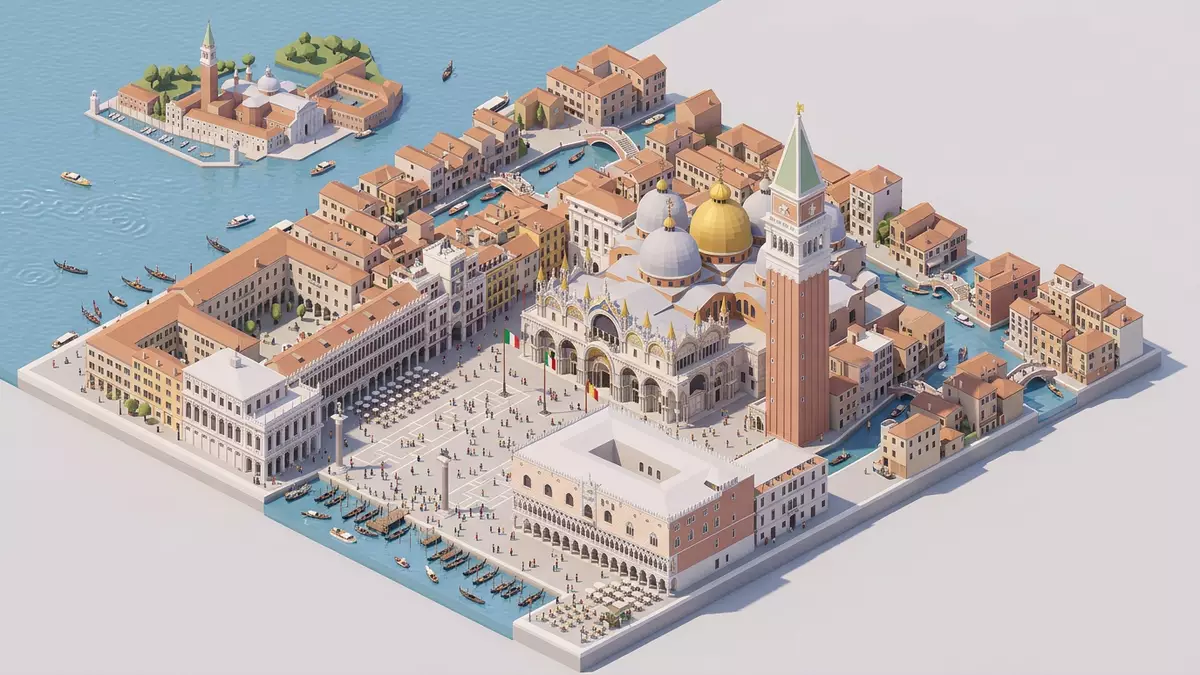
Basilica di San Marco in Venedig is a church where gold, marble and domes turn a civic square into something close to a stage set. Rising beside the Doge’s Palace, it has served since 1807 as the cathedral of the Patriarch of Venice, while keeping the character of a ceremonial chapel built for a maritime republic that measured itself in stone and light.cathedral of the Patriarch of Venice
Gold, mosaics and the glow of an Italo-Byzantine interior
The defining experience of Basilica di San Marco lies inside, where more than 8,000 square metres of mosaics wrap its vaults, domes and walls in reflective glass and gold leaf. Biblical narratives from the Old and New Testaments unfold across these surfaces, interwoven with scenes from the life of Saint Mark the Evangelist, whose relics gave the church its status.more than 8,000 square metres of mosaics
The mosaic cycle developed over some eight centuries, beginning with Greek-Byzantine craftsmen in the eleventh century and continuing with local Venetian workshops that absorbed Romanesque, Gothic and later influences.Greek-Byzantine craftsmen in the eleventh century Under the domes, figures step forward against gold grounds, while on lower walls patterns and inscriptions are framed by inlaid marble and porphyry. It is a space where theology, civic pride and artistic exchange across the Mediterranean are pressed into the same glittering skin.
A basilica shaped by Venice’s reach towards the East
The present Basilica di San Marco took shape in the eleventh century, when Doge Domenico Contarini ordered the construction of a grander church on the site of earlier shrines, using existing foundations and walls.Doge Domenico Contarini ordered the construction Work began in 1063 and the basilica is traditionally dated to completion around 1071, with later centuries adding galleries, chapels and sculptural details.work began in 1063
Architecturally, the church combines a Greek-cross ground plan and domed profile associated with Byzantine models with Western Gothic and Romanesque additions. Its five main domes rise over arms of equal length, while exterior arches, pinnacles and statuary reflect later phases when Venice engaged with northern European forms.combines Byzantine, Romanesque and Gothic elements The result is an Italo-Byzantine hybrid in which cupolas, arches and marble revetments speak of a city positioned between Latin West and Greek East.
Relics, lions and the public stage of Piazza San Marco
The story of Basilica di San Marco begins with the arrival of the relics of Saint Mark the Evangelist in 828, brought from Alexandria by Venetian merchants under Doge Giustiniano Partecipazio. A first church was completed and consecrated in 832, providing an official shrine for the new patron saint and the winged lion symbol that came to stand for the Republic of Venice.relics of Saint Mark the Evangelist in 828
Over the following centuries the basilica functioned as the doge’s chapel and as a setting for state ceremonies, processions and public appearances that unfolded across Piazza San Marco and into the church itself.setting for state ceremonies Marble cladding, sculptural spoils and bronze horses over the main entrance underline this civic role, turning the façade into a statement of Venice’s reach across sea routes to the Eastern Mediterranean. Standing on the square, the traveller sees basilica, campanile and doge’s palace arranged as a single composition, giving a compact view of how religion, politics and urban space intertwined in the city’s history.
Visiting Basilica di San Marco: what travellers from Western Europe should know
- Basilica di San Marco faces Piazza San Marco on the eastern side of central Venedig, immediately beside the Palazzo Ducale and close to the waterfront Riva degli Schiavoni.
- The approach from the surrounding streets leads across flat paving stones; inside the basilica, visitors encounter sections of uneven historic flooring and short flights of stone steps.
- Venedig lies in northeastern Italy, where the official language is Italian and the currency is the euro.
- Vaporetto waterbuses on the Grand Canal and St Mark’s Basin stop within a short walk of the basilica at landing stages such as San Zaccaria and San Marco Vallaresso.
Searching for Basilica di San Marco on social platforms
These links open searches for Basilica di San Marco on each platform.Frequently asked questions about Basilica di San Marco
Where is Basilica di San Marco?
Basilica di San Marco stands on Piazza San Marco in the historic centre of Venedig, in northeastern Italy, next to the Doge’s Palace and close to the city’s lagoon waterfront.
What can visitors expect inside the basilica?
Visitors enter a dim, gold-lit interior where extensive mosaics cover domes and vaults, supported by marble-clad walls, columns and pavements laid in geometric patterns.
What makes Basilica di San Marco distinctive among European churches?
The basilica’s combination of Byzantine-inspired domes, long-running mosaic decoration and role as both civic chapel and cathedral gives it a character strongly linked to Venice’s seaborne past.


