
Banff National Park and the layered landscape of the Canadian Rockies
Published on 08/29/2026 at 13:11 | Editorial responsibility: Rafael Müller, Editor-in-Chief AD HOC NEWS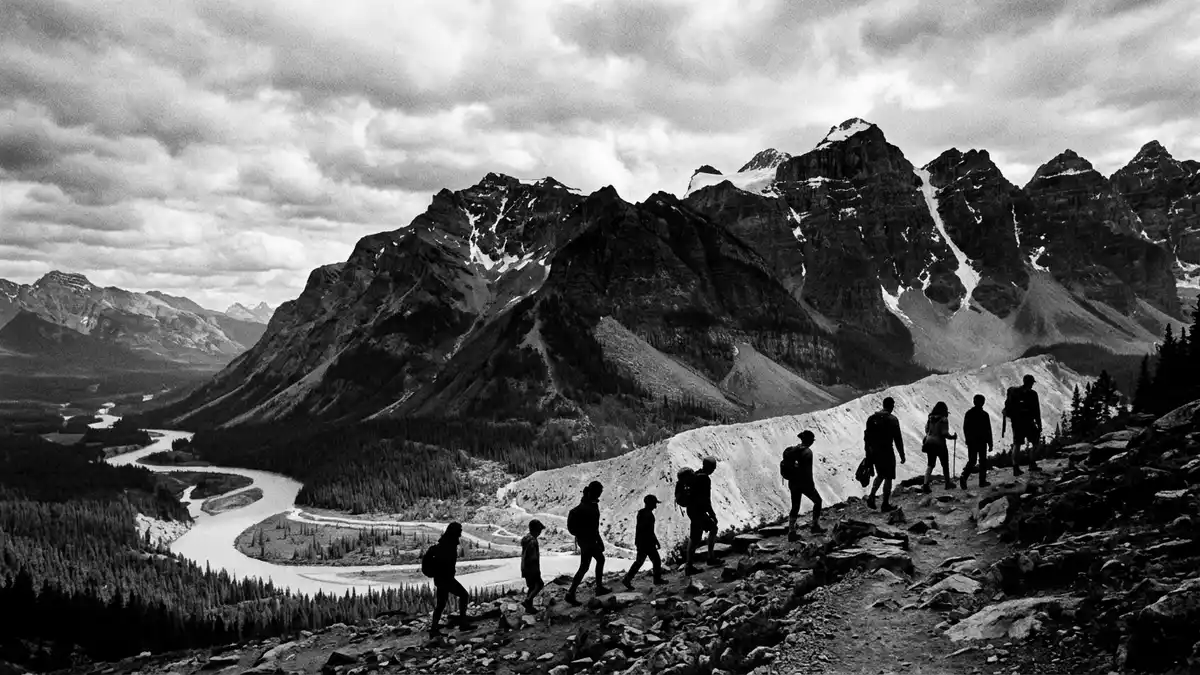
Banff National Park in Alberta presents the Canadian Rockies as a layered landscape where ancient seabeds, thrust-up mountains and glaciated valleys meet around the town of Banff.
From shallow seas to rising mountains
The story behind Banff National Park begins long before it became Canada’s first national park in the nineteenth century, in a setting that was once covered by shallow seas.Banff National Park Over hundreds of millions of years, mud, sand and the remains of marine life settled on the seabed and gradually turned into sedimentary rocks such as limestone, shale and sandstone.sediment laid down in shallow seas
These rock layers, some dating from the Precambrian eon through to the Jurassic period, were later compressed and deformed as tectonic activity affected western North America.geologic formations in Banff range in age from Precambrian to Jurassic During the Laramide orogeny, a major mountain-building phase between about 80 million and 55 million years ago, thick packages of these sedimentary rocks were thrust eastwards over younger strata and raised to form the core of the Canadian Rockies visible in Banff today.mountain building during the Laramide orogeny
Glaciers carving valleys and cirques
Once the mountains of Banff National Park stood high above the plains, ice and water began to reshape them, cutting valleys and basins that now hold lakes and rivers across the park.the great Ice Age altered the appearance of the Rockies During the Quaternary period, starting roughly 2 million years ago, continental ice sheets and mountain glaciers advanced and retreated repeatedly through this part of the Canadian Rockies, gouging U-shaped valleys and sculpting the sharp peaks that are now a hallmark of Banff’s scenery.glaciation during the past two million years carved peaks and valleys
Evidence of this glacial history is visible in the broad valleys that carry rivers and roads, in cirques high above the treeline and in the remnants of icefields on surrounding ranges.glaciers at times covered most of the park The Columbia Icefield, shared with neighbouring Jasper National Park, remains one of the largest uninterrupted glacial masses in the Rockies, while smaller mountain glaciers sit on shaded slopes and feed turquoise lakes through meltwater streams.
Banff as gateway to Canada’s first national park
Banff National Park surrounds the town of Banff in the Bow River valley of Alberta and forms part of the Canadian Rocky Mountain Parks UNESCO World Heritage Site.location and designation of Banff National Park The park was established in 1885 under the name Banff Hot Springs Reserve after mineral hot springs were identified on the slopes of Sulphur Mountain, and it became Canada’s first national park with the Rocky Mountains Park Act of 1887.reservation of hot springs in 1883 and park creation in 1885 and 1887
The town of Banff developed as a service centre and railway stop within this protected landscape, framed by mountains such as Cascade Mountain and Mount Rundle that rise above the Bow River corridor.Cascade Mountain rock formations Travellers encounter a landscape where long bands of limestone and shale form steep ridges, and where the valley floor holds forests, meadows and river channels that contrast with the cliffs and icefields above.
Visiting Banff National Park: what travellers from Western Europe should know
- Banff National Park lies in the province of Alberta in western Canada and is reached along the Trans-Canada Highway, which follows the Bow River valley between Banff and Lake Louise.
- Much of the park’s terrain is mountainous, with steep slopes, high passes and valleys at altitude, and paths and viewpoints can involve walking on uneven ground and climbing stairways.
- The town of Banff sits in a glacial valley beside the Bow River, with surrounding mountains rising above it; some lookouts and trails begin directly from the townsite.
- The official languages of Canada are English and French and the currency is the Canadian dollar.
- Entry requirements depend on your nationality; UK travellers can check the FCDO travel advice at gov.uk/foreign-travel-advice, Irish travellers the Department of Foreign Affairs at ireland.ie.
Searching for Banff National Park on social platforms
These links open searches for Banff National Park on each platform.
Frequently asked questions about Banff National Park
Where is Banff National Park located?
Banff National Park is in western Canada, in the province of Alberta, surrounding the town of Banff in the Bow River valley within the Canadian Rockies.
What can visitors expect when exploring Banff National Park?
Visitors encounter a mountain landscape of sedimentary ridges, forested valleys, rivers and glacial lakes, with a mix of roadside viewpoints and trails beginning from Banff and neighbouring areas.
What makes Banff National Park distinctive among mountain parks?
Banff National Park combines deep geological history, extensive glacial landforms and the role of Banff and its hot springs in creating Canada’s national park system in the late nineteenth century.


