
Banaue Rice Terraces and the mountains shaped into fields
Published on 09/23/2026 at 10:24 | Editorial responsibility: Rafael Müller, Editor-in-Chief AD HOC NEWS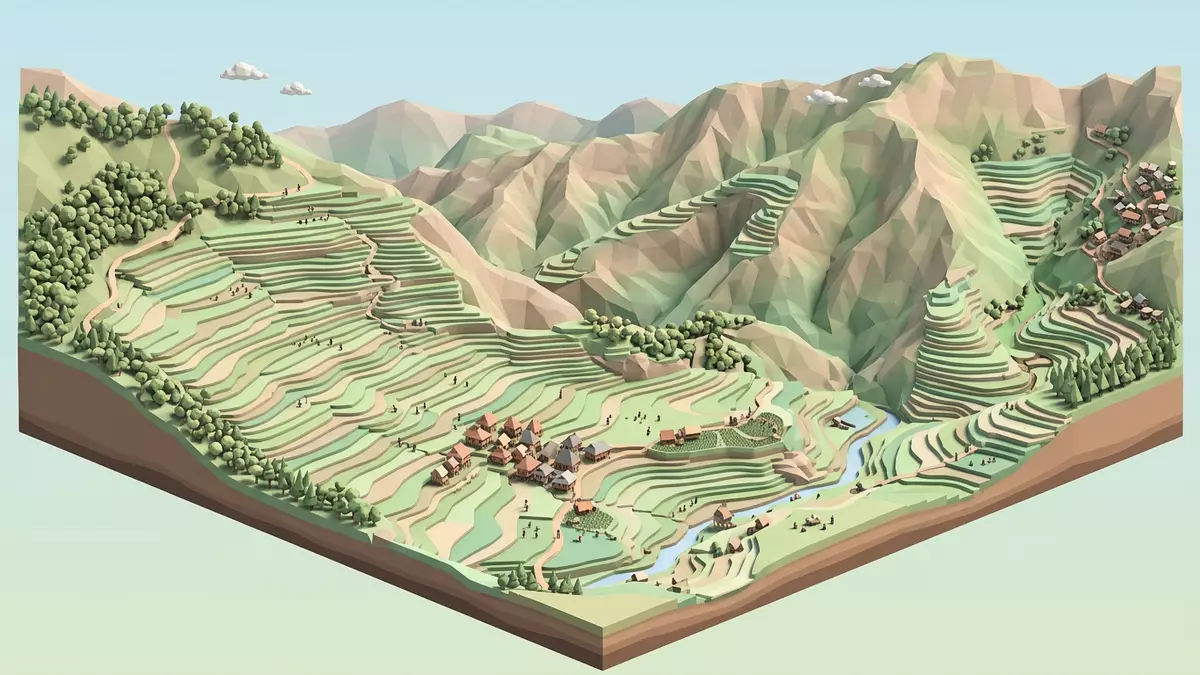
The Banaue Rice Terraces turn steep mountain slopes into a sequence of cultivated fields, retaining walls and narrow paths. In Banaue, Ifugao Province, the landscape remains inseparable from the Ifugao people and their rice-growing tradition.
Mountain slopes transformed into rice fields
The terraces follow the contours of the Cordillera mountains in northern Luzon. Their walls use packed earth and stone, while water moves through irrigation channels between the higher and lower paddies.
From viewpoints around Banaue, the fields appear as broad bands crossing the slopes. The scenery changes with cultivation, with flooded paddies reflecting the sky and planted sections forming green patterns across the mountains.
The Ifugao tradition behind Banaue
The terraces belong to an agricultural culture associated with the Ifugao people. Rice farming, woodland, water channels and communal labour form connected parts of the cultural landscape.
The age of the terraces is expressed at different levels of precision. They are traditionally dated to about 2,000 years, while archaeological research has produced more varied estimates for the development of individual terrace systems.
The Banaue terrace system is associated with irrigated rice cultivation in the mountains of north-central Luzon.
Banaue and the Cordilleras heritage landscape
The name Banaue Rice Terraces is used for the terrace landscape close to Banaue town. It is also linked in public discussion with the wider Ifugao Rice Terraces, a cultural landscape extending across several communities.
The UNESCO property is named Rice Terraces of the Philippine Cordilleras and was inscribed in 1995. Its recognised clusters include Batad and Bangaan in Banaue, alongside terrace areas in Hungduan, Mayoyao and Kiangan.
The UNESCO heritage property describes the terraces as a living cultural landscape shaped by the Ifugao community. The designation concerns the wider Cordilleras property, not every terrace visible from Banaue.
The Philippine government declared the Ifugao Rice Terraces a National Cultural Treasure in 1973. The National Cultural Treasure record places Banaue among the historic terrace areas of Ifugao.
Visiting Banaue Rice Terraces: what travellers from Western Europe should know
- Banaue lies in Ifugao Province on Luzon. Road journeys from Manila reach the mountain town through the Cordilleras.
- The landscape is steep and uneven. Viewpoints and terrace routes include steps, slopes, narrow paths and sections beside retaining walls.
- Batad is a separate terrace cluster reached from the Banaue area. Its landscape includes steep mountain paths and a village set among the paddies.
- The official language is Filipino and the currency is the Philippine peso.
- Entry requirements depend on your nationality; UK travellers can check the FCDO travel advice at gov.uk/foreign-travel-advice, Irish travellers the Department of Foreign Affairs at ireland.ie.
Searching for Banaue Rice Terraces on social platforms
These links open searches for Banaue Rice Terraces on each platform.
Frequently asked questions about Banaue Rice Terraces
Where are the Banaue Rice Terraces?
They are in and around Banaue, in Ifugao Province on Luzon in the Philippines. The wider terrace landscape extends across several Cordillera communities.
What can visitors expect?
Visitors encounter mountain viewpoints, cultivated paddies, stone and earth walls, irrigation channels and steep paths between terrace areas.
What makes the terraces distinctive?
The terraces convert mountain contours into irrigated rice fields. Their physical form and continuing cultural associations connect farming, water management and Ifugao heritage.


