
Banaue Rice Terraces and the living landscape of Ifugao
Published on 09/14/2026 at 21:44 | Editorial responsibility: Rafael Müller, Editor-in-Chief AD HOC NEWS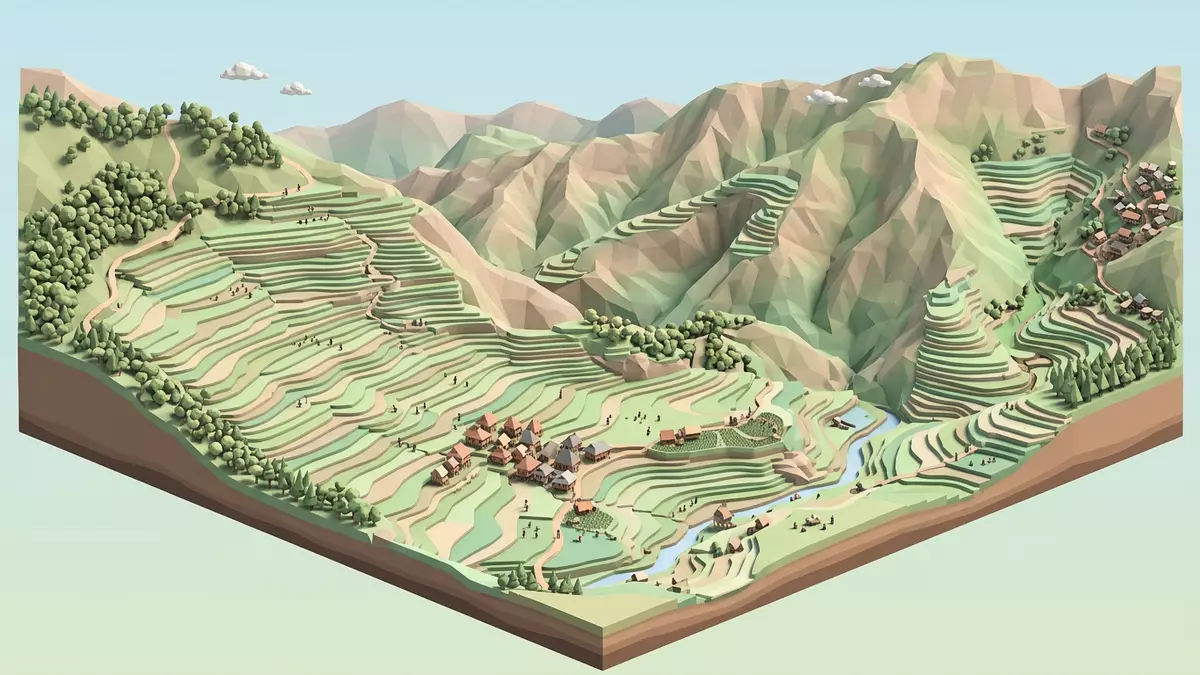
High above the town of Banaue in the Philippine Cordilleras, the Banaue Rice Terraces form a stepped landscape where mountain slopes have been turned into narrow fields of water and earth. Carved by Ifugao communities over many generations, these terraces are part of a wider rice terrace tradition in the northern island of Luzon that entered the UNESCO World Heritage List in 1995 as the Rice Terraces of the Philippine Cordilleras.
A mountain-side carved into fields
The Banaue Rice Terraces occupy the steep valley walls around Banaue, with narrow bench-like fields stacked one above another and supported by earth or stone retaining walls. The terraces follow the contours of the Cordillera mountain range on Luzon, forming a patchwork of irrigated paddies that mirror the structure of the hills rather than imposing a straight grid.Rice Terraces of the Philippine Cordilleras Water reaches these fields through a dense network of channels that tap upland springs and forested slopes, feeding the paddies and then returning to the river systems below.indigenous forest watershed management
Although Banaue gives its name to the terraces most visitors see from the viewpoint near the town, these are only one cluster among many in Ifugao Province. The wider cultural landscape includes terrace systems at Batad and Bangaan in the municipality of Banaue and further clusters at Mayoyao, Hungduan and Nagacadan, each with its own layout and relationship to nearby villages.five inscribed terrace clusters Collectively, these terraces form a highland mosaic of cultivated slopes, forests and hamlets that stretches across the Cordillera Administrative Region.
Ifugao heritage and a long farming tradition
The Banaue Rice Terraces are closely tied to the culture of the Ifugao people, whose ancestors developed wet-rice agriculture in this landlocked mountain province. Historical and archaeological studies indicate that terrace construction in Ifugao has unfolded over at least 2,000 years, with stone-walled systems at Banaue, Hapao and Hungduan counted among the oldest in Luzon.Ifugao Rice Terraces registry Farming knowledge, rituals and social organisation are embedded in these fields, linking the terraces to wider practices of forest management and irrigation.
Researchers working on the Ifugao Archaeological Project have used scientific dating methods to study terrace development in the Banaue valley. Their results point to significant expansion of the Bocos terrace system between the late fifteenth century and the late eighteenth century, with terrace building in parts of Banaue dating to after AD 1585.Bayesian dating of Bocos terraces This research adds detail to the broad picture of long-term terrace construction, showing how particular valleys were transformed from river floors to mountain-top fields across several centuries.
World Heritage terraces and the Banaue viewpoint
In 1995 UNESCO inscribed the Rice Terraces of the Philippine Cordilleras as a cultural landscape, recognising selected terrace clusters for their integrity and continuing agricultural use.World Heritage inscription in 1995 The inscribed sites include Batad and Bangaan in Banaue, Mayoyao Central in Mayoyao, terraces at Hungduan, and the Nagacadan cluster in Kiangan. These are places where terraces and traditional Ifugao houses, granaries and villages form coherent ensembles.
The terraces known in many guidebooks simply as the Banaue Rice Terraces refer to the cluster close to the town centre that visitors can see from the Banaue viewpoint on the main access road.Banaue Rice Terraces near the poblacion This cluster is part of the wider Ifugao terrace system and is recognised domestically as a National Cultural Treasure, but it does not form part of the core UNESCO World Heritage property because of the number of modern structures integrated into the slopes.national recognition of the terraces For travellers, this distinction matters less than the visible contrast between concrete buildings and centuries-old retaining walls, which makes the Banaue viewpoint a clear illustration of how terrace farming and contemporary settlement share the same terrain.
Visiting Banaue Rice Terraces: what travellers from Western Europe should know
- Banaue lies in the Cordillera mountain range on northern Luzon in the Philippines, reached from lowland hubs by mountain roads that climb towards the town.
- Paths leading out from Banaue to terrace viewpoints and villages may involve steep sections on earthen or stone steps, and walking along narrow terrace walls above drops into the paddies.
- The terraces sit at elevations where weather can shift quickly; fog, rain and bright sunlight can all affect visibility of the stepped landscape during a visit.
- Banaue is in the Philippines, where the official language is Filipino alongside English, and the currency is the Philippine peso.
- Entry requirements depend on your nationality; UK travellers can check the FCDO travel advice at gov.uk/foreign-travel-advice, Irish travellers the Department of Foreign Affairs at ireland.ie.
Searching for Banaue Rice Terraces on social platforms
These links open searches for Banaue Rice Terraces on each platform.
Frequently asked questions about Banaue Rice Terraces
Where are the Banaue Rice Terraces located?
The Banaue Rice Terraces are in Banaue, a municipality in Ifugao Province on the island of Luzon in the northern Philippines, within the Cordillera mountains.
What should a visitor expect when seeing the terraces?
A visitor sees steep mountain slopes reshaped into stepped rice fields, with retaining walls, irrigation channels and villages sharing the same highland landscape.
What makes Banaue Rice Terraces distinctive among rice terraces?
Banaue Rice Terraces stand within a wider Ifugao terrace system recognised as a World Heritage cultural landscape, while the viewpoint cluster near Banaue town shows centuries-old terraces alongside modern structures.


