
Bale Mountains National Park: Ethiopia’s high-altitude wilderness around Dinsho
Published on 09/12/2026 at 19:42 | Editorial responsibility: Rafael Müller, Editor-in-Chief AD HOC NEWS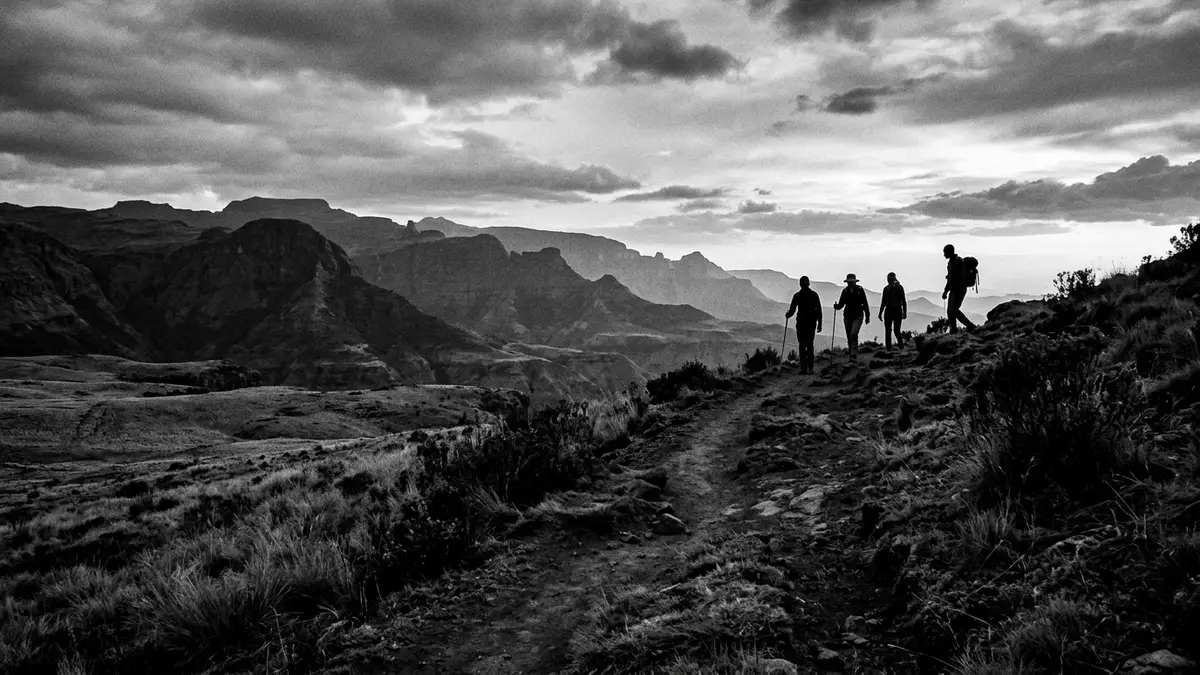
Bale Mountains National Park in Ethiopia spreads across a highland massif south-east of Addis Ababa, with park headquarters near Dinsho on its northern edge. It is known for its high-altitude Afroalpine plateau, steep escarpments and the Harenna Forest on the southern slopes, together forming one of Africa’s most distinctive mountain landscapes.
Afroalpine heights and the Sanetti Plateau
The core of Bale Mountains National Park lies on an elevated plateau that rises above 3,000 m (9,843 ft), creating extensive Afroalpine habitat rare on the African continent.Afroalpine plateau The Sanetti Plateau is one of the most striking parts of this high ground, an undulating plain punctuated by volcanic ridges, shallow basins and scattered glacial lakes. At its highest point the massif reaches Tullu Deemtu, a peak recorded at 4,377 m (14,360 ft), which is the highest summit in Ethiopia’s southern highlands.Tullu Deemtu summit
The park covers a protected area of about 215,000 ha within the Bale–Arsi massif in Oromia National Regional State, forming one of the largest continuous tracts of land above 3,000 m (9,843 ft) in Africa.215,000-hectare property This elevation shapes its vegetation: cushion-forming shrubs and hardy grasses dominate the plateau, while giant lobelias rise above moorland and damp hollows. The Afroalpine zone can be crossed on roads that climb from the lower towns through moorland to the high plain, giving long views across the massif and its volcanic forms.
Harenna Forest and the ericaceous belt
South of the plateau, the land falls steeply into the Harenna Forest, a moist montane forest regarded as one of the most extensive largely natural forests remaining in Ethiopia.Harenna moist montane forest Altitude in the forest zone ranges from about 1,450 m (4,757 ft) to around 3,200 m (10,499 ft) over a short horizontal distance, so tree communities change perceptibly with height. Lower slopes carry open-canopy dry forest, while upper belts at and above 2,400 m (7,874 ft) become very moist and mist-covered, with dense growth of epiphytes and woody climbers.
Between the high Afroalpine plateau and the Harenna Forest lies a marked ericaceous zone, where continuous scrub and stands of giant Erica trees blanket the escarpment between roughly 2,200 m (7,218 ft) and 3,200 m (10,499 ft).Ericaceous belt This transition band creates a visual contrast between the open moorland above and the closed forest below. The southern boundary of the park, at about 1,600 m (5,249 ft), coincides with the lower edge of the Harenna Forest and marks the southern limit of this large forest block in Ethiopia.southern forest edge
Endemic wildlife and conservation significance
Bale Mountains National Park is recognised as a major biodiversity hotspot in Ethiopia, supporting mammals and birds adapted to high altitude as well as species tied to its forest belts.biodiversity hotspot It holds the largest population of the endangered mountain nyala, a spiral-horned antelope endemic to Ethiopia, with significant numbers found in the juniper–hagenia woodlands around Dinsho inside the park.mountain nyala population These woodlands fringe the northern slopes of the Bale massif and bring larger mammals within reach of short walks from the headquarters area.
The park also supports over half of the global population of the Ethiopian wolf, a wild canid endemic to the country and considered the rarest in Africa.Ethiopian wolf stronghold Many of these wolves live in the Afroalpine habitat above 3,000 m (9,843 ft), especially on the Web Valley and Sanetti Plateau. Alongside them, Bale Mountains National Park shelters other endemic mammals, a high diversity of birds and a range of plant communities that shift between juniper woodland, moorland, bamboo stands and cloud forest. The combination of extensive Afroalpine vegetation and large moist montane forest underpins its recognition on international conservation lists.international recognition
Visiting Bale Mountains National Park: what travellers from Western Europe should know
- Bale Mountains National Park lies in the Bale Zone of Oromia in south-eastern Ethiopia, with its headquarters at Dinsho on the northern boundary; road routes run from Addis Ababa via Adama and Asela or via Shashamene through Dodola and Adaba.
- The terrain spans elevations from around 1,500 m (4,921 ft) to more than 4,000 m (13,123 ft), with high plateaux, steep escarpments, forested slopes and river valleys; walking routes can involve sustained gradients and extended sections on foot at altitude.
- The official language is Amharic and the currency is the Ethiopian birr.
- Entry requirements depend on your nationality; UK travellers can check the FCDO travel advice at gov.uk/foreign-travel-advice, Irish travellers the Department of Foreign Affairs at ireland.ie.
Searching for Bale Mountains National Park on social platforms
These links open searches for Bale Mountains National Park on each platform.
Frequently asked questions about Bale Mountains National Park
Where is Bale Mountains National Park located?
Bale Mountains National Park lies in the Bale Zone of the Oromia Region in south-eastern Ethiopia, with road access from Addis Ababa to Dinsho on its northern boundary.
What can visitors expect during a visit?
Visitors encounter high Afroalpine plateaux, moorland and volcanic peaks, along with deep forested slopes, cloud forest and juniper woodlands, with the chance to see endemic mammals such as mountain nyala and Ethiopian wolves.
What makes Bale Mountains National Park distinctive?
The park combines one of Africa’s largest areas of Afroalpine vegetation with the extensive Harenna Forest and significant populations of endemic highland wildlife, all within a single high-altitude protected landscape.


