
Bale Mountains National Park and the highland wildlife of Dinsho
Published on 08/28/2026 at 18:08 | Editorial responsibility: Rafael Müller, Editor-in-Chief AD HOC NEWS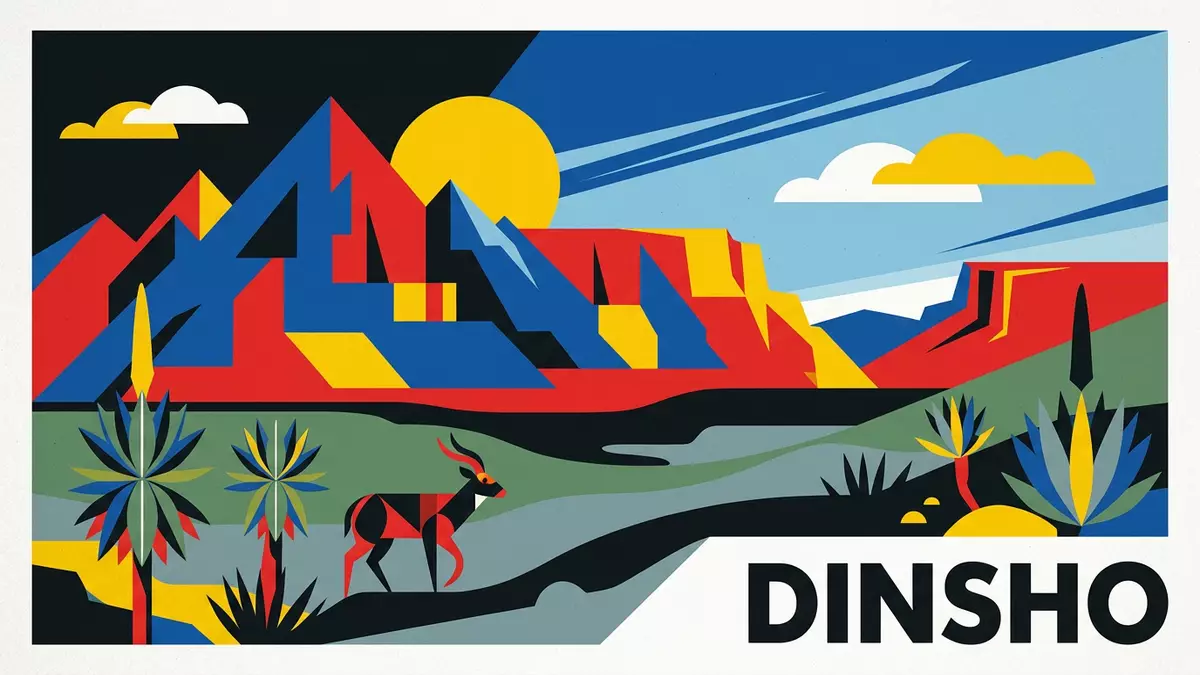
Bale Mountains National Park in southeastern Ethiopia gathers Afro-alpine plateaux, cloud-forest slopes and open grasslands into one highland landscape where rare animals still roam. Established in 1969 and centred on the small town of Dinsho, it is a protected area where Ethiopia’s highlands, wildlife and rural life meet in a way that remains intensely physical and grounded in the terrain.
Highland plateaux above the Rift Valley
Bale Mountains National Park lies in the Bale Zone of the Oromia Region, east of Africa’s Great Rift Valley and several hundred kilometres southeast of Addis Ababa.Bale Zone of the Oromia Region The park forms part of the Bale–Arsi massif, a block of high ground that rises steeply from the surrounding lowlands and shapes the skyline of southeastern Ethiopia.Bale–Arsi massif
Within its boundaries the land rises from around 1,500 m (4,921 ft) in the southern lowlands to Tullu Dimtu, Ethiopia’s second-highest peak at 4,377 m (14,360 ft).Tullu Dimtu, 4,377 m Between these extremes lies an extensive Afro-alpine plateau, including the Sanetti Plateau, which holds the largest expanse of intact Afro-alpine habitat in the world.largest expanse of Afro-alpine habitat
Five habitats in one protected area
Rather than a single uniform landscape, Bale Mountains National Park is structured as a sequence of distinct ecological zones that unfold with altitude. Around the park headquarters at Dinsho lie northern grasslands and juniper–hagenia woodlands, where open meadows alternate with stands of tall conifers and broad-canopied trees.juniper woodlands cover the northern slopes Trails here cross undulating ground, with views to rounded ridges and the silhouettes of giant trees marking watercourses and grazing clearings.
Higher up, the terrain gives way to Afro-alpine meadows on the Sanetti Plateau, erica heaths and finally the Harenna Forest on the southern slopes. The plateau is a high, wind-exposed table of moorland, scattered boulders and rocky outcrops, cut by shallow valleys and dotted with tarns. In contrast, the Harenna Forest forms a moist montane forest belt with dense understorey and tall canopy trees, one of the few remaining large forests in the Ethiopian highlands.Harenna Forest montane belt
Endemic wildlife on the Afro-alpine plateau
The high plateaux of Bale Mountains National Park are a refuge for species that exist only in Ethiopia’s mountains. The park is a stronghold for the Ethiopian wolf (Canis simensis), an endemic canid whose core population lives in the Afro-alpine moorlands of the Sanetti Plateau and surrounding high ground.stronghold for the Ethiopian wolf Packs patrol the open grasslands and wetlands, where dense populations of rodents, including the giant mole-rat, feed in the short vegetation and soft soils.
Alongside the wolves, Bale Mountains National Park supports the most important remaining population of mountain nyala, a spiral-horned antelope endemic to Ethiopia, as well as Menelik’s bushbuck and the Bale monkey.mountain nyala and Bale monkey Birdlife also reflects the park’s range of habitats, with highland raptors over the plateau and species such as the wattled crane in wetlands and valley bottoms.wattled crane and bearded vulture
Visiting Bale Mountains National Park: what travellers from Western Europe should know
- Bale Mountains National Park lies in southeastern Ethiopia’s Oromia Region, with park headquarters at Dinsho, which is reached by road from Addis Ababa via Adama, Asela and Dodola.
- The terrain ranges from grassy valley floors to high plateaux above 4,000 m (13,123 ft), and visitors encounter steep slopes, uneven paths and thin air on the upper sections.
- An all-weather road crosses the park from Dinsho towards Robe and Goba, then continues across the Sanetti Plateau before descending into the Harenna Forest.
- The official language is Amharic and the currency is the Ethiopian birr. Entry requirements depend on your nationality; UK travellers can check the FCDO travel advice at gov.uk/foreign-travel-advice, Irish travellers the Department of Foreign Affairs at ireland.ie.
Searching for Bale Mountains National Park on social platforms
These links open searches for Bale Mountains National Park on each platform.
Frequently asked questions about Bale Mountains National Park
Where is Bale Mountains National Park?
Bale Mountains National Park is in the Bale Zone of Ethiopia’s Oromia Region, east of the Great Rift Valley and close to the town of Dinsho.
What can visitors expect on a visit?
Visitors encounter a highland landscape of grasslands, forests and Afro-alpine plateaux, with rough tracks, steep slopes and the possibility of seeing endemic mammals and birds.
What makes Bale Mountains National Park distinctive?
The park combines Ethiopia’s second-highest peak, extensive Afro-alpine habitat and a concentration of endemic species such as the Ethiopian wolf and mountain nyala.


