
Bale Mountains National Park and the Afroalpine heights of Dinsho
Published on 08/26/2026 at 19:16 | Editorial responsibility: Rafael Müller, Editor-in-Chief AD HOC NEWS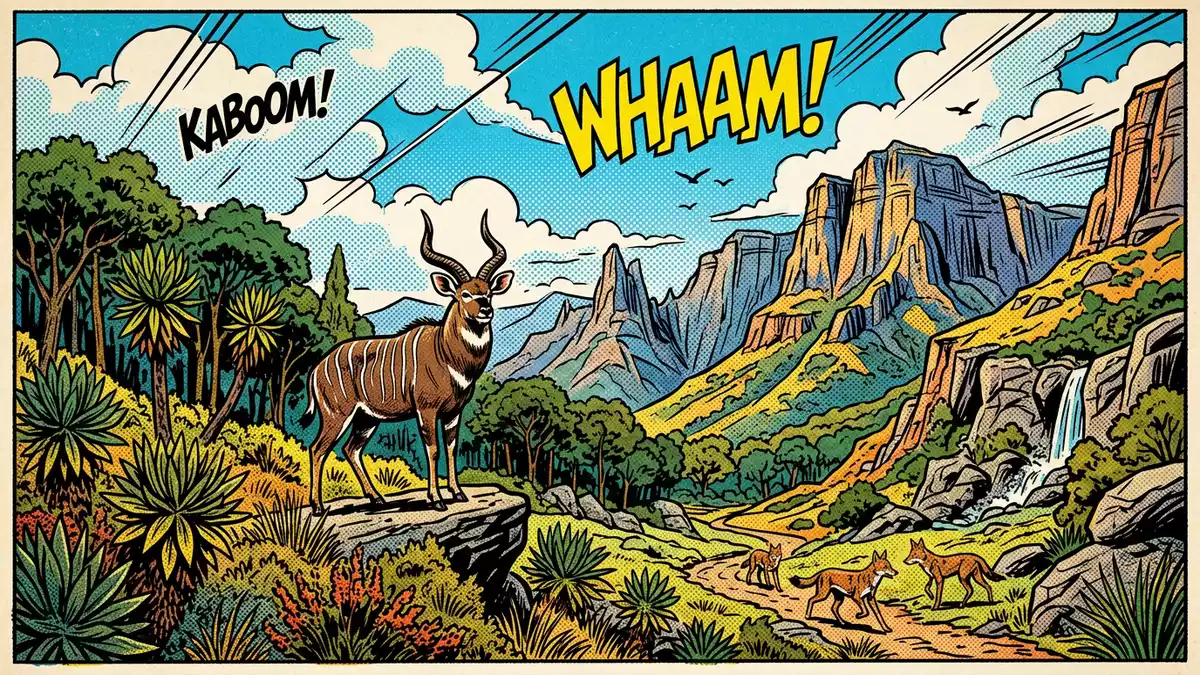
Bale Mountains National Park in Ethiopia’s Oromia Region is a highland protected area centred on the Bale massif, with park headquarters at Dinsho in the Bale Zone. It is widely recognised for afroalpine scenery, high-elevation grasslands and forests and for harbouring some of Ethiopia’s most remarkable endemic wildlife.
Highland geography and the scale of the park
Bale Mountains National Park occupies part of the Bale-Arsi Massif in south-eastern Ethiopia, forming a continuous highland landscape of peaks, plateaux and forested slopes. The property covers 215,000 hectares as a World Heritage site within a wider protected area measured in thousands of square kilometres, making it one of the country’s major highland reserves.215,000 hectares The Bale Mountains themselves rise to over 4,000 m (13,123 ft), and elevations within the park range from montane forest belts to afroalpine summits.
The park sits in the Bale Zone of Oromia, roughly south-east of Addis Ababa, and includes a variety of landforms from rolling uplands to steep escarpments. Dinsho serves as the gateway settlement, with the park headquarters located just beyond the town along the main road into the highlands.park headquarters outside Dinsho Within this area, the Bale massif transitions southwards from open high country into deep forested valleys.
Vegetation zones from juniper woodlands to afroalpine moorland
The protected area is structured around several major vegetation zones that follow altitude and exposure across the massif. On the northern slopes above towns such as Dodola and Dinsho, juniper woodlands form a belt of montane forest, with native conifers and broadleaf trees covering ridges and valleys.juniper woodlands on northern slopes These woodlands give way higher up to more open montane and subalpine vegetation.
Further south and at greater altitude, the landscape opens out into afroalpine grasslands and shrublands, especially on the Sanetti Plateau. This plateau is known for its tundra-like vegetation, scattered shrubs and open moorland where the ground cover and rocky outcrops create a distinctive high-elevation environment.afroalpine grasslands on the Sanetti Plateau Beyond the plateau, the land drops into the Harenna Forest, an extensive montane and cloud forest zone on the southern slopes, with dense trees, understorey and a humid atmosphere that contrasts with the exposed uplands above.
Endemic wildlife of the Bale highlands
Bale Mountains National Park is internationally noted for its wildlife, particularly species found only in these Ethiopian highlands. The afroalpine grasslands and shrublands of the Sanetti Plateau support the largest known population of the endangered Ethiopian wolf, a canid specialised in hunting high-altitude rodents.largest population of the Ethiopian wolf The plateau also holds endemic small mammals such as the Bale shrew, and other rodents that form part of this food web.
In the subalpine and upper montane woodlands, large antelope species include the mountain nyala, which is native to Ethiopia and closely associated with the Bale region.mountain nyala in upper montane woodlands Birdlife is equally rich, with afroalpine and forest species ranging from blue-winged geese and Rouget’s rail on high plateaux to forest specialists in the Harenna Forest. Across the different zones, the combination of endemic mammals, birds and amphibians makes the park a key centre of biodiversity in Ethiopia.
Visiting Bale Mountains National Park: what travellers from Western Europe should know
- Bale Mountains National Park lies in the Bale Zone of Ethiopia’s Oromia Region, with Dinsho as the main access town and park headquarters situated just beyond the settlement.
- The terrain ranges from high-altitude plateaux above 4,000 m (13,123 ft) to steep forested slopes and valleys, and approaches can involve walking on uneven ground at significant elevation.
- An all-weather road links Dinsho with Robe and Goba and continues across the Sanetti Plateau before descending toward the Harenna Forest, giving vehicular access to contrasting parts of the park.
- The official language is Amharic and the currency is the Ethiopian birr.
- Entry requirements depend on your nationality; UK travellers can check the FCDO travel advice at gov.uk/foreign-travel-advice, Irish travellers the Department of Foreign Affairs at ireland.ie.
Searching for Bale Mountains National Park on social platforms
These links open searches for Bale Mountains National Park on each platform.
Frequently asked questions about Bale Mountains National Park
Where is Bale Mountains National Park located?
Bale Mountains National Park is in Ethiopia’s Oromia Region, within the Bale Zone, with park headquarters situated near the town of Dinsho.
What can visitors expect on a visit to the park?
Visitors encounter a highland landscape of afroalpine plateaux, juniper woodlands and montane forest, with wildlife that includes endemic species such as Ethiopian wolves and mountain nyala.
What makes Bale Mountains National Park distinctive among Ethiopian parks?
The combination of extensive high-elevation afroalpine habitat on the Sanetti Plateau, dense southern forests in the Harenna area and concentrations of endemic mammals and birds gives the park a distinctive ecological character.


