
Balboa Park’s Spanish-inspired cultural landscape in San Diego
Published on 08/16/2026 at 14:04 | Editorial responsibility: Rafael Müller, Editor-in-Chief AD HOC NEWS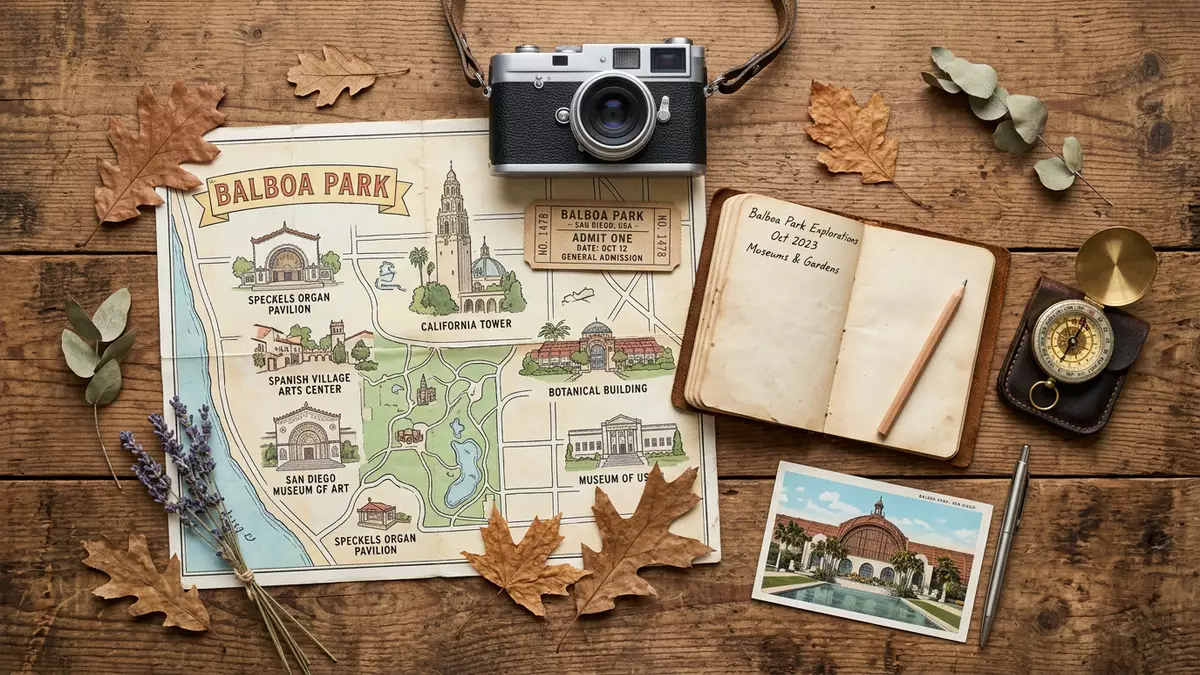
Balboa Park in San Diego is a wide urban cultural landscape where Spanish-inspired architecture lines garden paths and museum terraces frame views across canyons and lawns. In 1868, civic leaders set aside a large mesa above the harbour as public parkland, giving the city ground that would later become Balboa Park and its cultural district.In 1868 civic leaders set aside 1,400 acres for this purpose, and the original name “City Park” reflected that open intent.
From City Park to Balboa Park: exposition-era architecture
Balboa Park took on its present name in 1910, when San Diego prepared to host the Panama–California Exposition and renamed City Park in honour of Vasco Núñez de Balboa.The city renamed City Park to Balboa Park in 1910 as exposition plans gained shape. The exposition opened on 1 January 1915 and brought Spanish Colonial Revival and Mission Revival buildings to the park, turning canyons and mesas into exhibition courts and long promenades.Balboa Park is noted for Spanish Colonial Revival, Mission Revival and Pueblo Revival architecture that still shapes the park’s central axis.
Many of those exposition buildings later found new uses as museums and cultural institutions. Along the main boulevard, visitors encounter structures such as the Museum of Us, the San Diego Museum of Art, the Museum of Photographic Arts, the San Diego Natural History Museum and the San Diego History Center, all housed in early twentieth-century pavilions with arcades and ornamented facades.Several museums line the central boulevard in exposition-era buildings that tie contemporary exhibitions back to the park’s fairground origins.
Gardens, canyons and cultural institutions
Balboa Park covers more than 1,000 acres of mesas, canyons and landscaped gardens within San Diego’s urban fabric.Balboa Park extends across more than 1,000 acres and combines open terrain with formal planting. The park is recognised by the State of California as one of its cultural districts, reflecting the concentration of art, science and history institutions on the site.The park is recognised as one of California’s cultural districts and acts as a focal point for exhibitions and performances.
Within this landscape lie gardens, plazas and specialised buildings, from the House of Hospitality and House of Pacific Relations to exhibition halls and performance venues. The park is home to fifteen museums covering subjects such as aviation, art, natural history and regional heritage.Balboa Park is home to fifteen museums that occupy historic and later structures. The San Diego Zoo occupies a large tract on the park’s north side, integrating animal habitats with mature trees and planted slopes within the same municipal boundary.The San Diego Zoo is one of the major attractions within the park and sits alongside attractions such as the miniature train, the historic carousel, the Cabrillo Bridge and Sefton Plaza.
Layers of history and everyday use
Over its existence Balboa Park has hosted major expositions, military uses and civic events that left physical traces in building layouts and plantings. The Panama–California Exposition of 1915–1917 established the first group of cultural buildings, followed by the California Pacific International Exposition in 1935–1936, which added structures and landscaping that expanded the cultural core.Two major expositions were held in Balboa Park in 1915–1916 and 1935–1936, each leaving buildings that later housed museums. During both World Wars, the park’s buildings were used by the military before returning to cultural and recreational functions afterwards, giving some halls a layered past of barracks and galleries.During both World Wars park buildings were used by the military and later returned to cultural uses.
Today the park’s grounds accommodate daily leisure alongside formal programmes in theatres and museum halls. Plazas host community gatherings, while lawns and groves extend between the built cultural district and quieter canyons. Sculptures in places such as Sefton Plaza commemorate figures tied to the park’s development, including horticulturist Kate Sessions, whose planting work shaped much of the greenery.Sefton Plaza contains statues of Kate Sessions and other San Diegans, reinforcing the sense that Balboa Park is both a designed landscape and a record of civic history.
Visiting Balboa Park: what travellers from Western Europe should know
- Balboa Park lies north-east of central San Diego and stretches between several city neighbourhoods; the park is reached by road and by local public transport routes serving its perimeter streets.
- Footpaths and plazas in the cultural district are generally level, but the wider park includes canyons, slopes and staircases where visitors cover longer distances on foot between terraces and gardens.
- The city lies in California in the United States; the official language is English and the currency is the US dollar.
- Entry requirements depend on your nationality; UK travellers can check the FCDO travel advice at gov.uk/foreign-travel-advice, Irish travellers the Department of Foreign Affairs at ireland.ie.
Searching for Balboa Park on social platforms
These links open searches for Balboa Park on each platform.
Frequently asked questions about Balboa Park
Where is Balboa Park and what kind of place is it?
Balboa Park is a large urban cultural park in San Diego in southern California, combining landscaped grounds with museums, theatres and the San Diego Zoo within one municipal park.
What should visitors expect on a first visit to Balboa Park?
Visitors encounter Spanish-influenced exposition architecture, museums in historic buildings, gardens and open lawns, with longer walks between different districts of the park’s extensive grounds.
What makes Balboa Park distinctive among city parks?
The combination of early twentieth-century exposition buildings in Spanish Colonial Revival style, a concentration of museums and the presence of the San Diego Zoo gives Balboa Park a layered cultural character.


